
OpenAI reports 99.9% monitoring coverage for coding-agent traffic
OpenAI described an internal system that uses its strongest models to review almost all coding-agent traffic for misalignment and suspicious behavior. It is a sign that powerful internal agents may need continuous oversight, not just pre-deployment policy checks.
TL;DR
- OpenAI says it now monitors "99.9% of internal coding traffic" for misalignment, framing this as ongoing oversight for coding agents rather than a one-time safety gate coverage claim.
- In OpenAI's monitoring write-up, the company says it uses "our most powerful models" to review agent behavior and study misaligned actions in real deployments write-up post.
- The setup is aimed at suspicious behavior in internal environments, where coding agents can touch sensitive systems and tooling; that makes rapid detection and triage part of the deployment stack, according to OpenAI's deployment details.
What did OpenAI actually describe?
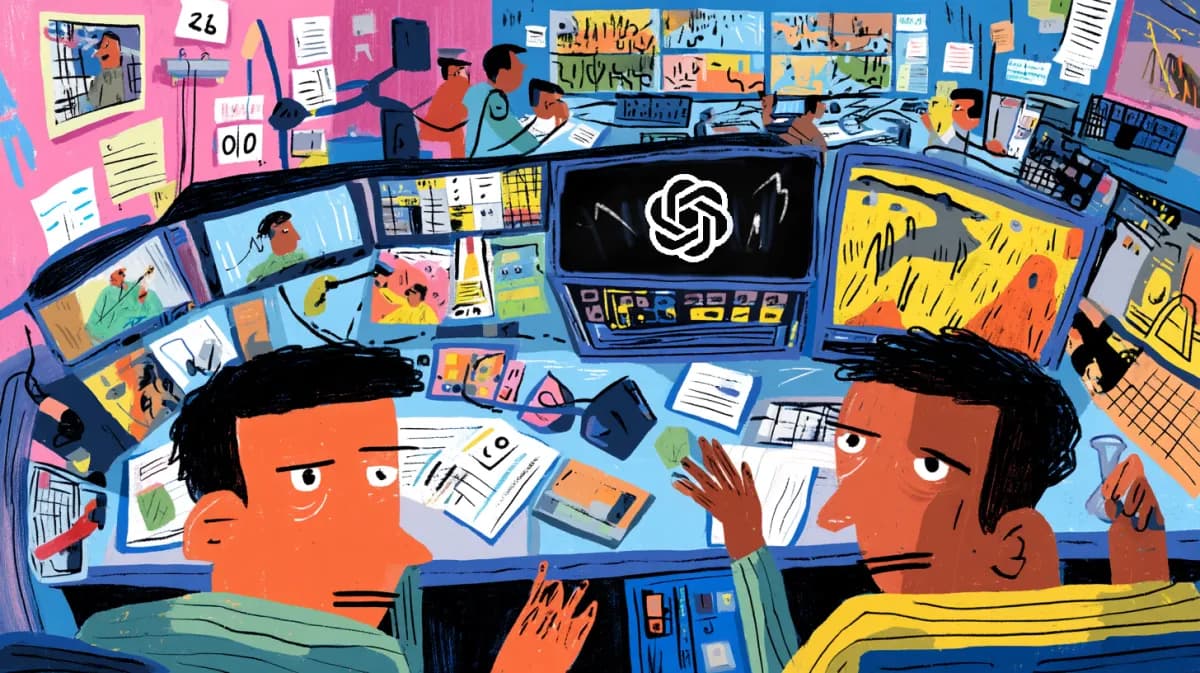
OpenAI's new write-up describes an internal monitoring system for coding agents that reviews agent interactions within roughly 30 minutes and looks at both actions and internal reasoning for signs of behavior that diverges from user intent or company policy. The post positions this as monitoring for "misaligned behavior in real-world deployments," not just red-teaming before launch deployment write-up.
The clearest new metric is the reported coverage level: Marcus J. Williams, in a post amplified by OpenAI, said the company now monitors "99.9% of internal coding traffic" for misalignment coverage claim. That suggests OpenAI has pushed this from a sampling-based safety exercise into near-universal observability for internal agent use.
Why does this matter for engineers?
The engineering takeaway is that powerful coding agents may need continuous runtime oversight once they gain real tool access. OpenAI's monitoring page says internal deployments create unique risks because agents can access sensitive systems and could potentially modify safeguards, so the company built a pipeline that flags suspicious sessions for fast triage instead of relying only on static policy checks.
That matters beyond OpenAI because the pattern is concrete: use a stronger model to watch production-like agent traces, inspect both tool use and reasoning, and close the loop quickly when something looks off. OpenAI's write-up explicitly argues for industry-wide monitoring standards for internal coding agents as those systems become more autonomous.