
OpenAI updates GPT-5.5 Instant with writing blocks and less bullet-heavy replies
OpenAI rolled a new GPT-5.5 Instant into ChatGPT and the API with less bullet-heavy output, better pacing, and higher multilingual quality. The update also replaces Canvas in GPT-5.5 Instant and Thinking with in-chat writing and code blocks, so users should migrate workflows while legacy models still keep Canvas temporarily.
TL;DR
- OpenAI shipped a new GPT-5.5 Instant in ChatGPT and the API that, according to michpokrass, is less "bullet pilled" and improves sycophancy, factuality, and multilingual performance.
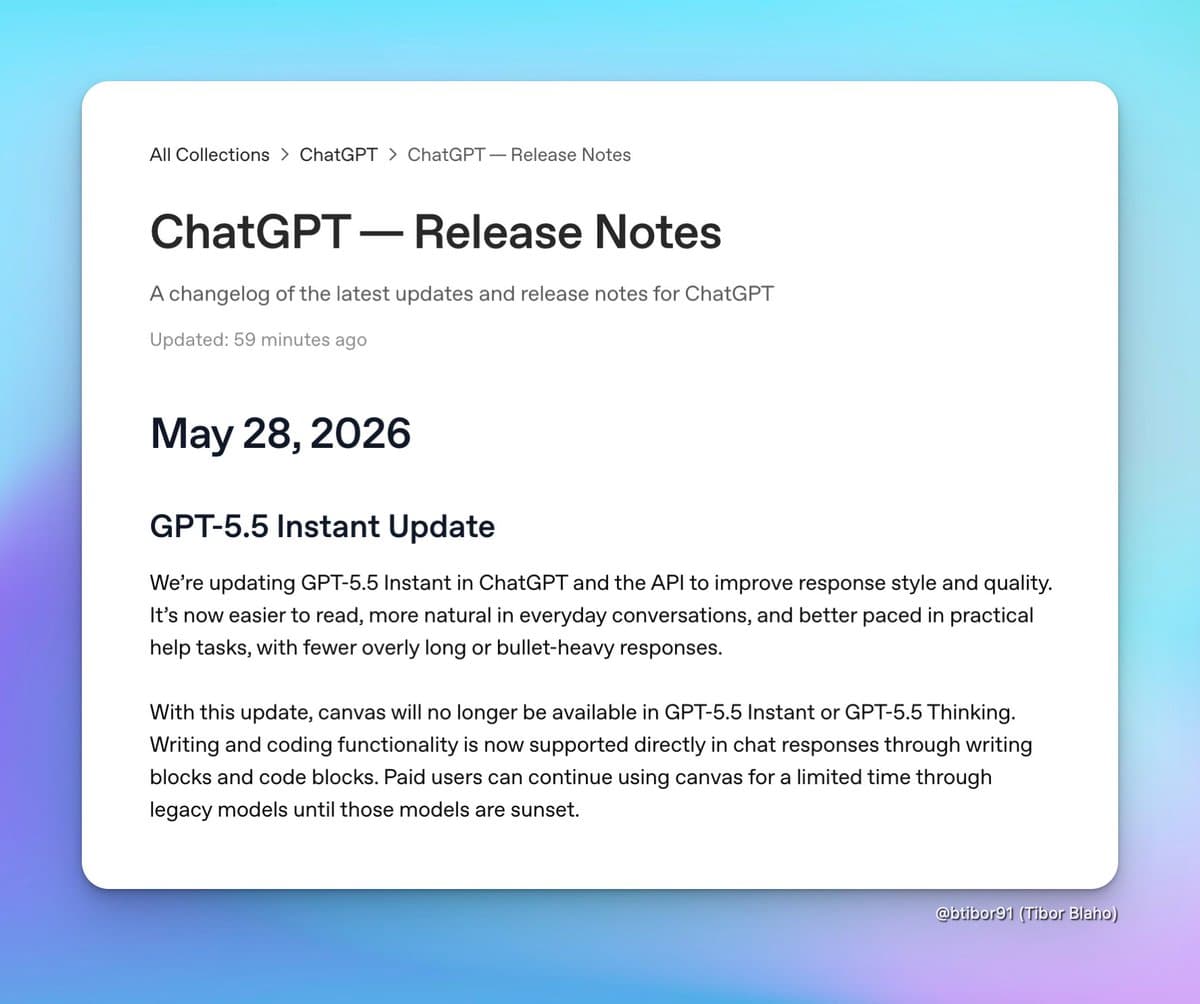
- In the product change spotted by btibor91's release-note summary, Canvas is being replaced in GPT-5.5 Instant and GPT-5.5 Thinking by in-chat writing blocks and code blocks.
- The Canvas transition is not immediate everywhere: btibor91's post says paid users can keep using Canvas for a limited time through legacy models until those models are sunset.
- OpenAI is pointing users to the ChatGPT release notes, which michpokrass's follow-up linked directly after announcing the ship.
- Separate from the style update, thsottiaux said Codex will sunset GPT-5.2 and GPT-5.3-Codex on June 2, making GPT-5.5 the default frontier model for free plans in Codex while the older models stay available in the API.
You can jump straight to the release notes section that btibor91 linked, read michpokrass's terse explanation for why the model changed, and see a separate status page thread because thsottiaux reported elevated API and ChatGPT latencies on May 27. The oddest detail in this mini-refresh is the UI swap: btibor91's summary says writing and code blocks now replace Canvas inside GPT-5.5 Instant and Thinking, with legacy models carrying Canvas only for a temporary grace period.
Writing blocks
OpenAI's biggest product change here is not a benchmark number. It is a workflow change.
According to btibor91's product summary, GPT-5.5 Instant and GPT-5.5 Thinking now generate writing blocks and code blocks directly in chat instead of opening Canvas. The same post says paid users can still reach Canvas through legacy models for a limited time, which makes this look like a staged migration rather than a same-day removal.
OpenAI's own release notes anchor, which btibor91 linked, is the canonical breadcrumb for the change.
Response style
The model update is explicitly about how GPT-5.5 Instant sounds, not just how fast it answers.
In michpokrass's announcement, OpenAI describes the previous version as too bullet-heavy, then lists four target fixes: fewer listy answers, less sycophancy, better factuality, and stronger multilingual performance. WesRoth's summary matches the same framing on readability, more natural conversation flow, and better pacing for practical help tasks.
That is a narrow but recognizable model-tuning story. OpenAI is changing default answer shape and conversational behavior in production, not pitching GPT-5.5 Instant as a new capability tier.
Release notes trail
OpenAI did not bury this update in a vague social post. It attached the change to the normal product log.
michpokrass's follow-up points users to the main ChatGPT release notes, while btibor91's direct link goes straight to the GPT-5.5 Instant update section. For a low-drama ship like this, that matters more than commentary threads because the release notes are where the Canvas deprecation path and model-behavior wording are meant to live.
Codex model selection
A separate OpenAI update on the same day shows where GPT-5.5 is being positioned inside the coding stack.
In thsottiaux's post, OpenAI said Codex will sunset GPT-5.2 and GPT-5.3-Codex on June 2 for users logged in with a ChatGPT account. The same post says GPT-5.5 becomes the default frontier model for free plans in Codex, while the retired Codex-side models remain available through the API.
That rollout landed amid service turbulence. thsottiaux's status update reported elevated latencies across API and ChatGPT, and in a later reply thsottiaux clarified that one issue was completions-API-only and did not affect Codex.