
SynthID adds OpenAI, ElevenLabs, and Kakao partners as Search and Chrome gain verification
Google expanded SynthID with new model partners and pushed verification into Search, Chrome, and Pixel video provenance flows. That matters because AI-content authentication is moving from isolated model outputs into mainstream browser and distribution surfaces.
TL;DR
- Google DeepMind's announcement says SynthID watermarking is expanding to models from OpenAI, ElevenLabs, and Kakao, extending a program that Google says has already marked more than 100 billion pieces of content.
- Google DeepMind's verification update says SynthID detection is moving into Search and Chrome, after Gemini users had already run verification checks more than 50 million times.
- Google DeepMind's Pixel post says Google is also adding provenance metadata for videos filmed on Pixel, tracking how media was created and edited, with or without AI.
- In btibor91's weekly roundup, this rollout sits alongside OpenAI's adoption of SynthID and C2PA conformance, which puts Google's watermarking system into a broader provenance push rather than a Gemini-only feature.
Google is pushing SynthID out of the model sandbox and into distribution surfaces. The partner announcement adds outside model providers, the Search and Chrome post turns verification into a browser and search flow, and the Pixel update reaches back to capture provenance from the moment a phone starts recording.
Model partners
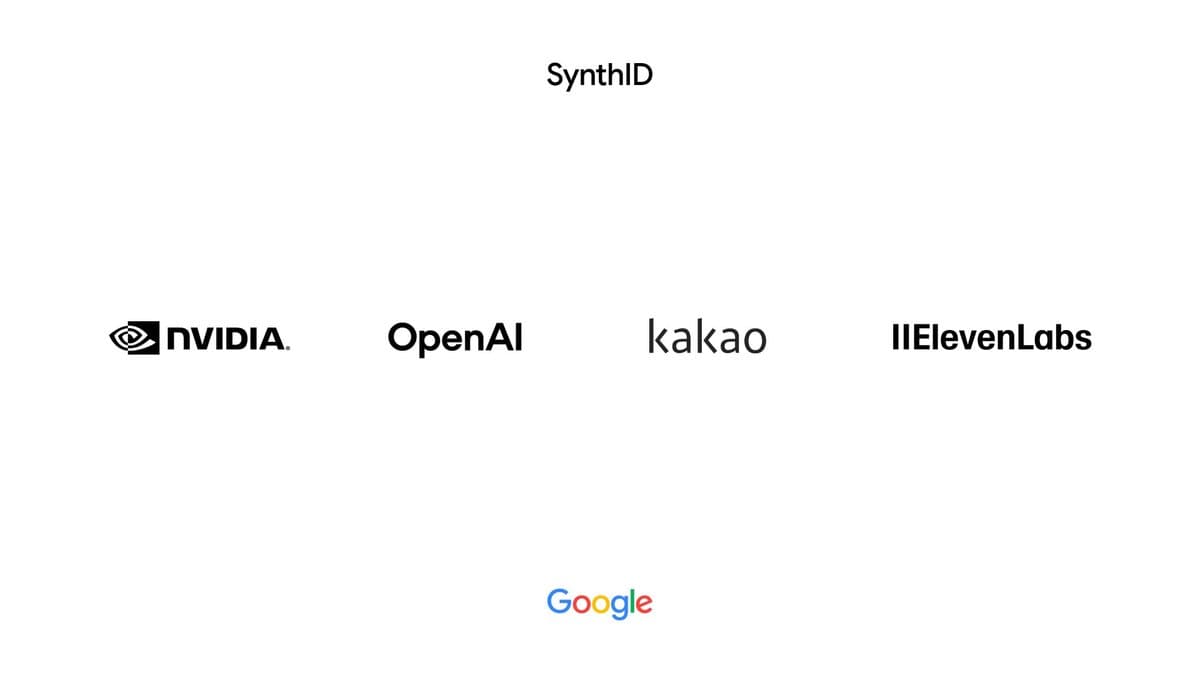
Google DeepMind said OpenAI, ElevenLabs, and Kakao will add SynthID watermarking to their models. The same post frames the new deals as an extension of momentum that Google says began with NVIDIA.
The interesting bit is the surface area. OpenAI covers mainstream text and image distribution, ElevenLabs brings in synthetic voice, and Kakao adds another large consumer platform, so SynthID is starting to look less like a Google feature and more like shared plumbing for AI media labeling.
Search and Chrome verification
Google says SynthID verification inside Gemini has already been used more than 50 million times. The next step is broader: Search and Chrome will let users ask whether a piece of media was made with AI.
That shifts verification from a model-specific checker into places where people actually encounter media. According to btibor91's roundup, the same week also included OpenAI's public talk about C2PA conformance and SynthID support, which makes the browser rollout look coordinated with a wider provenance stack.
Pixel video provenance
Google says Pixel-shot video will carry a record showing how media was created and modified, including edits that do not involve AI. The company describes that as a trail that starts when recording begins, not just a watermark added to the final export.
That is a different claim from model watermarking. The partner post is about marking generated outputs, while the Pixel post is about preserving production history across capture and editing. If Google follows through, SynthID becomes part of a fuller provenance chain instead of a single detection tag.