
GPT Image 2 supports 9-panel storyboards in Seedance 2.0 creator tests
Creators showed GPT Image 2 feeding Seedance 2.0 with perfume storyboard grids, UGC selfie references, poster-to-video setups, and time-freeze scenes. The workflow matters because it makes multi-shot ads and short videos more repeatable than one-off keyframe prompting.
TL;DR
- Creators are using GPT Image 2 to make multi-shot storyboard grids, then handing those grids to Seedance 2.0 as shot order and continuity guides, as Artedeingenio's perfume-commercial workflow, MayorKingAI's Moses storyboard, and egeberkina's fighting-game storyboard each showed.
- The recurring prompt pattern is explicit timing plus shot-by-shot direction, with Artedeingenio's 9-panel perfume prompt mapping 15 seconds beat by beat and MayorKingAI's Seedance prompt pairing each panel with camera and audio cues.
- The combo is spreading beyond cinematic ads into fake selfie UGC, because AIwithSynthia's supermarket clip used GPT Image 2 with Seedance 2.0 for shaky front-camera realism, while NahFlo2n's UGC example framed the format as scalable synthetic creator ads.
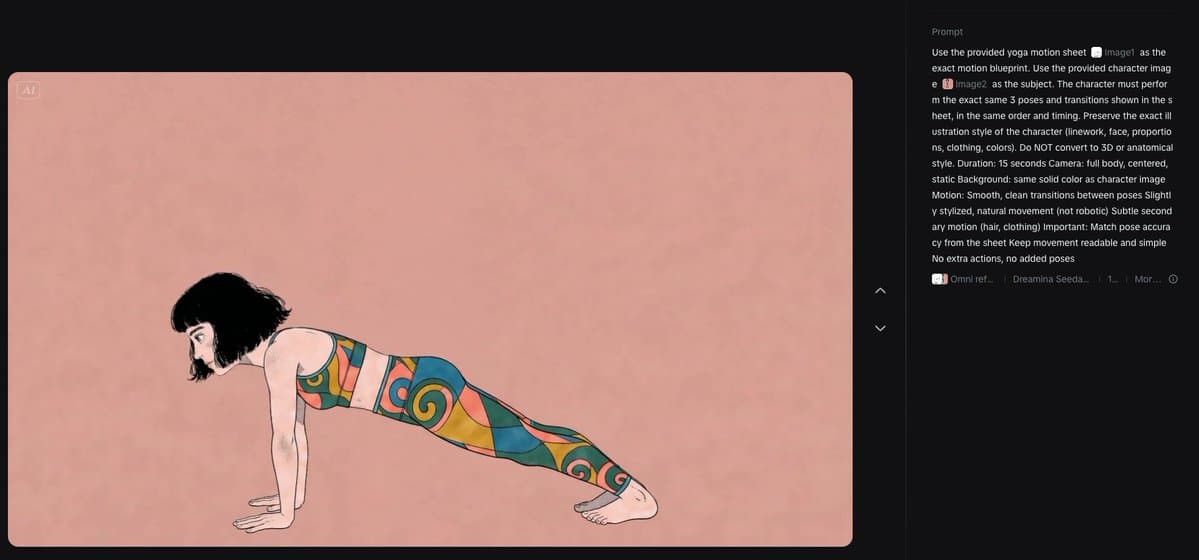
- Some of the strongest tests are not about cinema at all, because egeberkina's yoga motion-sheet demo used GPT Image 2 as a motion blueprint and the matching Seedance prompt told the model to preserve pose order, timing, and illustration style.
- The official tooling lines up with what creators are discovering: OpenAI's image generation guide says
gpt-image-2supports image inputs and multi-turn editing, while BytePlus's Seedance 2.0 release page lists multimodal video generation with 4 to 15 second outputs.
OpenAI's image guide quietly makes GPT Image 2 more useful for this than a plain text-to-image model, because it accepts image inputs and supports multi-step flows. BytePlus's Seedance page says the video model is built for text, image, video, and audio references, and Micheal Lanham's Seedance write-up says Ref2V can take up to nine image references in one generation. That helps explain why creators are suddenly treating storyboard sheets, pose charts, and game UI mockups like control surfaces instead of just inspiration.
9-panel storyboards
The big shift is not prettier frames. It is that creators are feeding Seedance a whole sequence plan instead of a single hero still.
Across the strongest examples, GPT Image 2 is doing three jobs before motion starts:
- Lock the character and product look.
- Lay out shot progression in a grid.
- Pre-commit the ending frame, usually the product hero shot or final reveal.
Artedeingenio's 9-panel perfume prompt turned a perfume ad into a second-by-second storyboard, from bottle closeups to a final title card. MayorKingAI's storyboard prompt did the same for a biblical action sequence, using a 3x3 grid to keep Moses, the staff, and the storm consistent across nine shots.
That lines up with OpenAI's model page, which describes gpt-image-2 as a high-quality generation and editing model with high-fidelity image inputs, and with the image generation guide, which says image generation can run inside multi-step conversational flows.
Timed video prompts
Once creators have the board, the Seedance prompt gets mechanical fast.
The common structure looks like this:
- total duration
- ordered shots or phases
- camera move for each beat
- continuity rules for character or object identity
- audio or SFX notes
- a hard ending frame
MayorKingAI's Seedance prompt labels nine shots across 15 seconds and assigns camera moves, SFX, and timing to each one. CharaspowerAI's Step 2 video prompt breaks the motion into movement, energy, abstraction, form, and design phases.
Lanham's Day 2 prompt breakdown describes the same logic in a tighter formula: Subject, Action, Environment, Camera, Style, Constraints. The creator versions in the tweet pool are basically that structure, stretched into timelines.
UGC and selfie ads
The same workflow is moving into fake casual footage.
The prompt ingredients are different from the perfume and Moses tests:
- handheld framing
- imperfect motion
- natural skin texture
- harsh everyday lighting
- unscripted speech cadence
- background passersby or clutter
AIwithSynthia's supermarket selfie test specifies shaky front-camera framing, bright supermarket light, visible skin texture, and an unscripted vlog tone. NahFlo2n's synthetic UGC ad pushes the same look into marketing, claiming the format can be reused across faces, voices, and scenarios.
BytePlus's product page says Seedance 2.0 is tuned for reference consistency, camera language, movements, facial micro-expressions, and text rendering. That reads a lot like the checklist UGC prompt writers are already reverse-engineering in public.
Motion blueprints
The most useful creator tests treat GPT Image 2 as a control diagram generator.
The yoga demo is the cleanest example. egeberkina's motion-sheet post makes a 1x3 technical layout with three poses, arrows, and alignment notes, then the matching Seedance prompt tells the model to follow the sheet as the exact motion blueprint, keep the same order and timing, and preserve the uploaded character style.
The fighting-game version applies the same idea to UI and choreography. egeberkina's storyboard prompt asks GPT Image 2 for a Tekken-style 3x3 gameplay grid with health bars, combo counters, and a KO screen, then the Seedance fight prompt turns those nine panels into a 15-second match timeline with damage, sparks, and camera shake.
Once you see those two together, the pattern is obvious: GPT Image 2 is being used to externalize structure, not just aesthetics.
Agent wrappers and multi-model stacks
A lot of creators are not using this combo in a bare prompt box.
ProperPrompter's Pika Agents demo shows the workflow wrapped in Pika Agents, where the agent uses GPT Images 2.0 for storyboard planning and Seedance 2.0 for the final ad without leaving the chat. ProperPrompter's follow-up clip adds one practical workaround: plan two 15-second parts, then feed clip one back in as input for clip two.
On the open stack side, hellorob's Comfy stack note describes a pipeline that mixes GPT Images 2, Sapiens2, DepthAnything3, Seedance 2.0, LTX 2.3, and grading in Comfy or Resolve. juliewdesign_'s workflow post compresses the same mood into three steps: Midjourney, GPT Image 2, Seedance.
The wrapper story matters because it turns a fragile prompt trick into a repeatable chain. BudgetPixel's workflow write-up makes the same point from the other side: let GPT Image 2 own the hero frame, let Seedance own motion.
Reference limits and the 15-second ceiling
The official constraints are showing up directly in creator behavior.
BytePlus's Seedance 2.0 release page lists 4 to 15 second outputs and 480p, 720p, and 1080p options. Lanham's Day 1 Seedance post says Ref2V accepts up to nine image references, three video references, and three audio references in one generation, each callable by name.
That explains two repeated behaviors in the evidence pool:
- chaining clips when 15 seconds is not enough, as ProperPrompter's follow-up clip describes
- packing as much continuity as possible into one board, as CharaspowerAI's workflow recap and Artedeingenio's 9-panel perfume prompt both do
The emerging creator grammar is simple: use GPT Image 2 to lock sequence logic into a board, then spend Seedance's short runtime on motion, timing, and polish.