
GPT Image 2 supports Seedance 2.0 image-to-video workflows across Freepik and Higgsfield
Creators documented GPT Image 2 plus Seedance 2.0 workflows across Freepik, Higgsfield, and Mitte for ads, animation tests, and uncanny short clips. The pairing turns better still generation into repeatable motion pipelines, though queues and setup still slow execution.
TL;DR
- freepik put GPT Image 2 into its Pikaso generator, and creator threads quickly turned that into a repeatable still to motion stack by feeding GPT Image 2 outputs into Seedance 2.0 on techhalla's Freepik workflow and AIwithSynthia's Higgsfield demo.
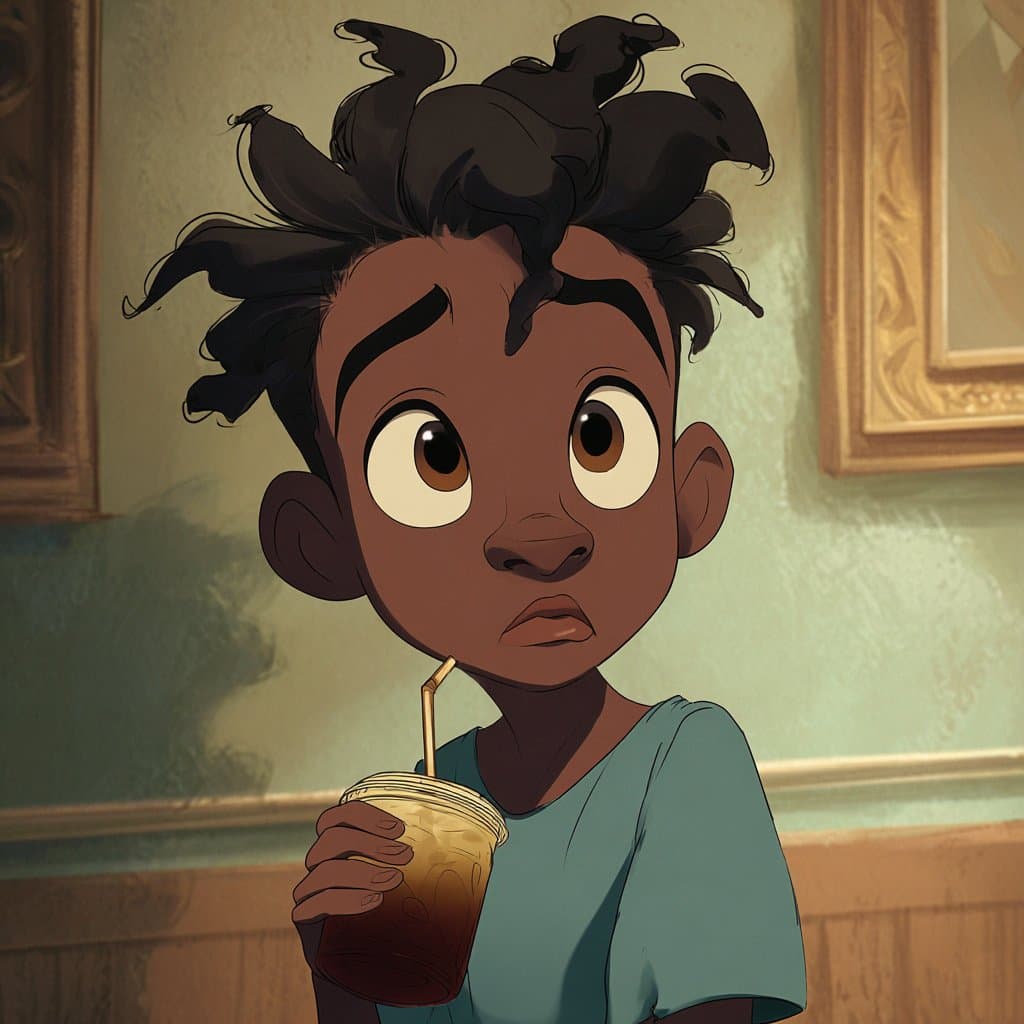
- The pairing is landing in very different styles: photoreal ad mockups on techhalla's thread, storyboard to animation experiments in minchoi's example list, and stylized cartoon shorts in Artedeingenio's Midjourney plus Seedance test.
- The useful pattern is more structured prompting, not just better stills: Artedeingenio's prompt post scripts motion by timecode, camera path, and mood, while AIwithSynthia's beat-synced prompt maps a whole 15-shot sequence in one block.
- Creators are increasingly treating Seedance as one stage inside larger products, with techhalla's Leonardo walkthrough, fabianstelzer's Glif V2 launch, and rainisto's BeatBandit workflow all wrapping generation in higher-level tooling.
- The catch is throughput. According to c_valenzuelab's service update, platforms were investigating Seedance 2.0 quality, queue, and error issues, and awesome_visuals said one generation had stretched to 60 minutes.
Freepik's GPT Image 2 page is live, Mitte keeps showing long-form character and montage workflows, and Glif V2 is already pitching a chat-first layer over GPT Image 2, Seedance 2.0, and other models. There is even a Topview pricing pitch built around using GPT Image 2 to lock storyboards before sending anything to Seedance.
Freepik and Higgsfield turned the combo into a product surface
The big shift in the evidence is not a new model announcement. It is that creators can now reach the GPT Image 2 to Seedance handoff from consumer tools instead of stitching everything manually.
On Freepik, the initial draw was readable type and dense editorial layouts. In the same launch thread, freepik's keynote example, freepik's Slack mockup, and freepik's magazine spread all push the same point: GPT Image 2 can generate layouts with small text and hierarchy intact. That matters because those images then become stronger animation inputs for Seedance.
Higgsfield is pitching the other half of the stack. AIwithSynthia's first demo called GPT Image 2 plus Seedance 2.0 on Higgsfield a cinematic action workflow, and aakashgupta's marketing-studio thread argued the same stack now keeps product UI readable and faces stable inside ad creatives.
Timecoded prompts are becoming the real workflow primitive
The strongest creator posts are less about a magic prompt and more about treating image to video like shot planning.
A few patterns repeat across the evidence:
- Timeline blocks: prompts are written second by second or beat by beat.
- Reference slots: creators explicitly tag
@image1,@image2, or a subject image. - Camera instructions: push-ins, chase cams, low-angle tracking, and reveal shots are spelled out.
- Mood arcs: prompts name an emotional progression, not just a setting.
- Continuity constraints: identity consistency is called out directly, especially for character work.
That same structure shows up in Artedeingenio's aging montage, Artedeingenio's evolution montage, and techhalla's F1 parody, even though the outputs are totally different.
Three formats are showing up first
The examples cluster into a few distinct formats rather than one generic “AI video” bucket.
- Storyboard to motion: minchoi surfaced 3x3 storyboard animation as an early use case.
- UGC and ad creative: minchoi's UGC example, techhalla's ad-style workflow, and aakashgupta's product ad thread all focus on readable products, believable people, and bulk variants.
- Short-form narrative and animation: Artedeingenio's Goonies-style clip, Artedeingenio's sci-fi short, and rainisto's microdrama episode use the combo for continuity across scenes, not just one-shot spectacle.
The weirdest result might be how often creators are aiming on purpose for shaky amateur footage. fabianstelzer's Ferrari clip and awesome_visuals' Lamborghini variant both lean into bad-phone-video aesthetics because the realism reads better when the camera is supposed to be messy.
Seedance is getting wrapped by orchestration layers
A lot of the interesting product motion is happening one layer above the model.
Glif describes itself as a “creative super agent” that can call GPT Image 2, Seedance 2.0, Gemini, Kling, Veo, ElevenLabs, and subtitle or music tools from one conversation. Rainisto showed a narrower but clearer production loop: BeatBandit outlines the series, writes the screenplay and shot list, splits scenes into 15-second prompts, then Seedance runs the shots through Higgsfield before editing in Premiere.
The same wrapper logic appears in smaller forms elsewhere. techhalla's Leonardo walkthrough uses Leonardo as the interface for Seedance 2.0 and its Fast mode, while Artedeingenio's Mitte presets post says Mitte has started shipping presets for anime, 3D cartoon, and cinematic looks.
Queues, cost, and resolution still decide the pace
The main limitation in this evidence set is not output quality. It is the plumbing.
Concrete constraints surfaced fast:
- Queue spikes were widespread enough that one platform said it was working with ByteDance on quality, queues, and new errors.
- One creator reported a 60 minute generation time and said refusals arriving at 98 percent were especially painful.
- Resolution is still a tradeoff. awesome_visuals explicitly suggested boosting 720p if 1080p could not hold.
- Price still varies a lot by wrapper. hasantoxr's Topview thread pitched Seedance 2.0 at $0.10 per second in one bundle, while zaesarius' AI FILMS Studio post priced 1080p Seedance 2.0 VIP at $0.675 per second, or $2.70 for 4 seconds and $10.125 for 15.
That leaves the real story in a very creator-shaped place: GPT Image 2 is making stronger frames, Seedance 2.0 is turning those frames into motion, and the difference between a smooth workflow and a miserable one mostly depends on which wrapper sits on top.