
Min Choi maps Grok 4.5, Fable 5, and GPT-5.6 Sol to coding roles
Min Choi's workflow assigned Grok 4.5 to research and debugging, Fable 5 to planning and frontend, and GPT-5.6 Sol to complex coding. Shann Holmberg added tactics for effort levels and usage limits.
TL;DR
- The emerging workflow is role routing: Min Choi put Grok 4.5 on realtime research, daily coding, debugging, and tests; Fable 5 on planning and frontend; GPT-5.6 Sol on complex coding in his routing map.
- Effort routing became the second dial, with low, medium, high, and xhigh/max mapped to task difficulty in Shann Holmberg's effort guide.
- Usage is now part of the craft: Holmberg’s six levers covered lean context, stop points, subagent reasoning, and cheaper orchestrators in his limits guide.
- Creators are already using the new stack for real builds, including Meng To’s GPT-5.6 Sol Ultra infinite canvas with layers and an inspector and Emil Kowalski’s Fable-powered animation audit skill for project animations.
OpenAI’s GPT-5.6 launch describes Sol, Terra, and Luna as separate tiers across ChatGPT, Codex, and the API. xAI’s Grok 4.5 post frames Grok as a coding and agentic-work model trained alongside Cursor. Anthropic’s Claude Code effort guide says effort affects not just thinking time, but files read, tools used, and steps taken before checking back in. A SourceFeed build-off found Fable cleaner across five app-spec runs, while Sol still showed strong but uneven frontier-agent behavior.
The role map
Choi’s map is the cleanest version of the current creator stack:
- Realtime research: Grok 4.5 High
- Planning and orchestration: Fable 5 Max / XHigh
- Day-to-day coding and debugging: Grok 4.5 High
- Writing and running tests: Grok 4.5 High
- Complex coding and debugging: GPT-5.6 Sol XHigh
- Frontend: Fable 5 High
Peter Yang posted a similar split for a weekend project: Fable built plan.html and design guidelines, Claude Design made components and screens, then GPT-5.6 did the build in his project process. He put it more plainly in a reply: Fable was good at planning, GPT was good at execution, and Fable tokens were expensive and limited in Yang's follow-up.
That matches the vendor framing. OpenAI’s launch post calls GPT-5.6 Sol its best coding model yet, while xAI’s Grok 4.5 announcement says Grok 4.5 was built for coding, agentic tasks, and knowledge work.
Effort routing
Holmberg treated effort as model routing one level down. His ladder:
- Low: fast, cheap, obvious work like sorting a lead or fixing a typo.
- Medium: standard work like a post from a brief, an email, or a call summary.
- High: careful work like a competitor teardown or campaign plan.
- XHigh / Max: slow, pricey work for the problem high could not crack.
Anthropic says the same dial is broader than “thinking time.” Its Claude Code effort guide says effort changes how many files Claude reads, how many tools it uses, and how many steps it takes before checking back in.
Holmberg’s point was cost discipline, not minimalism. He said high roughly tripled review quality over low on a 26-task GPT-5.5 coding benchmark, while xhigh cost more than 2x again for gains that often did not earn back the spend in his benchmark note.
Limit levers
Holmberg’s limit playbook had six moving parts:
- Trim
CLAUDE.mdandAGENTS.mdto the essentials. - Drop reasoning when the task does not need the top level.
- Give the model clear stop points before execution.
- Keep subagents on lower reasoning, because they inherit the parent level.
- Use a cheaper orchestrator and call the expensive model only for hard reasoning.
- Inspect what one message costs in usage.
The pain was visible elsewhere in the thread pool. Peter Yang said 5.6 Sol high fast mode burned usage faster than 5.5 high fast mode in his usage note. LLMJunky argued Fable can be more token efficient than Sonnet and Opus in some situations, but the usage and API cost still make it “the most expensive model by a huge margin” in a cost reply.
Harnesses
Meng To described the working pattern as one goal split into many threads. He asks GPT-5.6 Sol to make the plan, break it into 20-plus concrete steps, then spawn a thread for each step so every task can be reviewed and rolled back independently in his workflow post.
Holmberg’s planning-framework map put three harnesses around that pattern:
- Superpowers: brainstorm, lock a spec, break into tasks, run subagents, review against the spec.
- G-Stack: spec, build, review through CEO / engineering / design / devex lenses, QA, ship.
- Matt Pocock’s skills: grill first, establish shared language, convert to spec, implement with TDD, code-review.
Holmberg’s “marketing engineer” stack broadened the same idea beyond code: company brain, harness, operations, model routing, and taste in his marketing engineer diagram. The useful phrase is “taste,” because the workflow assumes code is cheap and judgment is the bottleneck.
Creator builds
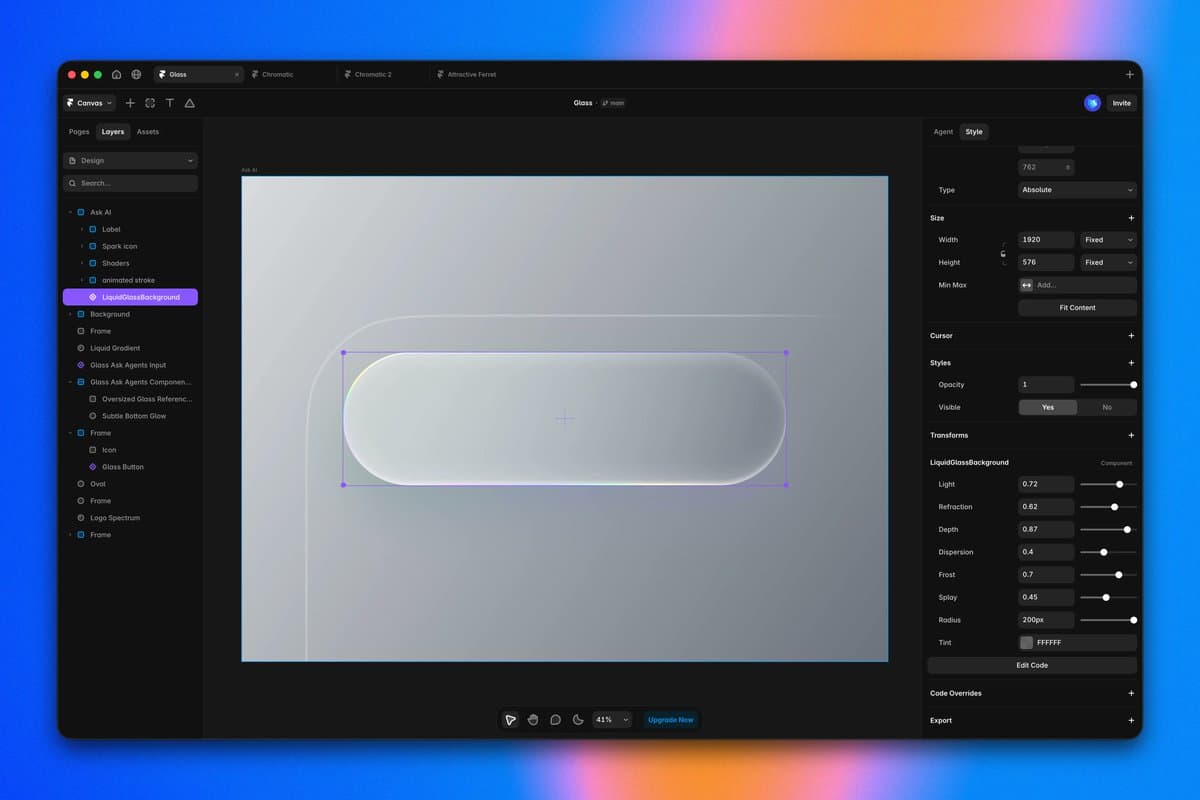
Meng To's infinite canvas built with GPT-5.6 Sol Ultra
Meng To’s build was an infinite canvas for HTML and React designs with layers, an inspector, and real-time collaboration. He said Sol Ultra “pretty much one-shotted” it with planning and subagents, though it burned through his limits in his build post.
Kowalski shipped /improve-animations, a skill that uses a capable model to audit animation code and hands execution to cheaper models in his skill release. The attached demo shows the audit moving into a smoother browser preview.
Kowalski's animation audit skill
The website-design crowd went straight to full prompts. Viktor O. shared a VEX landing-page prompt that specified React 19, TypeScript, Tailwind CSS v4, no component libraries, no animation libraries, exact video URLs, liquid-glass CSS, IntersectionObserver reveals, SEO metadata, and responsive behavior down to 320px in the full VEX prompt.
Min Choi’s Grok 4.5 showcase gathered ten examples, including a playable FPS under an hour, a UE5 cyberpunk street in 36 minutes for about $12, a 2D and 3D home planner under a minute, and a Linux kernel module for laptop RGB in his Grok 4.5 thread. His GPT-5.6 thread listed Manhattan in voxels, a Google Earth clone, a 10-minute flight simulator, an Android wireless mic, and Blender work in his GPT-5.6 thread.
Access friction
Grok 4.5 was showing up in terminals. Ozan Sihay said xAI had integrated Grok 4.5 into Grok Build CLI and allowed limited free use with an X or Grok account, including a one-line install command in his Grok Build post. Another user posted a terminal screenshot with “Grok 4.5 (high)” active in the terminal hello test.
Fable access stayed unsettled. Ozan Sihay said Claude Fable 5 use within limits had been extended first from July 7 to July 12, then from July 12 to July 19 in his Fable extension post. Levelsio’s reaction clip captured the mood: “You and me when Anthropic extended Fable access for another week” in the extension reaction.
The friction was not only quotas. Peter Yang posted a Claude Design warning asking him to start a new chat to save 222k tokens of context in his context screenshot, and another banner said the selected model was at capacity in his capacity screenshot.