
InVideo Agent Two adds Notebooks for manual video control
InVideo says Agent Two now lets creators move from agent chat into Notebooks for manual control over image, video, sound, and music while keeping project context. Creators used Notebooks to store scripts, character sheets, locations, and references.
TL;DR
- Agent Two now has a chat-to-Notebook handoff: creators can work with the agent, then jump into manual control for image, video, sound, and music without losing context, according to MayorKingAI's Notebooks post.
- The early creator workflow looks more like a production binder than a prompt box: CharaspowerAI built a 1m15 sci-fi sequence from screenplay and production assets while Agent Two remembered characters, creatures, and locations in his workflow thread.
- The repeatable sequence is asset-first: character sheets, location sheets, creature designs, then video direction, as CharaspowerAI's character-sheet step, his location-sheet step, and his creature-design step show.
- Manual mode was the loud request: Uncanny_Harry said he uses agents for ideas, character design, locations, and storyboarding, then goes manual for narrative video generation.
- Playbooks add another control layer on top of Notebooks, with saved languages, workflows, creative rules, multiple variations, and Ultra/Pro/Lite choices in MayorKingAI's Playbooks post.
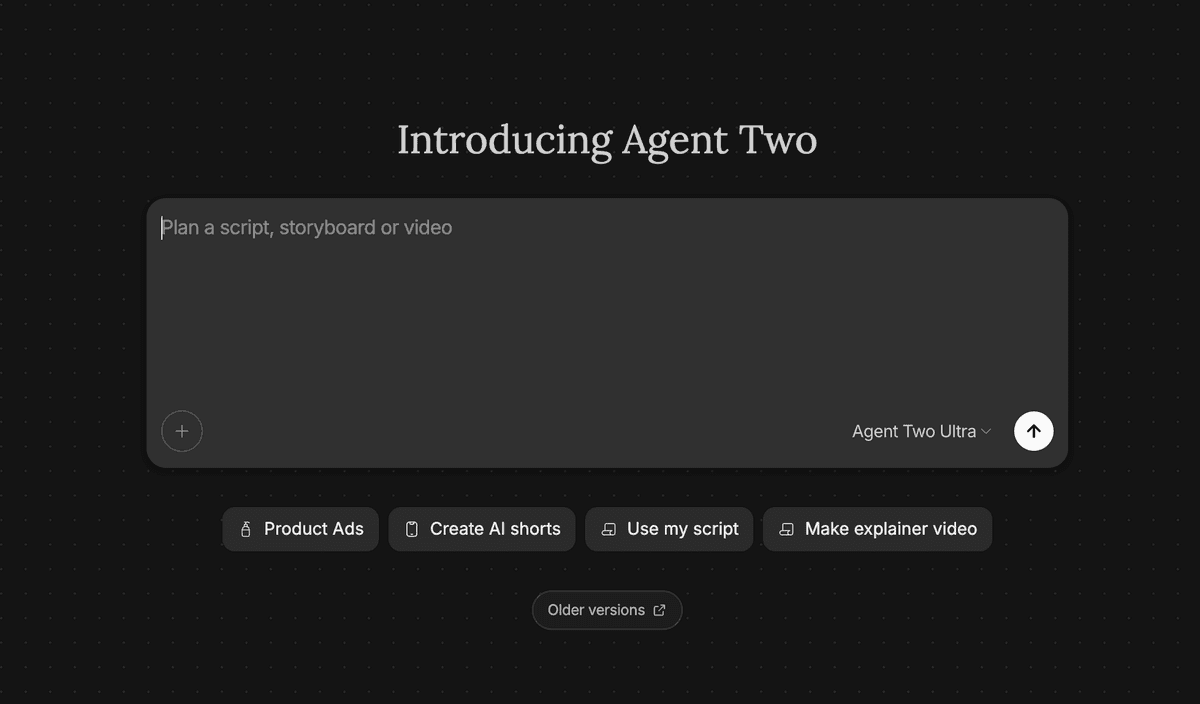
InVideo's Agent Two homepage now shows “Notebook · Page 1” inside its long-term-memory demo. The agentic workflow guide describes the operating model as one persistent project context shared by specialized agents, with cheap image iteration before spending video credits. The model-chain FAQ lays out the pipeline as script → image model → video model → audio/lip-sync → upscale, while the Director Agent FAQ says each episode director executes inside its own isolated notebook.
Manual mode
MayorKingAI framed Notebooks as “the best of both worlds”: freeform agent collaboration, then granular manual control over image, video, sound, and music generation without dropping project context in the launch note.
That landed because creators were already splitting their work this way. Uncanny_Harry said he wants manual mode when he needs granular control in one reply, and later narrowed the split: agents for ideas, character design, location, and storyboarding, manual work for narrative video generation in a follow-up.
lloydcreates put the workflow in plainer terms: “you dial a gen in as far as you want and hand it back,” while the agent keeps going with the edits still in memory in his response. That is the feature: not full automation, not a timeline editor, but a handoff between them.
A 1m15 sci-fi sequence
CharaspowerAI used Agent Two “like a movie studio,” producing a 1m15 cinematic sci-fi sequence from a screenplay plus production assets while Agent Two remembered every character, creature, and location in the opening post.
The setup post claimed Agent Two is 4× faster, 2× cheaper, and has “infinite memory” compared with Agent One, and said the product is available from InVideo's homepage in the thread. The more useful part is the asset list he fed it: character sheets, location sheets, images, videos, scripts, and references.
Character, location, and creature sheets
The workflow sequence is the part worth saving:
- Script first: CharaspowerAI mapped the story, then gave Agent Two the script before generating shots in the character-sheet step.
- Character sheets: he built two main characters with locked identity, expressions, outfits, proportions, and visual details in the same step.
- Location sheets: he used GPT Image 2 inside Agent Two to design the alien planet and spaceship interiors before video generation in the environment step.
- Creature sheets: he designed alien species with distinct silhouettes, anatomy, and personality before starting the final sequence in the creature step.
- Directing pass: once the assets were loaded, he kept guiding, refining ideas, and giving creative direction as the project evolved in the collaboration step.
CharaspowerAI's final read was that the tool reduced repeated prompting: Agent Two remembered characters, worlds, creatures, references, and prior creative decisions in the closing post.
Persistent context
techhalla pointed at the practical problem Notebooks are meant to solve: generative projects create piles of assets and prompts, and organization becomes part of the creative workflow in his post.
InVideo's consistency FAQ says AI video models carry no memory between clips, so consistency comes from re-supplying character and style context manually or through an agent that holds it. The same page lists three layers: fixed style text, locked character-sheet image references, and persistent agent context.
The homepage's product copy uses the same frame: agents store a project's full context in long-term memory so clips stay consistent, and the demo shows a notebook page with “Locked composition” and “Same shot, new backdrops” on InVideo's Agent Two page.
Playbooks and credit tiers
Playbooks are the second control surface around Agent Two. MayorKingAI said creators can define languages, workflows, creative rules, and automatic multiple variations, then choose between Ultra, Pro, and Lite depending on intelligence and cost in the Playbooks post.
The saved-rule angle resonated with creators who already repeat instructions. lloydcreates said he types the same 3 or 4 rules into every prompt, so letting an agent hold them would save time in his Playbooks reply.
One naming wrinkle: MayorKingAI's post calls the low-cost choice Lite, while InVideo's generation-quality help page currently calls the low-cost Autopilot tier Basic at 2 credits per minute. The same page prices Pro at 80 credits per minute and Ultra at 160 credits per minute.
InVideo's pricing page says all paid plans include access to 200+ image, video, audio, and music models, including Seedance 2.0, Veo 3.1, Kling 3.0, Nano banana pro, and ElevenLabs music. Its credits help page says agent charges depend on the models running in the background and generation complexity, with a Veo 3.1 4K video with audio costing 10+ credits in its example.