
Kling 3.0 adds multishot close-ups with stronger facial acting
A creator demo showed Kling 3.0 carrying subtle facial acting across a three-shot dramatic scene with multishot cuts. Cannes posts around the same time kept positioning Kling for TV and film pipelines, linking the demo to longer-form narrative use.
TL;DR
- CharaspowerAI's three-shot demo shows Kling 3.0 carrying a dramatic exchange across medium, tight, and extreme close-up shots, with the strongest bit being how the facial tension survives the cut sequence.
- According to AllaAisling's Adobe Firefly workflow, Adobe is already positioning Kling 3.0 inside a creator stack that pairs reference images, multishot scene control, and native lip-sync in one workflow.
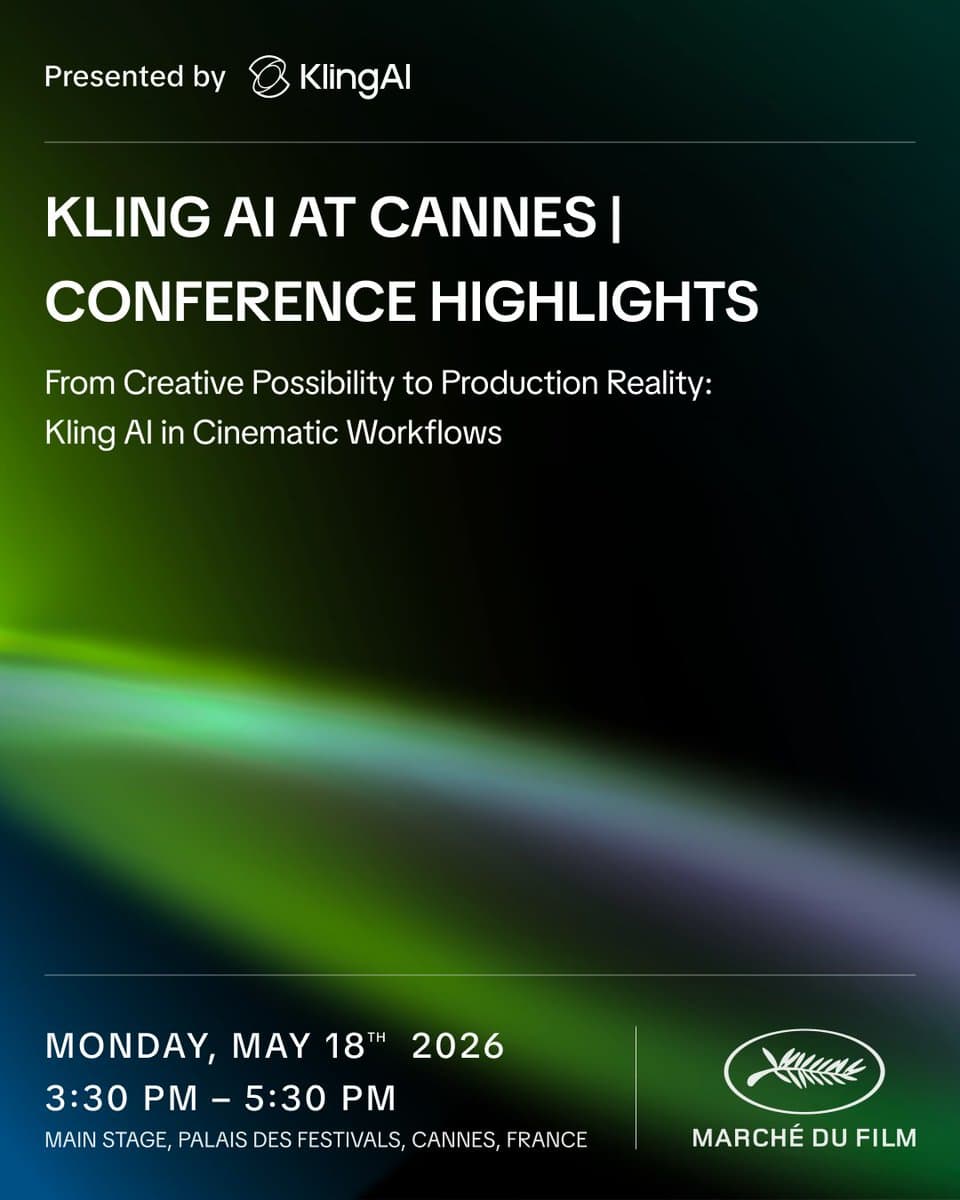
- Kling_ai's Cannes recap and the Cannes showcase repost both frame Kling as a film-production tool, not just a one-off clip generator, with examples tied to a Hollywood series and a Moses trailer.
- The bigger shift in the Cannes commentary repost is narrative ambition: the model is being pitched for TV and film pipelines at the same moment creators are posting dialogue-heavy close-up scenes.
You can watch the Adobe Firefly walkthrough, skim Adobe's Kling quick guide, and compare that workflow with CharaspowerAI's dramatic test, which is a much better proof point for facial acting than the usual action montage. Around the same window, the Cannes showcase repost and Kling_ai's conference recap kept tying Kling to longer-form production, including House of David and The Old Stories: Moses.
Multishot close-ups
The clip matters because it stays in the hardest part of AI video, faces under emotional pressure. Shot 1 sets a two-shot confrontation, Shot 2 cuts to the man's defensive close-up, and Shot 3 lands on the woman's tearful rebuttal.
The prompt in CharaspowerAI's post is unusually explicit about acting beats: trembling lips, a guilty glance, a cracked voice, then silence. Kling 3.0 does not just hold wardrobe and framing here, it preserves micro-expression changes across the cut pattern well enough to make a short argument scene read as a scene, not a sequence of disconnected generations.
Cannes pipeline push
Kling's own posts used Cannes to push a specific claim: AI video is entering real production workflows. Kling_ai described the Marché du Film event as a discussion about how AI is moving into film production, while the showcase repost tied that pitch to House of David and a trailer for The Old Stories: Moses.
That is a different frame from consumer AI video marketing. Kling_ai's earlier Cannes post talked about filmmakers and industry talent embracing AI-driven storytelling, and the follow-on commentary repost summarized the moment more bluntly, arguing that generative video had moved past the demo phase.
Firefly workflow stack
The most concrete creator workflow in this evidence set came from Adobe Firefly's partner-model stack. In AllaAisling's post, the sequence is broken into five clips built from two systems: GPT Image 2 for consistent visual references, then Kling for shot generation.
The post surfaces three production mechanics in one chain:
- GPT Image 2 generates reference characters and environments.
- Kling 2.5 Turbo handles a fast opening single shot.
- Kling 3.0 handles multishot scene control plus native synchronized dialogue and lip-sync.
That workflow is also the cleanest link between the acting demo and the Cannes messaging. Adobe's Kling quick guide and Firefly video surface put Kling inside an existing creator toolchain, while AllaAisling's example shows what that looks like when the target is a short cinematic ad rather than a standalone test clip.