
OpenClaw adds daily source scans that write 12 film and TV briefs into Obsidian
Rainisto showed an OpenClaw agent that scans film, shorts, and TV sources each day, returns 12 ideas, and saves them into Obsidian. The pattern helps writers build a living inspiration inbox instead of recycling the same generic brainstorming prompts.
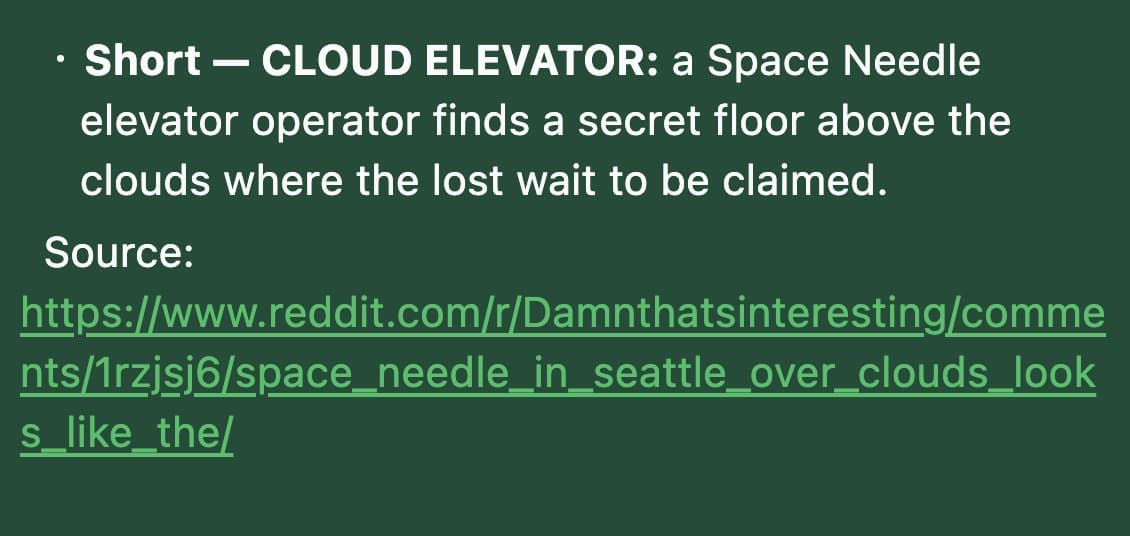
TL;DR
- Rainisto showed an OpenClaw workflow that reads film, shorts, and TV sources each day, then turns that scan into 12 story ideas instead of a single generic brainstorm prompt workflow post.
- The agent writes those ideas straight into Obsidian, creating a running brief file that can be revisited and expanded rather than lost in chat history Obsidian note.
- The stated goal is to avoid the repetition that comes from asking ChatGPT for ideas in isolation by feeding the model fresher, narrower source material drawn from daily coverage idea rationale.
- OpenClaw is also pushing beyond chat-based interfaces: another builder says he spent roughly 40 days making an alternative UI aimed at broader use with less setup friction UI progress.
What the workflow does
Rainisto's setup uses an OpenClaw agent to read a set of sites every day, with separate searches for movies, shorts, and TV, then return 12 ideas that are "inspired by real events" rather than strict retellings. That framing matters for screenwriters and directors: the input is current reporting, but the output is adaptation fuel, not news summary.
The second practical piece is storage. According to Rainisto's Obsidian note, each batch is recorded into Obsidian, which turns the agent into a living inspiration inbox instead of a one-off prompt session. His follow-up post says the point is to capture "fleeting things" rather than the biggest stories everyone is already seeing.
Why creatives may care
The clearest creative takeaway is not "AI writes scripts" but a more repeatable research-to-brief pipeline. By sourcing from daily niche inputs, the workflow tries to surface stranger prompts before they flatten into the same recycled suggestions large chatbots often produce idea rationale.
The supporting signal is that builders around OpenClaw are already treating the interface as a bottleneck. In his UI progress, thekitze says he abandoned the idea in week one, then came back after about 40 days of work on an alternative UI meant for people who do not want to live in Telegram or Discord. That suggests the agent layer is becoming useful enough that creators now want calmer, more production-friendly front ends.