
Cognition launches Devin Desktop with ACP support for local and cloud agents
Cognition added a desktop control surface that can run Devin, Codex, Claude, and other ACP-compatible agents across local and cloud contexts. The app turns Devin from a single hosted agent into a broader orchestration surface.
TL;DR
- cognition's launch post pitched Devin Desktop as a control surface for "fleets of local and cloud agents," not just a packaged desktop shell for Devin itself cognition launch post.
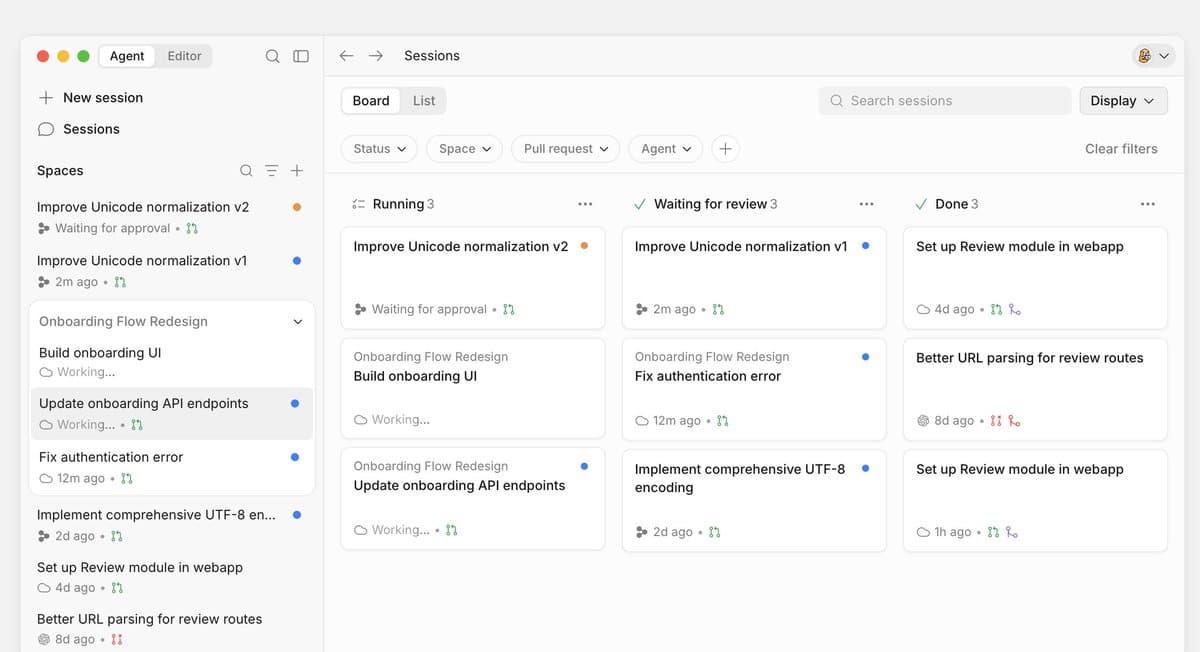
- According to the official launch post, Devin Desktop is the new name for Windsurf, with the Agent Command Center, Kanban view, and shared-context Spaces moved to the foreground, while the FAQ says the editor, extensions, keybindings, and LSP workflows stay intact.
- cognition's handoff post says work can start locally and continue in the cloud after you close the laptop, and the Devin docs describe that cloud agent as built into the desktop app with in-editor PR review.
- russelljkaplan's agent-neutral post and the ACP docs frame the bigger shift: Devin Desktop can host third-party ACP agents, including Claude Code and Codex, inside the same command center agent-neutral post.
You can read the rename announcement, skim the FAQ on what changed and what did not, and check the ACP page where Cognition explicitly says third-party agents run inside the Agent Command Center. The getting started guide also slips in a useful detail: the app ships for Mac, Windows, and Linux, and imports VS Code or Cursor settings.
Windsurf becomes Devin Desktop
The most concrete product change lives in Cognition's own docs: the launch post says Windsurf is now Devin Desktop, and the FAQ says existing Windsurf 2.0 users were already using the product that is now being rebranded.
The rename comes with a UI priority shift. The FAQ says the Agent Command Center, specifically Spaces, Kanban view, and multi-agent management, is now the primary view, while the classic editor stack remains available.
That lines up with how cognition's launch copy describes the app: a single surface to plan, delegate, review, and ship. In the official post, Cognition adds that Spaces groups sessions, PRs, files, and context so multiple agents can share the same working set.
ACP turns it into an agent hub
Cognition's biggest claim is that Devin Desktop is "fully agent-neutral," as russelljkaplan's launch thread puts it, with custom background agents running directly from the desktop app alongside Devin, Claude Code, and Codex agent-neutral post.
The protocol underneath that is ACP. Cognition's ACP docs call it an open standard for communication between code editors and coding agents, and the ACP introduction describes the same goal more broadly: remove one-off editor-to-agent integrations for local and remote setups.
Cognition's own examples match the tweets. dabit3's platform post names Codex, Claude Agent, OpenCode, and any other ACP-compatible agent, while Zed's reply frames the launch as another desktop app adopting ACP Zed ACP reply.
One important caveat sits in the docs rather than the announcement. The ACP page says third-party agents are available on Pro, Max, and Teams plans, with Enterprise enablement handled separately.
Local handoff, cloud continuation
The workflow Cognition is pushing is a split one. cognition's handoff post says you can plan locally, then hand work to the cloud so Devin keeps running after the laptop closes local and cloud handoff post.
The docs break that stack into two pieces:
- The getting started guide says Devin Local is the primary local agent harness, shared with Devin CLI.
- The Devin-in-Desktop page says cloud Devin is built into the app, with delegation and PR review handled inside the editor.
- The launch post positions both inside the same Agent Command Center rather than as separate products.
That is why the launch reads bigger than a desktop wrapper. The desktop app is free to download according to cognition's download post download post, but the product story is really about collapsing local agents, cloud runs, and third-party ACP agents into one orchestration layer.
Platform coverage and rollout details
Cognition also used the launch to argue that Devin now spans most of the software delivery loop. In dabit3's platform post, the company lists Cloud, CLI, Desktop, Automations, Testing, and Review as its major surfaces platform surfaces post.
Two rollout details showed up outside the main announcement:
- The getting started guide says Devin Desktop supports Mac, Windows, and Linux, and can import settings from VS Code or Cursor.
- The Devin-in-Desktop docs say access to Devin Cloud is rolling out gradually, even for eligible self-serve plans.
- dabit3's follow-up reply says Adaptive Router is also available in Devin for Desktop Adaptive Router reply.