
Codex supports After Effects JSX edits in creator tests
Creators used Codex to generate After Effects JSX edits, build reusable skills, and push Codex Sites toward autonomous app updates. That moves Codex from app scaffolds into repeatable motion-design workflows, though builders still flag setup friction and weak frontend polish.
TL;DR
- AmirMushich's first test and his follow-up demo show Codex generating After Effects JSX that can cut motion sequences to audio, which pushes Codex from web app scaffolds into a real motion-design workflow.
- In AmirMushich's setup note, the repeatable part is tiny: run the JSX file, choose the sound file, choose the images, then let After Effects handle the edit.
- petergyang's workflow post and gregisenberg's Codex Sites walkthrough both frame the next layer as skills plus integrations, where the upfront setup is what makes later runs feel autonomous.
- The current complaints are concrete: petergyang's slides comparison says Codex still lags Claude on frontend polish, while his question thread shows builders already thinking about cron jobs, image generation costs, and chained video workflows.
- LLMJunky's Linux demo landed at the same moment that the 0.137.0 release notes added remote-control pairing and plugin improvements, which matters for creators trying to keep Codex running across more than one machine.
You can skim OpenAI's workspace agents announcement, browse a community-made Excalidraw skill post, and inspect the Linux packaging repo from LLMJunky's download link. Together they make the same point as this tweet set: Codex is getting used less like a one-off code generator, more like a reusable workflow layer.
After Effects JSX
The most useful creator example here is not "Codex can code." It is that AmirMushich used plain-language prompts plus his own design sense to get a usable After Effects script, then showed the result running inside AE.
In his workflow breakdown, the system is narrow enough to matter:
- Run the generated JSX file.
- Select the sound file.
- Select the image set.
- Let After Effects assemble the match cuts.
- Render.
That is a more interesting pattern than a flashy demo because the creative tool stays the same. Codex is acting like a script writer for an existing pro app, not replacing the app.
Skills and integrations
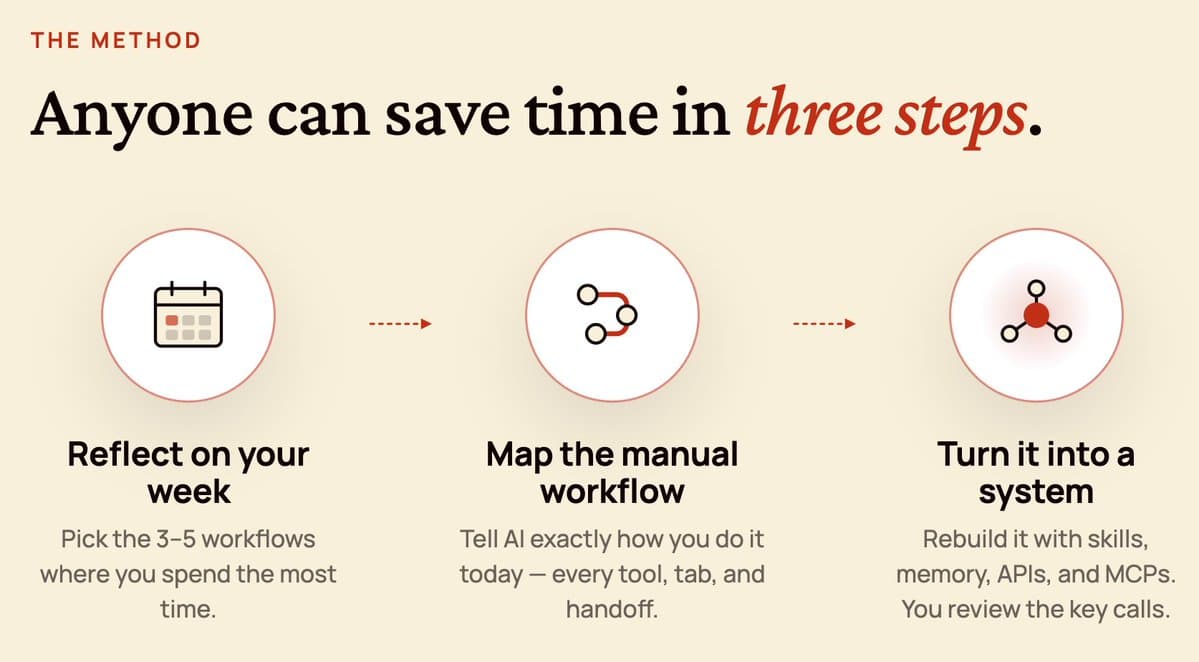
The tweet pool keeps circling the same word: skills. In petergyang's post, the workflow starts by listing every step in a repetitive task, then asking Codex or Claude Code what integrations and skills would compress it. In bentossell's prototype, that idea turns into a smaller text-editing agent with keyboard shortcuts.
A community example on the OpenAI Developer Community makes the same pattern legible for creatives. The shared Excalidraw skill generates editable .excalidraw JSON, preview files, open-in-Excalidraw links, and local session state so the next prompt edits the previous diagram instead of starting over.
That fits what OpenAI says about workspace agents: Codex-powered agents run in the cloud, can be shared across a team, and are meant to improve over time. The practical shift is from prompting for one output to building a reusable verb.
Codex Sites
The strongest Codex Sites claim in this evidence pool is not the launch video. It is gregisenberg's explanation of what makes a site keep changing after launch.
He breaks that loop into four pieces:
- persistent storage, so the app keeps state between visits
- safe actions, so the agent has a bounded set of things it can change
- skills, so future chats know how to operate the app
- save checkpoints, so you can review versions before deployment
That maps closely to independent writeups of the product. Mervin Praison's breakdown describes Sites as OpenAI-managed hosting with workspace authentication, optional D1 database storage, optional R2 file storage, and a save-then-deploy flow. Lushbinary's guide adds one buried operational detail: every deployed Sites URL is a production deployment, which is why the save step exists as a separate review checkpoint.
That is also why gregisenberg keeps returning to "save for review, do not deploy." The workflow is trying to make autonomous updates feel reversible.
Friction and polish
The pushback in this tweet set is refreshingly specific.
In petergyang's question thread, he asks whether cron jobs can live on a Mac Mini instead of a primary laptop, whether Codex image generation is effectively free, and whether generated images can feed directly into HeyGen video runs. Those are not launch-day novelty questions. They are ops questions from someone trying to turn Codex into a daily creator stack.
In his design complaint, the issue is first impression. He says a /slides skill built in Claude looks better in one shot than the Codex version, unless you first generate an image elsewhere and ask Codex to match it. That neatly matches gregisenberg's own caveat that Codex Sites still has gaps around domains, databases, and authentication.
Even the more bullish thread from aakashgupta puts the real leverage somewhere else: taste encoded into tests, persona-based CI reviewers, and a harness that keeps correcting the agent. The visual layer is still where creators notice rough edges fastest.
Linux remote control
The last useful wrinkle is that Codex is also getting easier to keep alive outside the main ChatGPT tab. LLMJunky showed remote control support in the Codex Linux app, with installs distributed through a public packaging repo at am-will/codex-app.
That lines up with OpenAI's 0.137.0 release notes, which added remote-control pairing, controller grant management, machine-readable plugin listings, and more explicit handling for malformed skills fields. For creators, that is mundane but important infrastructure: the workflow story here is not only about what Codex can generate, but where it can keep running.