
Midjourney users test SREF 1828479729 for retrofuturist anime and sketchbook styles
New Midjourney SREF shares include 80s Japanese retro sci-fi, notebook sketches, minimalist brand illustration, poster art, and darker fashion imagery. Save the codes that fit your brief and reuse them as style presets.
TL;DR
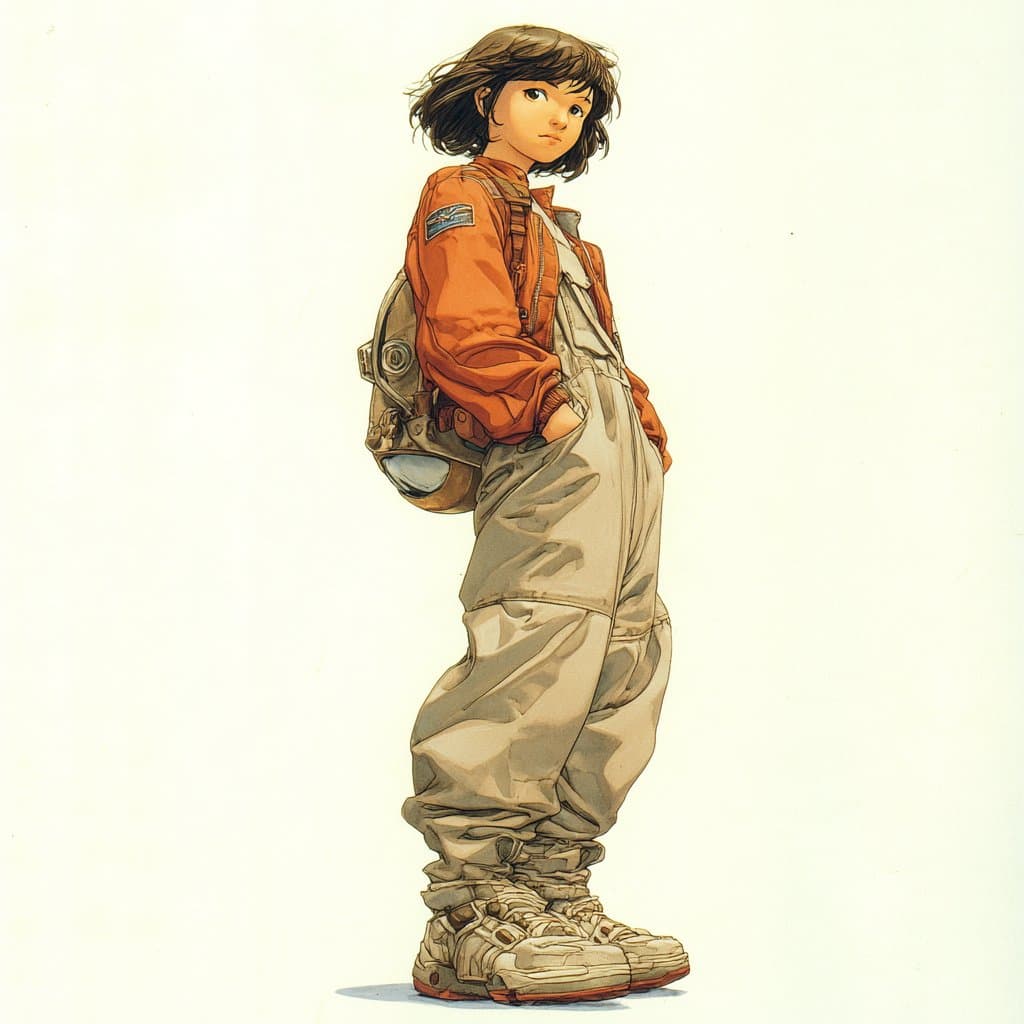
- Midjourney users are circulating a new retrofuturist anime look built around retro sci-fi sref
--sref 1828479729, with examples that lean hard into 1980s-90s Japanese concept-art backgrounds, orange utility gear, dense cityscapes, and hovering aircraft. - A second share from the same creator positions sketchbook sref
--sref 3908922393as an aged-notebook preset for architectural, anatomical, and naturalist-style drawings on parchment-like paper. - Other creator-facing presets in the same burst target cleaner commercial briefs: minimal brand sref
--sref 1692661577 --v 7 --sv 6for warm minimalist illustration, and neo-impressionist sref--sref 4183607271 --niji 6for glowing poster and cover art. - The range extends into moodier fashion territory, where emotional photo sref
--sref 5610821200 --v 7 --sv6is being framed as a surreal editorial look driven by red contrast, translucent materials, and spotlight lighting.
What styles are people saving
The most distinctive new code is the retrofuturist set around 1828479729. In the original share, the references are explicit: Otomo, Kawamori, and Miyazaki's sci-fi illustration phase. The attached images back that up with white megastructures, low-rise urban sprawl, orange jackets, and aircraft that feel closer to anime background design than to glossy concept art.
The companion code 3908922393 moves in the opposite direction. According to the sketchbook post, it pushes outputs toward explorer's notebooks, scientific bestiaries, and old anatomical studies. The examples show sepia linework, cross-hatching, handwritten marginalia, and parchment textures, which makes it a useful preset for worldbuilding docs, artifact sheets, or faux-archival key art rather than finished poster imagery.
How creators are turning them into briefs
The commercial angle is clearer in the promptsref shares. The minimalist code pairs 1692661577 with --v 7 --sv 6 and describes a warm red-green-yellow palette, hand-drawn texture, and simple compositions aimed at children's books, packaging, posters, and app or web illustration. Its linked breakdown at the prompt page frames the code less as a vibe experiment and more as a reusable house style.
The brighter alternative is 4183607271 --niji 6. In that write-up, the target look is luminous neo-impressionism: orange-red glow, deep blue shadows, particle texture, and animated-poster energy. Promptsref explicitly maps it to album covers, fantasy character art, ad creatives, and social visuals, with the companion guide adding style-weight and blending tips.
A third option, the fashion-oriented share for 5610821200 --v 7 --sv6, shifts the same "save this preset" logic into beauty and editorial work: red-heavy contrast, plastic-film translucency, and cinematic lighting for conceptual portraits, luxury ads, and album art.
The advanced move is stacking codes
The more advanced lesson from the wider conversation is that these SREFs are increasingly being used as ingredients, not single-click styles. In one workflow post, creator _VVSVS stacks four SREF codes, adds a profile, sets --ar 16:9, and pushes --stylize 500 for abstract bone studies. A later test reuses the same stack with --raw and --exp 20 on a Quetzalcóatl prompt, suggesting that once creators find a palette of compatible codes, they are carrying it across subjects instead of restarting from scratch.
That makes the current wave useful beyond novelty. 1828479729 and 3908922393 read like strong single-purpose presets, while the commercial and experimental shares show how those presets can be slotted into broader prompt systems for branding, posters, editorials, and concept development.