
Opus 5 builds single-file Three.js browser game prototypes through Codex
Meng To used Opus 5 through Codex and Claude Code to rebuild Sakura Crossing as a single-file Three.js scene. Other demos show one-prompt Fallout-style RPGs and a Pool Rooms survival-horror level.
TL;DR
- Browser game prototyping is moving from prompt-to-screenshot to prompt-to-playable-web-build: MengTo ran Opus 5 for two hours, with Codex driving Claude Code CLI, and packaged a Sakura Crossing-inspired San Francisco scene as one HTML file in MengTo's Sakura Crossing demo.
- The repeatable pattern was reference-first: live URL plus source repo gave coding agents enough context to study mechanics and rebuild them, according to MengTo's reference workflow.
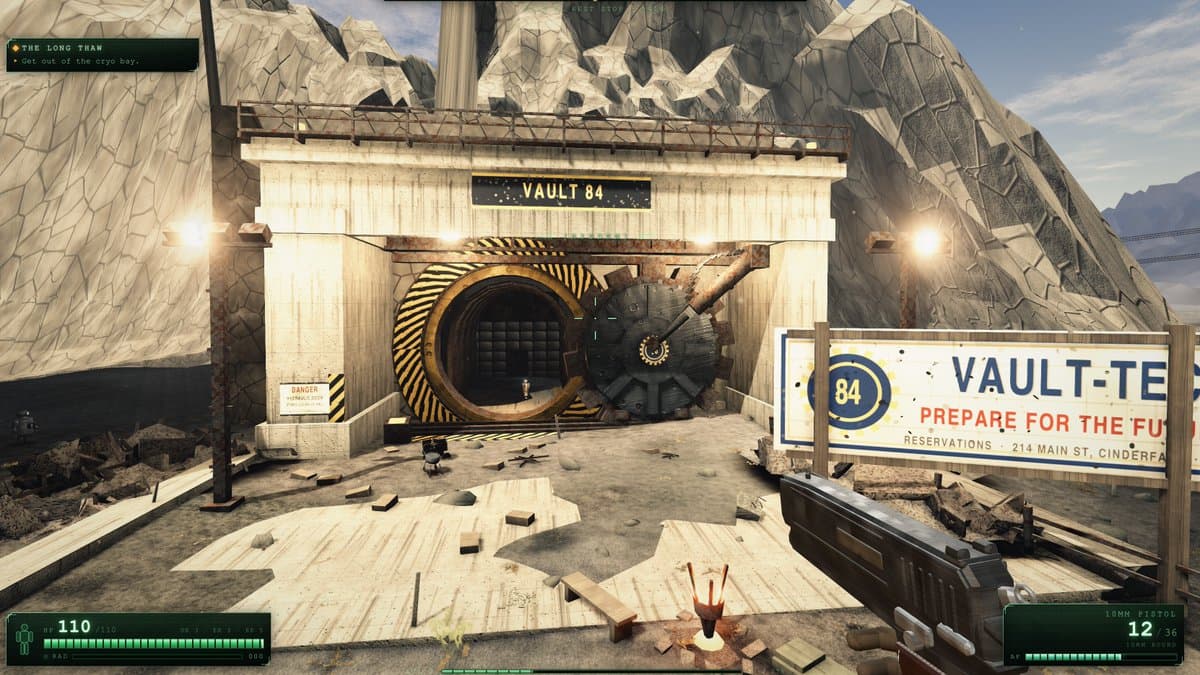
- Fallout-style browser demos are runnable now, but still rough: chrisfirst's Fallout demo ran in Three.js, while his caveat called it a buggy tech demo with glitches and weak dialogue.
- The most serious projects are already in maintenance mode: AIandDesign said Liminal Spaces had 35k lines of Godot code and Fable was refactoring it in a Godot update.
- Game designers are still separating graphics from game design: petergyang argued core loops, progression, and story are harder than one-shotting visuals.
Anthropic’s Opus 5 launch post positioned the model for agentic coding and long-running work, then the creator demos stress-tested that claim in games. The Sakura Crossing repo is a code-only anime scene: no image assets, Canvas2D signage, Three.js plus Vite. Chris First’s fallout-ember repo has modules for art, audio, world generation, NPCs, combat, inventory, minigames, and UI, plus Playwright screenshot and scene-check scripts. Anthropic’s Claude Code docs define the CLI side as an agentic tool that reads a codebase, edits files, and runs commands, while the subagents docs describe isolated task workers with their own context, tools, and permissions.
Sakura Crossing in one file
Opus 5 ran for two hours, but the useful detail was orchestration: MengTo had Codex use the Claude Code CLI, so both agents worked on the same Three.js build.
The source target mattered. The original Sakura Crossing repo documents an explorable Japanese railway-crossing neighborhood built from real Three.js geometry, with runtime Canvas2D signs, fascia, lanterns, and price strips instead of image assets.
MengTo said the GitHub repo was enough reference in a reply about inputs. Codex was the command center in his Claude Code CLI follow-up.
The artifact was not framed as finished. MengTo's token-limit reply named UI and detail passes as next work, while another reply said there was still a lot to do to make it closer to San Francisco.
Strong reference prompts
MengTo reduced the workflow to three inputs: a strong reference, the live URL, and the source repo. The agent studies mechanics, recreates them, and produces a working place to experiment.
His example was a Trevor Noah-inspired book interaction remade as fictional manuals for Codex, Claude Code, and Cursor in the same post. When asked about context, MengTo said the X post alone was enough because it contained the GitHub link and video in a follow-up.
The pattern showed up again in a reply about strong references, where he said the approach works especially well with strong refs.
Fallout as an orchestration prompt
chrisfirst’s earlier Fallout build was a 2.3 MB single HTML file with an explorable world, unique landmarks, a functional Pip-Boy, dialogue trees, and a vault in progress, according to his first Fallout post.
The prompt reads like a production breakdown:
- Terrain and environmental storytelling.
- Pip-Boy interface.
- Weapon and armor systems.
- NPC dialogue trees.
- Atompunk 1950s art direction and world design.
- Hacking, lockpicking, body searches, and container looting.
- A harsh visual critic sub-agent for each item.
- A
/loopinstruction until the critic was “utterly wowed.” - Side-by-side blind comparison against the target game.
- Three.js as the required runtime.
chrisfirst said the run had to happen in Claude Code, not regular chat, in a reply to a doubter. He called the build “all Claude Code” in another reply.
The follow-up details were very game-specific: one update said the model had made building interiors, and another update showed lockpicking.
Buggy tech demos
chrisfirst later separated the demo from a shipped game. He called it a buggy mess in one reply: weak dialogue, many glitches, but still a browser-run tech demo.
The artifact also split into versions. The first post described a 2.3 MB single HTML file in the earlier Fallout post, while a later clarification said the newer version was not one HTML file and would live in GitHub.
Performance was still being patched. New areas glitched for a second, and he was working with Claude to fix it in a performance reply.
Pool Rooms as a Godot codebase
AIandDesign’s Pool Rooms clip came after a week, one Codex reset, and several Fable five-hour windows in the Pool Rooms post. The bigger project was Liminal Spaces: 35k lines of Godot code and a Fable refactor in the codebase update.
The game loop was already more than a flythrough:
- World shape: AIandDesign said there were 9 procedurally generated environments and no two sessions shared the same random seed in a procedural-generation reply.
- Goal loop: the player enters a zone from an elevator, follows a compass, reaches the next elevator, and escapes after the ninth space, from the mechanics breakdown.
- Threats: ghost-like demons kill on contact, can be killed with a flashlight, and stop following when the player reaches the next room, also from that breakdown.
- Horror behavior: the ghosts use a “weeping angels” effect, jumping closer when the player looks away and back, from the same mechanics post.
- Blackouts: the player has to stop moving, ghosts freeze too, and AIandDesign was considering environment changes after the lights return in the blackout note.
The tooling was messy in the way real projects get messy. AIandDesign said Fable and Sol Ultra were tag-teaming the project in a model-stack reply, and a refactor update said Sol modularized a 16k-line GDScript file that had swallowed all 9 level generators.
Physics tests, not screenshots
The strongest demos were simulation-heavy.
om_patel5 described a browser waterbending sim with real-time fluid physics, snow deformation, procedural terrain, cloth simulation, spell lighting, and a third-person surf system in the waterbending post. The same post put the run at around 9 hours, 4 million tokens, a Claude-written spec refined over about 15 messages, then roughly 100 follow-up messages for bug fixing.
chrisfirst’s V8 engine prompt asked Opus 5 for a single self-contained HTML file with 112 clickable parts, exact slider-crank piston kinematics, cam timing, valve lift graphs, subsystem isolation, and a “no TODOs” delivery requirement in the V8 prompt.
stevibe’s WebGL2 burn test turned model choice into a line item: Fable 5 cost $1.822060, Opus 5 cost $1.436880, GPT-5.6 SOL cost $0.560380, and Kimi K3 cost $0.286888 in the model comparison. His ranking for that visual test was Fable 5, Opus 5, Kimi K3, then GPT-5.6 SOL.
minchoi’s roundup showed the format spreading fast: a 24-hour game, snow physics, a Katamari clone, a Battlefield-style build, Fallout in one HTML file, dynamic-weather racing, procedural car graphics, a design-to-app conversion, a Rocket League-style game, and Daggerfall from one prompt in minchoi's 10-demo thread.
Game-design caveats
petergyang separated fancy graphics from finished game design in his caveat: core loops, progression systems, and story are the hard parts.
LLMJunky made a similar distinction after Slopet League. In one reply, he said good games are still hard to make, his game was not something he would publish, and AI does not make someone a good storyteller or designer.
Reference depth helped. LLMJunky said the Rocket League-style build worked partly because vehicles, fields, physics, and cars were well documented in a reply about limitations.
The cost was visible too. LLMJunky estimated the Slopet League run at about $150 in a cost reply, plus 60% of one Anthropic Max x5 weekly allowance and a little Codex usage in a usage reply.