
Seedance 2 adds character-order prompts and negative-line cleanup in creator tests
Creators are using Seedance 2 prompts that specify left-to-right staging, foreground order, and no-line negatives to reduce first-frame failures and artifacts. The pattern is being reused for crowd scenes, chase shots, ad concepts, and emotion tests across Runway and Dreamina handoffs.
TL;DR
- Creators testing Seedance 2 are getting more stable multi-subject scenes by spelling out spatial order in the prompt, with phrases like "from left to right" and "foreground to background," according to underwoodxie96's backstage prompt trick.
- Negative constraints have turned into a real control surface: underwoodxie96's cleanup note adds "no red lines, no annotation lines, no guide lines," while AllaAisling's soccer prompt system repeatedly bans duplicate balls, broken physics, text overlays, and UI.
- The strongest workflows read more like shotlists than prose. AllaAisling's ice canyon prompt, techhalla's explosion timeline, and Artedeingenio's frog transformation prompt all break action into timed beats.
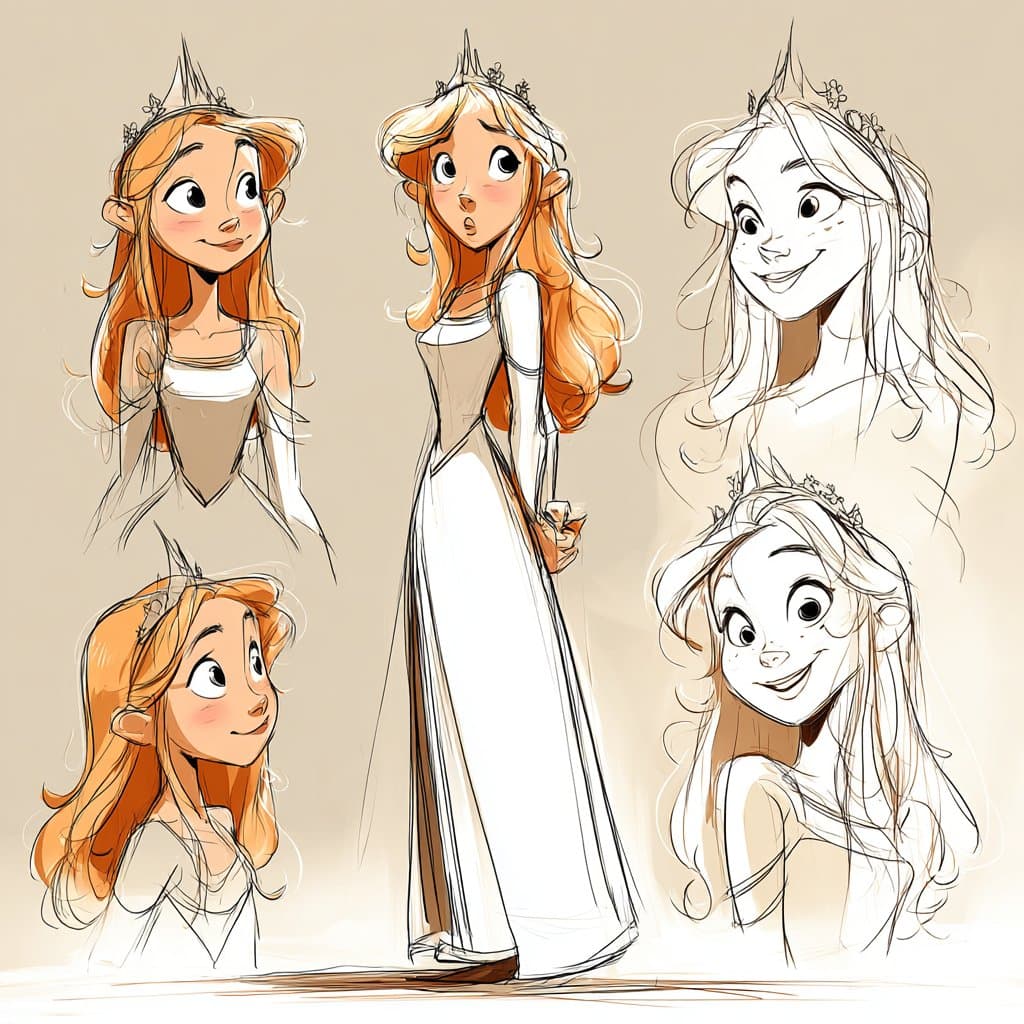
- Character consistency is getting pushed upstream into reference prep. Artedeingenio's character-sheet reply says uploaded character sheets are essential, while CuriousRefuge's consistency workflow builds multi-shot sequences from a single GPT Image 2 character board.
- Seedance is also showing up as a middle layer inside bigger pipelines, from CuriousRefuge's restoration thread that runs Seedance between GPT Image 2 and Topaz Astra to techhalla's music-video walkthrough that feeds it Magnific-generated images plus audio.
You can compare ByteDance's launch post with Dreamina's product page, which quietly spells out the 9-image, 3-video, 3-audio reference stack. Then the creator tests get more interesting: underwoodxie96's prompt note is about stage blocking, AllaAisling's soccer thread turns negative prompts into physics rules, and CuriousRefuge's restoration workflow uses Seedance less like a generator than a video restyling pass.
Character order
The cleanest new prompt trick in the evidence pool is basic blocking. underwoodxie96's backstage prompt trick says explicitly describing character order and position, including "from left to right" and "foreground to background," noticeably reduced failures in a crowded World Cup backstage scene.
That same instinct shows up elsewhere as motion choreography instead of cast placement. AllaAisling's ice canyon prompt maps the chase beat by beat, while AllaAisling's fugitive corridor prompt locks the camera into a wide-to-tight pursuit path through collapses, drops, and turns.
What matters is how concrete the language gets:
- subject order
- camera path
- beat order
- spatial depth
- failure states to avoid
That is a lot closer to directing a previs shot than typing a vibe.
Negative constraints
Seedance creators are writing negatives for specific recurring glitches, not generic quality cleanup. underwoodxie96's cleanup note targets red lines, annotation lines, and guide lines after seeing first-frame artifacts.
AllaAisling's soccer templates turn the negative prompt into a rules engine. Across the thread, the recurring bans are:
- no duplicate ball
- no extra limbs
- no broken physics
- no teleporting players or objects
- no text overlays, logos, or UI
- no crowd morphing
- no identity blending when the camera is an FPV drone
The same pattern appears in character work. Artedeingenio's carriage prompt tells the model that only one elderly sorceress exists in the scene and forbids copies, mirrored versions, background versions, or additional sorceresses.
Shot timelines
A lot of the best Seedance prompts in this batch are basically edit decisions written in plain text. AllaAisling's ice canyon prompt runs from first crack to final escape. techhalla's explosion timeline breaks a city blast into 0 to 4 second, 4 to 8 second, 8 to 12 second, and 12 to 15 second phases. Artedeingenio's frog transformation prompt scripts a full 15-second single shot with camera moves, sound design, and a final frame.
The shared structure is easy to spot:
- establish the space
- trigger one event
- control escalation in short beats
- specify the camera's response
- lock the ending frame
That format also shows up in prompt packs designed for remixing. techhalla's seven action clips thread pitches seven distinct action setups in LTX, while replies in the thread show other creators reusing the structure with their own scenes.
Character boards
The reference-heavy workflows are getting more disciplined. Artedeingenio's character-sheet reply says the model needs uploaded character sheet images as a visual guide throughout generation, not just a text description.
The pattern in Artedeingenio's examples is consistent:
- generate character sheets in Midjourney
- upload those sheets into a Seedance workflow inside Mitte
- write a single-shot prompt with timed beats
- use negatives to prevent duplicate characters or copyrighted references
CuriousRefuge pushes the same idea into multi-shot sequences. CuriousRefuge's consistency workflow starts from a single GPT Image 2 character board, then expands into multiple characters, destinations, and art directions while keeping wardrobe, environment, and visual language fixed up front.
One shot at a time
One useful correction comes from kaigani's Dreamina Octo experiment and kaigani's follow-up note: the underlying prompts they inspected do not bother with multishot prompts, they prompt one shot at a time.
That lines up with several of the stronger examples here. kaigani's educational game demo is a single product-ad concept with a clear category, announcer voice, GUI overlay, and one classroom mechanic. MayorKingAI's Oldboy-inspired alley fight is one contained homage shot. AIwithSynthia's first World Cup match is a longer narrative brief, but it is still structured as one continuous emotional journey rather than a stitched sequence of unrelated moments.
Kaigani's other warning matters too. kaigani's excessive-running note says dropping in a full script produced a scene with excessive running, which is a good reminder that narrative intent still needs to be translated into shot logic.
Restoration and sync workflows
The most practical creator tests treat Seedance as a transformation layer between other tools. CuriousRefuge's restoration thread lays out a four-step restoration pipeline for old footage.
The sequence is unusually concrete:
- run the original clip through Seedance 2 Omni to restyle it as stabilized 4K footage
- pull 3 to 8 stills from that result
- upscale and modernize those stills in GPT Image 2
- send the refined stills and the Step 1 video back into Seedance to match the video's quality and style to the new references
- finish sharpening in Topaz Astra
Techhalla's music-video walkthrough uses the same hub-and-spoke logic for audio sync instead of restoration. techhalla's music-video walkthrough builds characters and scenes in Magnific, then feeds three images plus audio into Seedance for lip-synced or performance-led clips.
Prompt ceilings and surfaces
One more concrete constraint surfaced in replies: underwoodxie96's API-limit note says Seedance 2's API caps prompts at 2,500 characters, which is why some prompt builders are now exposing character counts in their canvas UIs.
That limitation helps explain why creators are spreading the workload across tools and surfaces instead of stuffing everything into one master prompt. In this evidence set alone, Seedance shows up inside Dreamina, OpenArt, Leonardo, PixVerse, Runway, Flora, and Mitte, according to AIwithSynthia's OpenArt workflow, MayorKingAI's Leonardo workflow, AllaAisling's PixVerse workflow, 0xInk_'s Flora reply, and Artedeingenio's Mitte workflow.
The official product pages describe the same expansion from the other side. Dreamina's Seedance 2.0 page says the model can take up to 9 images, 3 videos, and 3 audio clips, while ByteDance's launch post frames Seedance 2 as a multimodal reference and editing system, not just a text-to-video box. The creator tests here mostly agree with that framing. The prompt is getting shorter, but the workflow around it is getting much bigger.