
Perceptron releases Files API with reusable upload IDs
Perceptron’s Files API lets developers upload an image or video once and reference it by ID across later requests instead of resending base64 or URLs. That simplifies repeated multimodal workflows and cuts transfer overhead for video-heavy pipelines.
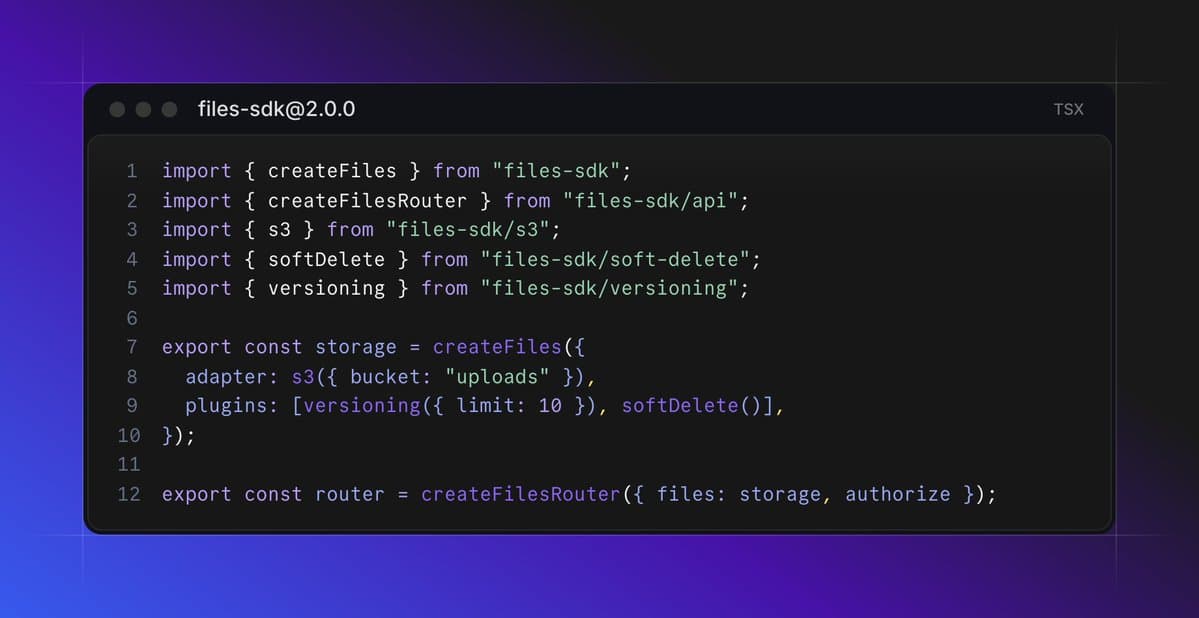
TL;DR
- Perceptron shipped a Files API that lets developers upload an image or video once, then reference that asset by ID in later requests, according to Perceptron's launch post.
- The company says the same file ID works across Mk1, Isaac, and its agentic APIs, which Perceptron's follow-up reply framed as an OpenAI-compatible path away from resending base64 blobs or hosting temporary URLs.
- Perceptron pitched the release at repeated multimodal workloads, with Perceptron's enterprise use-case post naming manufacturing, construction, geospatial, robotics, and retail.
- ArmenAgha's post said the point is making hours-long video workflows practical by uploading footage once and querying it multiple times across models and agentic harnesses.
- The launch is live now, with Perceptron's availability post linking both the blog post and docs.
You can jump straight to the blog post and docs, and ArmenAgha's post adds the most concrete deployment detail: repeated queries over hours of footage. Perceptron also tied the API to its earlier visual reasoning write-up, which focused on backtracking and spatial grounding in visual games like Set!.
Reusable file IDs
Perceptron's core change is small but useful: media becomes a reusable object instead of request payload. The launch post says developers can upload an image or video once and reuse that file ID across later requests.
That removes two common bits of glue code:
- repeated base64 serialization inside every call
- self-hosted asset URLs for temporary media access
- per-request reupload overhead when the same clip is queried multiple times
Cross-model media reuse
The same uploaded asset can be referenced across Mk1, Isaac, and Perceptron's agentic APIs, according to Perceptron's follow-up reply. That matters more for orchestration than for one-shot prompts, because the file handle survives across model hops instead of being repackaged for each step.
Perceptron also called the interface OpenAI-compatible in that same reply, suggesting the company wants this to fit existing multimodal client patterns rather than force a new request shape.
Video-heavy workloads
Perceptron aimed the release squarely at long and repeated video analysis. Its use-case post lists manufacturing, construction, geospatial, robotics, and retail as target domains.
ArmenAgha put the scaling claim more bluntly: hours of footage can be uploaded once, then queried multiple times across models and agentic harnesses. That is the clearest statement in the evidence set about why this exists at all.
Availability and docs
The API is available now. Perceptron's availability post links the official blog post and docs, while AkshatS07's launch post adds one extra product detail, generous limits meant to push Perceptron's context windows further.