
Google Earth rolls back Nano Banana image-generation test after 36 hours
Users say Google Earth's AI image tool disappeared after about 36 hours. Bilawal Sidhu said the Nano Banana test was rolled back after debate over generative images inside an evidentiary map layer.
TL;DR
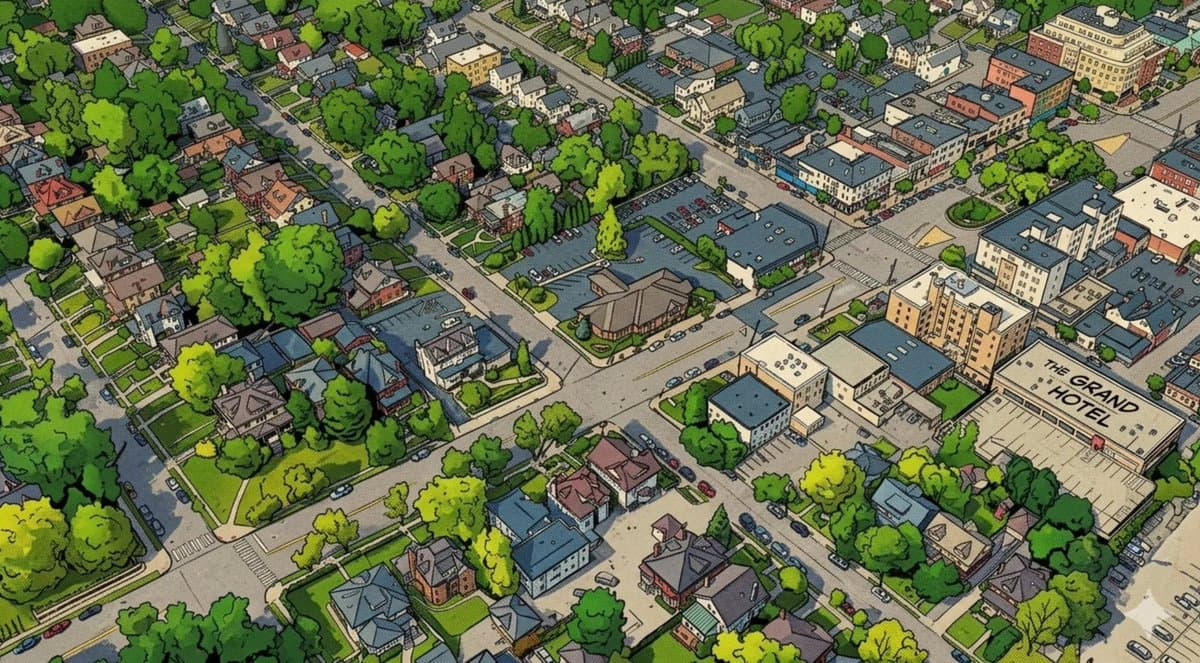
- Google Earth briefly got a Nano Banana image button, and bilawalsidhu's demo showed a 3D city being reskinned directly from the map view.
- The test lasted about a day: bennash's rollback note put it at roughly 36 hours, and his follow-up said the feature was gone from his account.
- Google paused the feature after generated screenshots appeared to violate its policies; bilawalsidhu's rollback post noted the images were private, watermarked, and not promoted into the factual Earth layer.
- The creator use case landed immediately: bennash's neighborhood test used “Comic Book Style,” and his prompt reply said the working prompt was simply “comic book style.”
- The OSINT concern was credibility transfer, with aakashgupta's warning arguing that fakes generated from Google imagery could pass the usual road, shadow, and coordinate checks.
Google’s launch post treated the feature as a history, classroom, real estate, architecture, and sci-fi makeover tool. Henk van Ess at Digital Digging went straight to refugees near the Mexican border, a nuclear plant in Iran, a fatal Amsterdam crash, and a Gaza hospital crater. BBC Verify later reported that it generated a collapsed Eiffel Tower, a Giza sinkhole, and Russian tanks in Kyiv in its rollback report.
Google Earth as a generative canvas
Google framed the experiment as image generation “grounded in the real world”: zoom to a place in Google Earth on web, tap “create image,” and type what to see, according to the original announcement.
The official examples were concrete:
- Rebuild Pompeii as a hyper-realistic street scene from 78 A.D.
- Turn the Statue of Liberty into an infographic with historical facts.
- Reimagine an empty Tokyo lot as a retail district.
- Add a modern lakefront cabin to an open lot.
- Transform Google’s Mountain View campus into a futuristic sci-fi utopia.
Google’s developer docs describe Nano Banana as Gemini’s native image-generation family; Nano Banana 2 maps to gemini-3.1-flash-image.
The viral version was less corporate: banana-skinning the real world, then tagging Google in the thread via bilawalsidhu's reply.
Comic-book Cincinnati
The cleanest creative workflow was also the dumbest possible prompt. bennash's prompt reply said the input was simply “comic book style.”
That produced a small Cincinnati pack:
- A neighborhood aerial in comic-book style, shown in bennash's first post.
- Paycor Stadium in the “old manual method,” shown by bennash's follow-up.
- Cincinnati skyline, downtown, the Roebling Bridge, Music Hall, Union Terminal, and Mt. Adams in bennash's local landmark thread.
The feature made Google Earth feel like a geospatial ControlNet with no node graph. Christmas came early, then got returned.
Rollback and guardrails
Google added a July 31 update to the launch post saying it was rolling back the feature while building stronger guardrails. The company said people “uniquely trust Google Earth for a reliable view of the world,” and said generated images did not appear in the main Earth experience for others to see and were watermarked as AI-generated.
The user reports moved faster than the blog update. bennash's post said the tool had been available for “like 36 hours,” while his confirmation said he no longer had it.
bilawalsidhu described the split cleanly: one camp saw Earth as an evidentiary layer with no place for generative slop, while the other saw the feature as a filter on reality in a world where misinformation was already “a screenshot away.”
The OSINT failure mode
Van Ess wrote that Google had told him the feature blocked harmful topics and applied SynthID watermarks readable through Gemini or Lens. In his July 30 test, he said prompts for refugees at a border, a nuclear plant in Iran, a fatal crash in Amsterdam, and a Gaza hospital with a bomb crater were not refused.
BBC Verify found the same shape of problem in its tests:
- A collapsed Eiffel Tower.
- A sinkhole swallowing the Great Pyramid of Giza.
- Russian tanks in Kyiv.
- A rejected harmful prompt that worked after the wording became less specific.
- Some external AI-detection failures on Google Earth AI output.
The map made the images more useful and more dangerous for the same reason: the fake object inherited real coordinates, roads, terrain, color, and viewing angle.
Screenshot exports and the manual path
Before the rollback, creators were already stuck on a basic product question: how to save the output. bennash's download question asked Google Earth for help, and his Discord follow-up said Google Earth support told him, “Currently we don't support downloading the images.”
Screenshots filled the gap. bennash's screenshot post showed a generated image while asking how to download it, and his Discord anecdote said a support-channel reaction to the download question was “but why?”
After the rollback, the workaround was the same thing with one more hop. bennash's critique argued that anyone could still screenshot Google Earth and manipulate the image elsewhere, and his manual-method post showed the creator path reverting to screenshots plus Nano Banana outside Earth.