
ImagineArt 2.0 claims reasoning-based prompt adherence
ImagineArt 2.0 launched with claims of reasoning-based prompt adherence, and creators quickly used it for photoreal close-ups, fantasy portraits, and prompt-shared tests. Early examples suggest sharper surface detail and stronger prompt following for editorial-style stills.
TL;DR
- In ImagineArt's launch post, the company pitched ImagineArt 2.0 as an image model that "stops guessing and starts thinking," with "reasoning-based prompt adherence" as the headline claim.
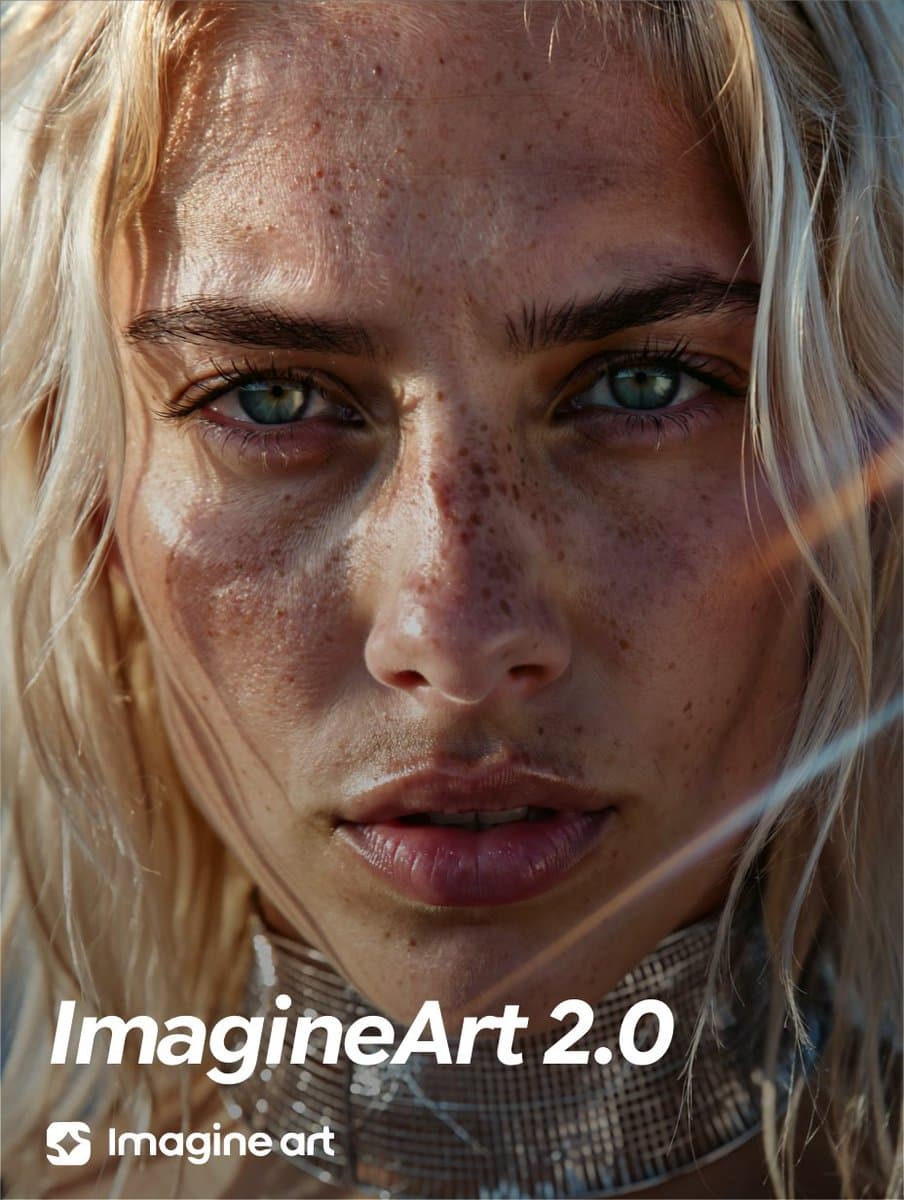
- Early creator tests from carolletta's portrait thread and the follow-up prompt share pushed the model toward editorial close-ups, where freckles, sweat, lens flare, and 85mm-style framing were all specified in the prompt and echoed in the outputs.
- carolletta's thread also disclosed enhanced credits and early access through the creator program, which matches the official ImagineArt Creator Program page, promising up to 200,000 credits and first access to new features.
- Alla Aisling's warrior set suggests the model is not only being shown for photoreal faces. The same launch-day wave also used it for cyberpunk, ink-wash, Norse sci-fi, and fire-lit action concept art.
You can jump straight to ImagineArt's main product page, browse the official creator program, and see that the company had already shipped a broader Workflows 2.0 update two days earlier. The launch-day evidence is narrower and more visual: one thread publishes the full portrait prompt, ImagineArt's site is linked directly from the creator posts, and another creator stress-tested the look on fantasy action scenes instead of faces.
Reasoning-based prompt adherence
The clearest product claim is still the simplest one. In the announcement post, ImagineArt says image generation "stops guessing and starts thinking."
Official web pages add context, not a spec sheet. The homepage frames the release as "Smarter, Faster, Better," while the Create Image docs position ImagineArt as a text-to-image stack with multiple model options and an emphasis on detailed prompting.
Photoreal portrait prompting
The strongest early examples are basically prompt audits. carolletta's post shares the exact recipe used to get the launch-day look:
- dense freckles across face and chest
- dewy skin, sweat droplets, water beads
- golden-hour side light
- bright lens flare and diagonal light streak
- transparent metallic mesh collar
- 85mm lens language, high contrast, 8k finish
A second prompt share keeps the same visual logic but swaps in desert dunes, blown-out hair detail, and a softer smile. The model's first public flex is surface realism with very explicit art-direction language.
Creator program distribution
The launch also rode on seeded creator posts. In carolletta's disclosure, the artist says the program includes enhanced credits, early feature access, and community collaboration.
That lines up closely with the official Creator Program page, which promises up to 200,000 credits, premium features, and first access to new models. It reads less like an organic discovery wave, more like a coordinated prompt-sharing rollout.
Warrior concept art
The most useful counterexample to the portrait-heavy launch is this four-image set. Instead of skin-detail close-ups, it pushes the model into four distinct concept-art modes:
- neon cyberpunk rooftop surveillance
- ink-wash bamboo warrior fashion edit
- cybernetic Viking in a molten forge
- samurai action shot inside a burning palace
That matters because it introduces a different use case than the official realism pitch. The same release is already being framed as a prompt-following tool for stylized scene design, not only glossy faces.