
MengTo uses Claude Code and Hi3D MCP to generate four game characters
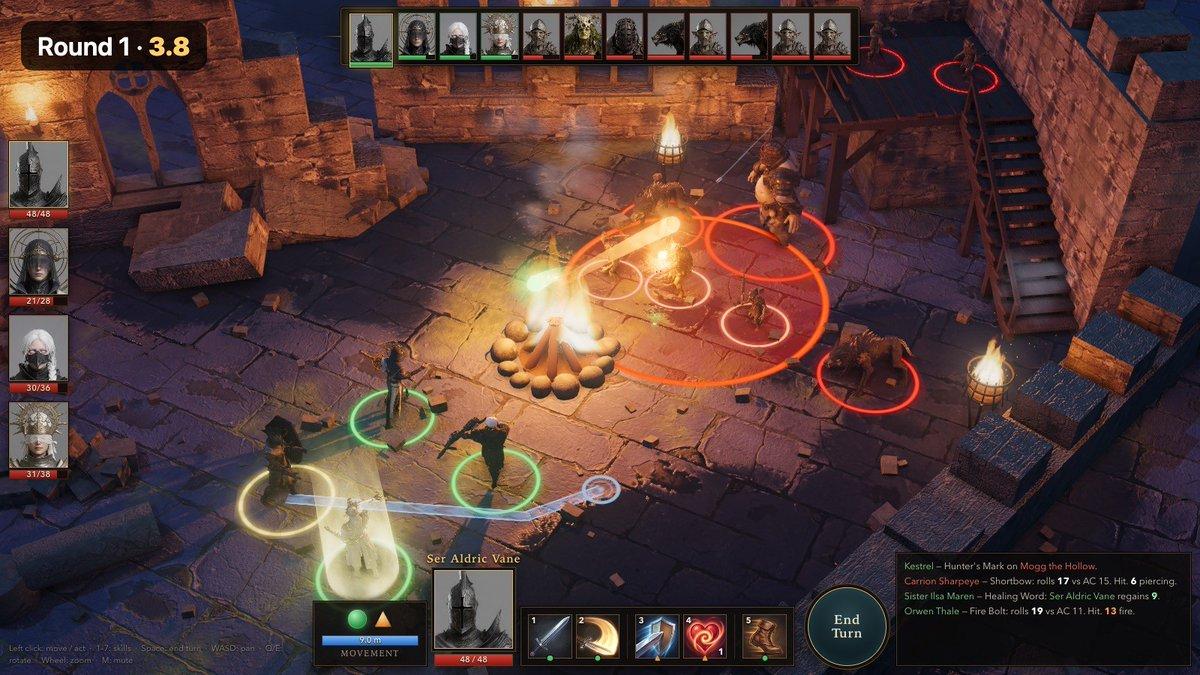
MengTo says Fable 5.2 built a Three.js game in two days. Claude Code used character pictures and Hi3D's MCP to generate four models, while a screenshot-driven feedback loop guided development.
TL;DR
- A turn-based Three.js game took two days to build with Fable 5.2, MengTo says.
- Four character pictures became GLB models through Claude Code and Hi3D’s MCP, according to MengTo’s workflow breakdown.
- Visual development started with an invented screenshot, with a fresh agent scoring each round in MengTo’s screenshot-first workflow.
An invented screenshot makes a sharp art brief: the dream-loop skill has a separate critic compare the live render against it. MengTo’s character recipe gets as specific as an arm angle: 35 degrees.
Four GLBs through Hi3D
MengTo supplied the character pictures; Claude Code handled the tool calls. He called Fable 5.2 his current top pick with a “high ceiling”, and shared the demo as a paid partnership.
With Hi3D’s MCP connected, Claude Code handled five steps, according to MengTo’s breakdown:
- Uploaded each character image.
- Checked the generation cost.
- Started all four jobs at once.
- Polled until the jobs finished.
- Downloaded each model as a GLB.
Hi3D did the model generation. MengTo credited it with the hard part, saying the same work would take far longer with procedural code alone.
Hi3D’s MCP integration guide documents task submission, status polling and download links. Its hosted endpoint is https://mcp.hitem3d.ai/mcp, with client credentials required for authentication.
Screenshot targets and a fresh critic
MengTo used Seedream 5.0 Pro for the references and later visual targets. A fresh agent scored each round out of 10.
Development follows five steps in the dream-loop README:
- Generate an imagined screenshot of the finished scene.
- Build toward that image.
- Have a separate critic compare a live screenshot with the target.
- Return to building with the critic’s feedback until it is satisfied.
- Optionally generate a better target from the current result.
The MIT-licensed skill installs with npx skills add achimala/dream-loop. Its prerequisites include image generation and vision input; subagents are optional but strongly preferred.
Ten rounds, 78 prompts
Day one’s agent score rose from 3.8 to 7.6 out of 10 over ten rounds, according to MengTo. His prompts included “less generic, more action-RPG style” and “keep tuning.”
MengTo also linked all 78 prompts and credited two supporting resources:
- Sound effects: earshot, a local audio toolkit available as a CLI, Python API and MCP server.
- Stone and rocks: Poly Haven, a free, human-made asset library with CC0 licensing.
The A-pose character recipe
MengTo packaged the character workflow as game-dev-character-model. His demo recipe specifies:
- An A-pose with arms 35 degrees away from the body.
- Flat lighting and a plain grey background.
- Hi3D v3.0 Master with PBR.
- A GLB with two 8K maps.
The live skill file currently documents Meshy or Tripo through Fil; the Hi3D settings above come from the demo screenshot. That file explains the source-image constraints: hard shadows can bake into textures, while arms pressed against the torso can fuse into the body.
Hi3D is free to try, but MengTo’s thread gives no total spend for the four character models.