
Midjourney V8 updates film-still workflows with deeper compositions and ECLIPTIC remake tests
Creators are moving from V8 calibration complaints to darker film-still scenes, fashion shots, and worldbuilding tests, with ECLIPTIC remakes showing stronger depth and lighting. Retest saved SREF recipes if you rely on V8 for cinematic ideation.
TL;DR
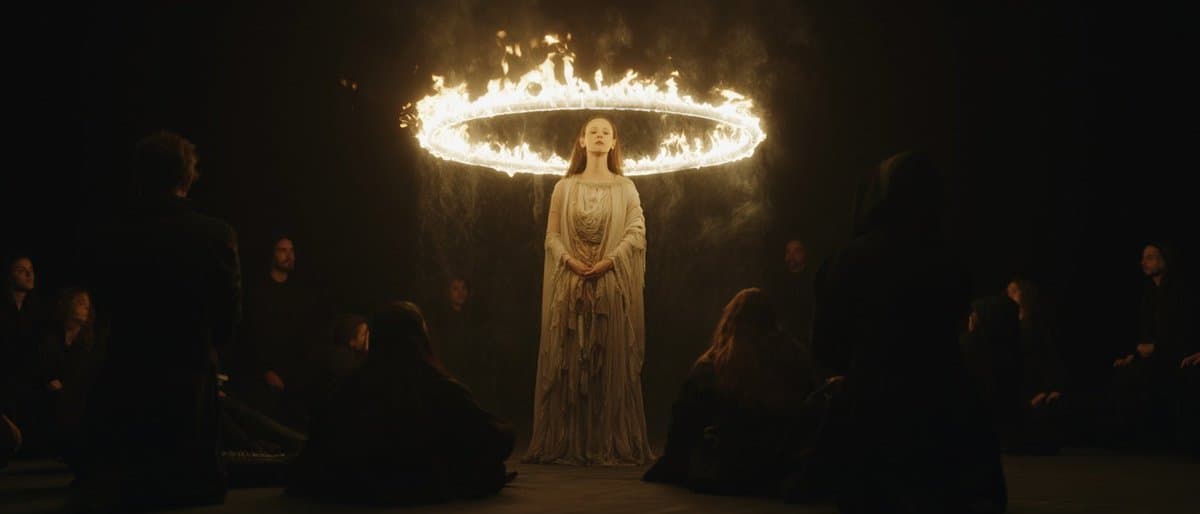
- Midjourney V8 is already being tested less as a prompt lab curiosity and more as a film-still engine, with creators repeatedly pointing to stronger composition, lighting, and especially perceived depth in dark scenes, according to depth claim and Dustin Hollywood’s ongoing V8 showcase.
- The clearest case study is Dustin Hollywood’s remake of his earlier AI short ECLIPTIC, where he says V8 let him rebuild the project visually first and then move the stills into animation tools like CapCut, Dreamina, and Seedance remake post.
- Those tests are expanding beyond one sci-fi thread: the same V8 runs are producing neon body-horror frames, underwater portraits, fashion editorials, and desert tableaux in a single creator’s sequence of posts neon set desert set.
- Style-reference workflows are still part of the picture, but creators are treating them as recipes to re-check under V8 rather than fixed looks, with one post sharing an Otomo-style cyberpunk
--sref 2781892103anime sref while another shows a dense multi-sref prompt stack from earlier Midjourney practice multi-sref prompt.
What changed in V8 for cinematic stills
The most consistent creator takeaway is not higher spectacle but thicker scene construction. Dustin Hollywood’s depth examples explicitly calls out composition, lighting, and “DEPTH,” and his surrounding posts back that up with wide shots built around haze, backlight, suspended debris, and layered silhouettes rather than flat poster-style framing. Across the showcase run, V8 outputs move from ritual sci-fi tableaux to confined neon interiors and submerged figures while keeping strong foreground-background separation neon set.
That matters for film-still workflows because the frames read like coverage, not just key art. The shots in part 3 and ECLIPTIC stills suggest blocking, atmosphere, and camera distance choices that can be carried forward into edit and motion treatment.
How ECLIPTIC is being rebuilt
Dustin Hollywood says the V8 rabbit hole led him to generate “an entirely new film update” for ECLIPTIC, his first AI-made film, and that the next step is animation in CapCut, Dreamina, and Seedance ECLIPTIC remake. That is a concrete creator workflow: lock the script first, rebuild visual language in Midjourney, then hand selected frames to downstream motion tools.
The remake posts show how V8 is being used for worldbuilding, not only single-shot moodboards. One clip names “Dominion” as the supermassive black hole the planet orbits Dominion clip, while later stills add recurring motifs — the oracle, twin suns, tactical figures, floating bodies, and red-lit closeups — that feel like a coherent production pack rather than isolated generations oracle still part 4.
Where creators are pushing the look next
The broader experimentation around V8 is unusually wide. Dustin’s later sets jump from glossy fashion portraits and underwater faces to motel-noir, street-surreal, and desert Americana compositions part 5 part 6. Earlier images in the same run also lean into biotech neon, enclosed cockpit-like spaces, and body-transformation imagery neon set.
Style references still matter, but they are behaving more like starting points than guarantees. Artedeingenio’s anime sref shares a specific code for 80s-90s Japanese cyberpunk anime, while _VVSVS posts a more old-school parameter stack with multiple --sref values, --exp 20, a profile, and --stylize 500 multi-sref prompt. Together they suggest the V8 opportunity is not abandoning saved recipes; it is rerunning them against V8’s deeper staging and seeing which ones survive the transition.