
Nano Banana creators introduce brand-collage prompt for scrapbook moodboards
Nano Banana creators shared a scrapbook-style brand-collage prompt that turns one brief into editorial moodboards for decks, socials, and campaigns. Try it when you need fast brand-specific visuals with materials, product focus, and heritage cues built in.
TL;DR
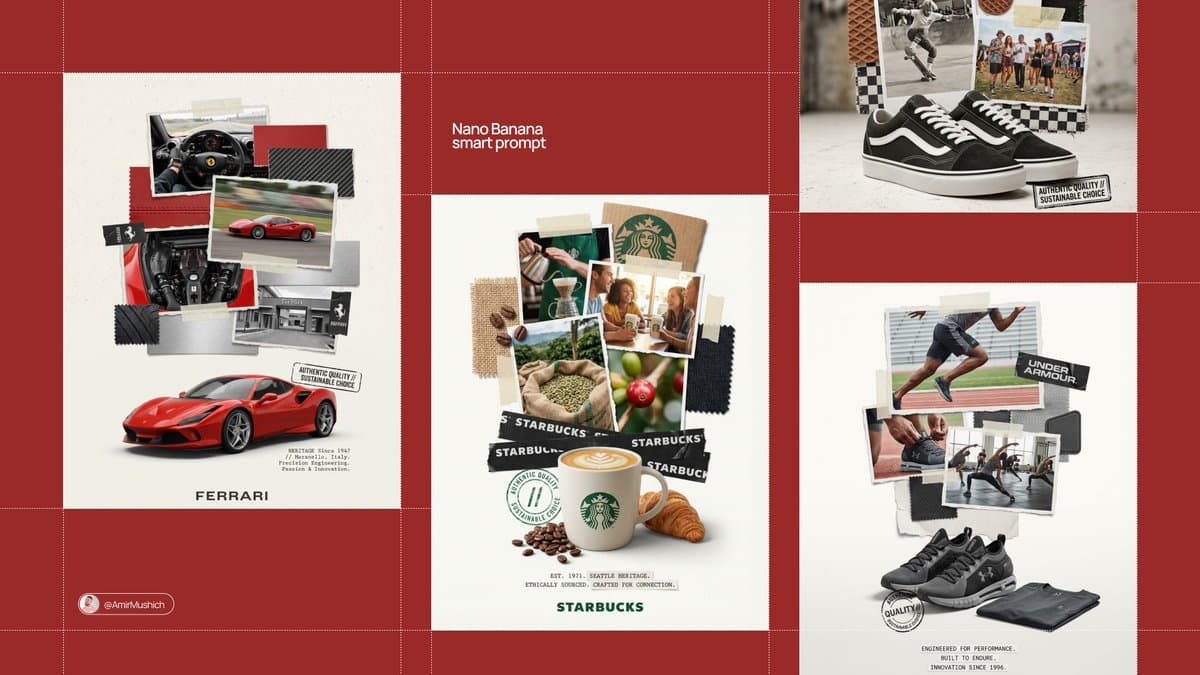
- Nano Banana creators shared a reusable scrapbook-style brand moodboard prompt that turns a brand name and product type into an editorial collage with a hero product, torn-paper photo stack, material swatches, branded tape, and heritage copy, according to the launch thread.
- The full prompt structure is unusually specific about composition and finish: bottom-centered 3D product render, overlapping lifestyle images, distressed stamp text, and high-key studio lighting with macro detail on paper grain and fabric fibers, as laid out in the prompt post.
- Early examples show the format translating across categories including Ferrari, Starbucks, Vans, and Under Armour, with each output keeping brand cues while swapping materials and supporting imagery, as shown in the example set.
- Creators are already framing it as a fast content system for decks, presentations, articles, and socials rather than a one-off aesthetic trick, with a follow-up demo claiming a branded moodboard can be generated in under a minute.
What the prompt specifies
The core recipe is a layout system, not just an aesthetic prompt. In the full text, the hero product sits at the bottom center as a realistic 3D render, while a vertical stack of torn-edge photos rises above it with usage shots, detail close-ups, and material swatches tied to the category.
The branding layer is doing a lot of the work. The prompt calls for semi-transparent masking tape, black duct tape printed with the brand logo, a distressed stamp reading “AUTHENTIC QUALITY // SUSTAINABLE CHOICE,” and small sans-serif or typewriter text blocks describing the brand’s heritage. That makes the output read more like a finished campaign board than a generic image grid.
What the outputs look like in practice
The examples in the launch thread show why the template is portable. Ferrari gets carbon, track, and cockpit imagery; Starbucks shifts to latte art, coffee cherries, and burlap textures; Vans leans into waffle soles, checkerboard fabrics, and skate photos. The composition stays fixed while the brand evidence changes.
A later Vans example from the demo post positions the workflow as production-friendly for decks, analytical docs, presentations, and socials. Another remix in the BIC example applies the same formula to a humble product by surrounding an orange lighter with denim, cardboard, flame close-ups, and short provenance copy like “SINCE 1950” and “MADE IN FRANCE.” The useful takeaway is that the prompt works best when the brand already has recognizable materials, rituals, or product details to collage around.