
Nano Banana 2 supports dual grounding and 3x3 character sheets
Nano Banana 2 workflows now use dual grounding, 3x3 multi-angle sheets, and tighter scene consistency controls. Use structured prompts for character packs, composites, and puzzle-style images that need repeatable outputs.
TL;DR
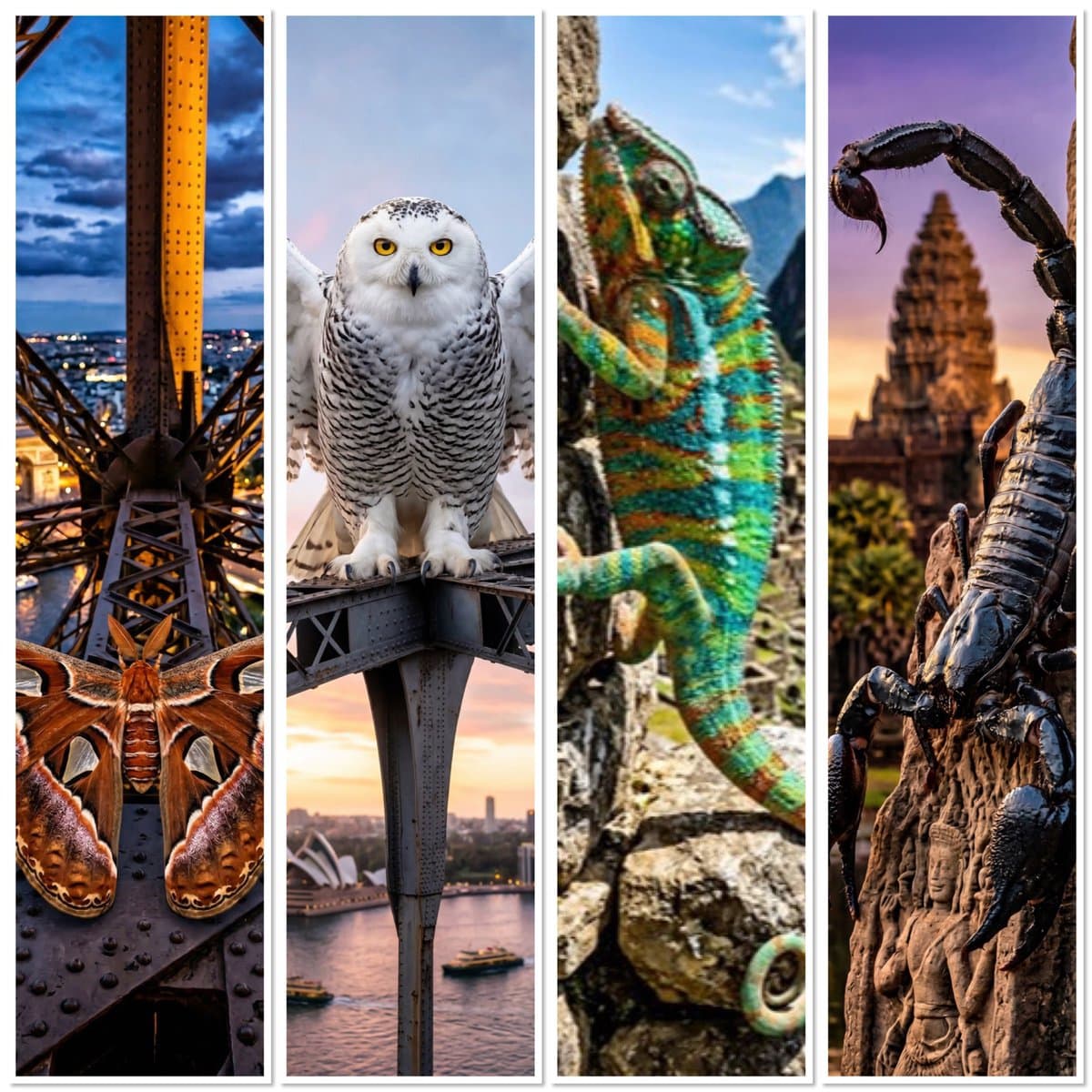
- Leonardo creators are showing Nano Banana 2's biggest practical upgrade as dual grounding: one prompt can hold two researched subjects at once, such as a specific animal and a specific landmark, instead of loosely blending them.
- A second pattern is the 3x3 character sheet prompt: nine 2:3 cells, one character, one environment, with pose and angle changes but stable wardrobe and scene details.
- Structured prompts are also being used for repeatable composite scenes, from split-city photography with geographically accurate signage to miniature flag cities that swap a single country variable while keeping the lighting and camera recipe fixed.
- The same consistency bias works for game-like image formats: hidden-object scenes and a follow-up aquascape puzzle both keep dense environments readable enough to hide multiple objects without the frame collapsing into noise.
What dual grounding changes
The clearest new workflow is subject pairing. In one wildlife-style demo, an Atlas moth is anchored to the Eiffel Tower with species-level visual details and place-specific architecture, while the follow-up post says the trick is Nano Banana 2's dual Image Grounding: one prompt, two simultaneously researched subjects. The four-image set keeps that same method across Sydney Harbour Bridge, Machu Picchu, and Angkor Wat, which matters more than the surreal concept itself. The useful part for creators is that the prompt is doing less aesthetic hand-waving and more explicit grounding of real-world reference points.
That same prompt discipline shows up in the miniature city template. The recipe locks camera body, lens, aperture, lighting direction, composition, and output style, then changes only the country variable to generate France, Japan, Italy, and India as fabric-built micro cities. It is less a single prompt than a reusable production scaffold.
How creators are building repeatable packs
The 3x3 character-sheet prompt is the most directly useful technique in the batch. The example post specifies nine cells, each at 2:3, with the same character shown from different angles and in randomized poses while the subway setting stays consistent. That turns Nano Banana 2 into a rough preproduction tool for character packs, storyboard references, and pose libraries rather than a one-off image generator. The linked prompt library suggests this is becoming a reusable pattern, not an isolated trick.
A similar structure works for composites. One Firefly workflow splits a frame between two locations and asks for geographically accurate landmarks and signage with a seamless center divide, producing Times Square versus Shibuya and other city pairings. The important detail is that consistency comes from constraining the frame geometry first, then letting the locations vary.
Where the consistency holds up
The strongest proof that these controls are stabilizing outputs is in dense scenes. A hidden-object terrarium hides five items inside moss, driftwood, and condensation without losing the cross-section read, and a later aquascape version repeats the same game format in a very different environment. Those are harder than clean portraits because the model has to preserve both scene legibility and small-object placement.
That said, the evidence here is still prompt-led, not a formal feature launch. Creators are getting the best results when they over-specify lenses, framing, subject roles, and what is allowed to change from image to image, as the dual-grounding, country-swap, and multi-angle examples all show.