
Amir Mushich builds Off-Script coffee video from 13 directed keyframes
Amir Mushich built an Off-Script coffee video using vector brand assets and 13 directed keyframes. His workflow uses Seedance through Lumina for generation, followed by editing, timing, sound and color work.
TL;DR
- Thirteen directed keyframes anchored Off-Script’s coffee video, doubling as storyboard and production assets in the keyframe breakdown.
- Generation ran through Seedance in Lumina on BytePlus, according to the project walkthrough.
- The video still got a hands-on finish: the post-production notes describe sound effects, collaging and additional zooms in After Effects.
The hand-rebuilt Figma logo is the best detail in this AI video workflow. Mushich’s motion formula assigns appearance to the keyframe and time to the text prompt.
Off-Script brand system
Amir Mushich built the coffee brand around “normal world × unexpected behaviour,” using Pinterest references to establish its visual language in his opening brief:
- Y2K youth photography.
- Direct flash.
- Hard sun.
- Wide-angle or fisheye lenses.
- Grain.
- 1990s color.
AI generated the initial identity. Mushich cleaned the cutouts and rebuilt the logo as vectors in Figma before moving into video.
He tied that brand-to-storytelling approach to “clients & sales”, without reporting commercial results for the project.
13 directed keyframes
Mushich used ChatGPT to work through seven decisions before adding motion:
- Composition.
- Casting.
- Wardrobe.
- Product placement.
- Lens.
- Light.
- Color.
The resulting 13 keyframes served as both storyboard and production assets. His conversations included asking what made a reference “cool” and how its qualities could translate to his task.
Five-part motion prompt
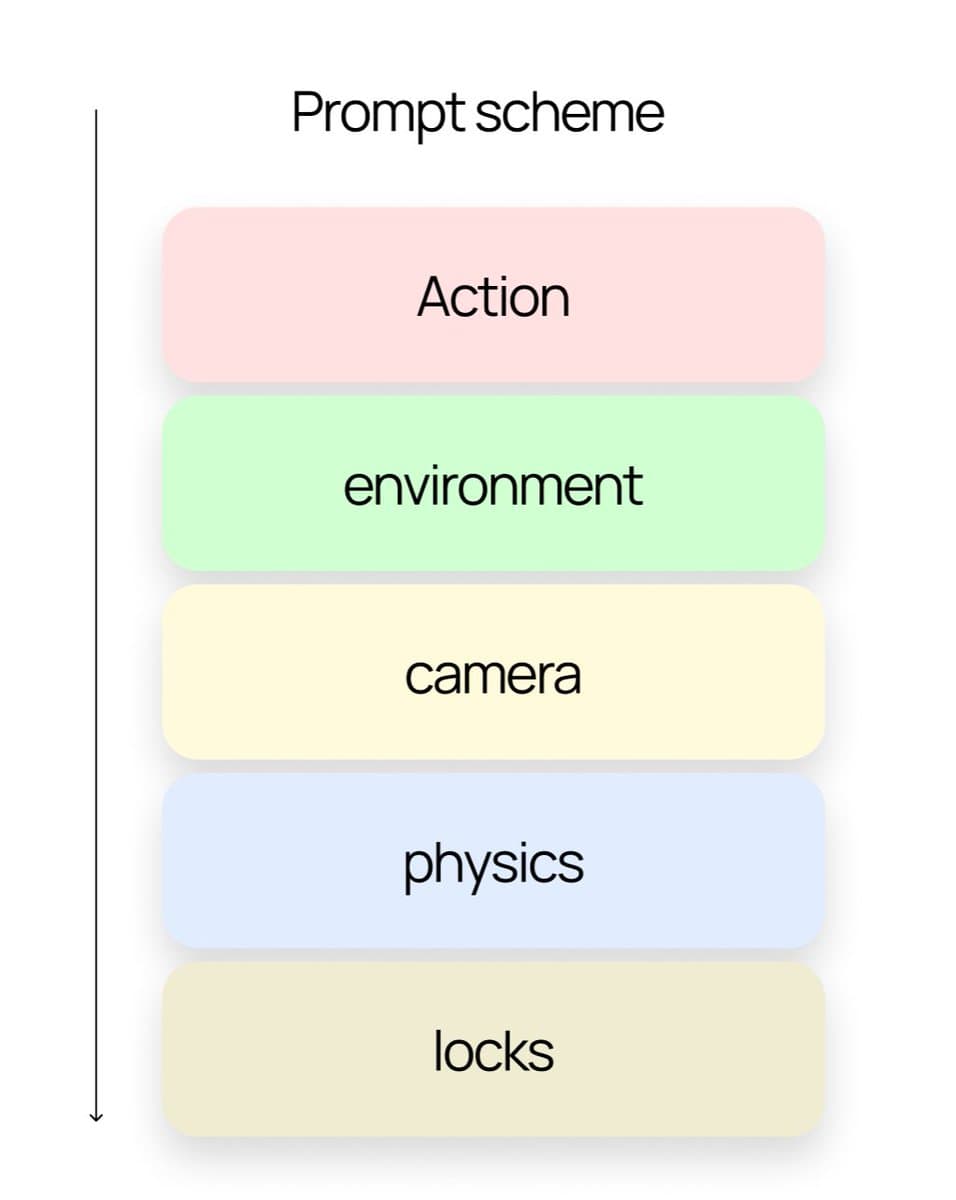
“Keyframe = look; prompt = time” was Mushich’s division of labor for Seedance. Each shot’s motion prompt followed this order:
- Action.
- Environment.
- Camera.
- Secondary physics.
- Locks.
30 seconds in Lumina
Mushich used Lumina, BytePlus’s creative platform with Seedance video generation.
For the 30-second generation, he loaded his frames as references and asked the model to preserve three things:
- The product.
- The visual language.
- The characters.
The prompt then directed how the camera and action evolved over time. He shared the full prompt document alongside the thread.
After Effects finishing
Mushich treated the generated output as footage for post-production. He explicitly named three additions:
- Sound effects.
- Collaging.
- Animation of the Scale parameter to create subtle linear zooms.
His shared project folder includes an After Effects folder and an “OFF SCRIPT COFFEE Shared” item.
In a separate motion-design demo labeled “GPT Astra + After Effects,” Mushich paired a generation interface with a layered After Effects timeline.