
OpenArt Director tests one-prompt short films in creator demos
Creator demos showed OpenArt Director turning a single prompt or headline list into characters, script, voice, music, and edit, including a short film and a cat-news parody. Watch these tests if you want to see how far yesterday's one-tool film claim now reaches beyond a showcase clip.
TL;DR
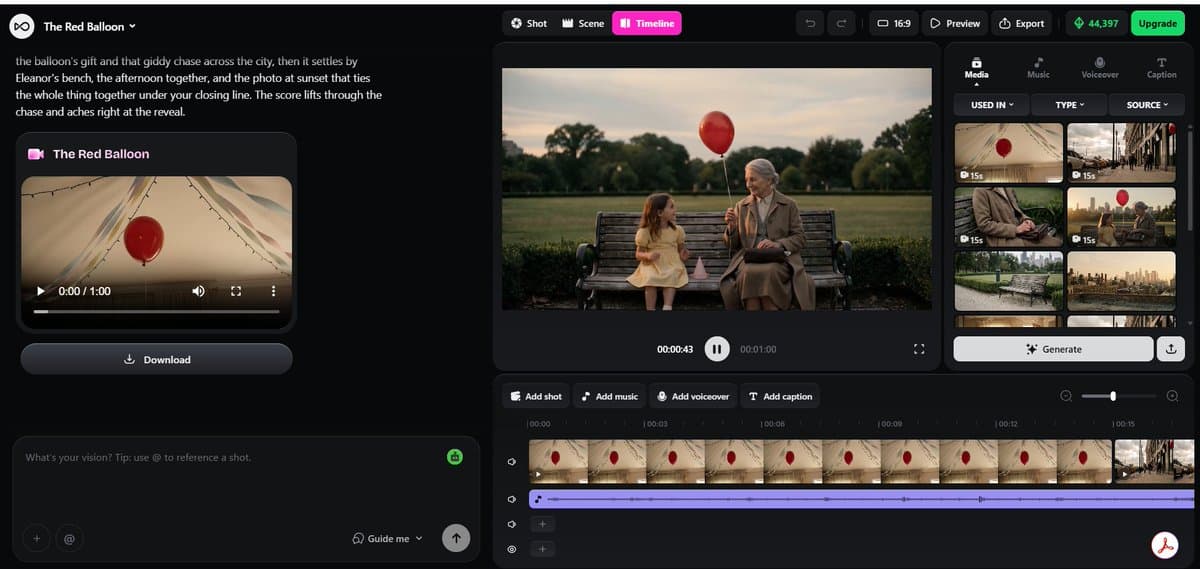
- AIwithSynthia's Red Balloon post framed OpenArt Director as a single-idea filmmaking workflow, saying the short was built inside OpenArt from story and characters to voice, music, sound design, and final edit.
- In AIwithSynthia's process thread, the creator said the film came together through one conversation instead of tool-hopping or long prompt writing, which is the core claim running through these demos.
- kaigani's cat-news test pushed the same claim in a different direction: a list of AI news headlines became a finished parody segment, with the agent proposing characters and script while the creator approved the choices.
- kaigani's Wizard of Oz remix suggests the mode is not limited to one house style, because the test reimagined a public-domain scene as sci-fi anime rather than repeating the cinematic look of the Red Balloon short.
- The broader creator chatter around agentic video workflows, from techhalla's Magnific clip to hasantoxr's OpenCreator thread, shows why this category is getting sticky: the pitch is no longer raw generation, it is fewer moving parts and more consistent output across shots.
You can watch the Red Balloon short, skim the process post, and compare it with the cat-news parody or the sci-fi anime Dorothy test. A different strand of creator demos, from techhalla's single-prompt Magnific piece to hasantoxr's OpenCreator workflow breakdown, makes the same market bet from other angles: one conversation, one prompt, or one agent should carry more of the production load.
One conversation is the product claim
The strongest evidence in this batch is not the finished short itself. It is AIwithSynthia's follow-up, which says the process involved shaping scenes, refining moments, and adjusting soundtrack inside a single conversation.
That makes OpenArt Director look less like a prompt box and more like a lightweight production loop. In one reply, AIwithSynthia called it "like a whole direction," while another reply compressed the pitch to "one prompt for everything." Those are creator descriptions, not product docs, but they are unusually specific about the interface metaphor.
The Red Balloon demo covered the full stack
AIwithSynthia's claim in the main post is broad enough to matter: story, characters, visuals, voice, music, sound design, and final edit all happened inside OpenArt Director.
That is a longer list of responsibilities than the usual AI video showcase clip. Broken out, the demo claims Director handled:
- Story development, per AIwithSynthia's description
- Character creation, per the same post
- Visual generation, per the same post
- Voice, per the same post
- Music and sound design, per the same post
- Final edit, per the same post
The attached video in the Red Balloon post runs about a minute, which puts the test beyond a single hero shot and into short-film territory.
Headline lists turned into cat news
kaigani's cat-news post is the cleaner stress test because the input was banal: a list of AI news headlines. Kaigani said the agent suggested the characters and script, and the creator approved everything without revision.
That matters because it shifts the claim from visual generation to editorial structure. The output was not just a sequence of clips. According to kaigani's post, the system turned headlines into a presenter, a script, and a finished comedic format.
Kaigani's other test widens the style range again. A public-domain Wizard of Oz scene became sci-fi anime, which suggests creators are using Director as a format remixer, not only as a cinematic short generator.
Adjacent demos are converging on the same workflow
OpenArt is not the only creator demo here compressing multi-step video work into one input. In techhalla's post, the creator said an entire dark fantasy animation was produced by running the same single prompt repeatedly in Magnific.
[Src:38|hasantoxr's thread] described a more structured agent flow in OpenCreator. The setup steps listed in hasantoxr's Step 1 post were:
- Pick a format: Cinematic, Social, Commercial, or Freeform
- Upload a product or character
- Choose a Director Seed for visual language
- Add a "Viral Hook"
Then hasantoxr's Step 2 post said the agent handled script, visuals, cuts, captions, and background music. The recurring theme across all three examples is not one model beating another. It is creators trying to keep the whole chain, from concept to edit, inside one system.
Consistency has become the selling point
The most concrete problem statement in the evidence set came from hasantoxr's post, which argued that the hard part of AI video is not generation but consistency across shots. a follow-up post reduced it to three variables: same face, same style, same world.
OpenArt's Director demos do not spell out the mechanics behind that, but they do show why the claim lands. A one-minute short like Red Balloon or a host-led parody like cat news only works if character and scene continuity hold together long enough to survive editing. That is the real threshold these creator tests are probing, and it is a more useful one than the usual single-shot wow clip.