
Kaigani builds Seedance 2.0 BURST FRAME method for 20-shot lists
Kaigani posted a Seedance 2.0 workflow that packs 20 consistent full-resolution shots into one rapid-fire prompt using a Chinese shot-list template. Claude Code and ffmpeg then extract key frames after generation, so users can try the pipeline for repeatable scene sets.
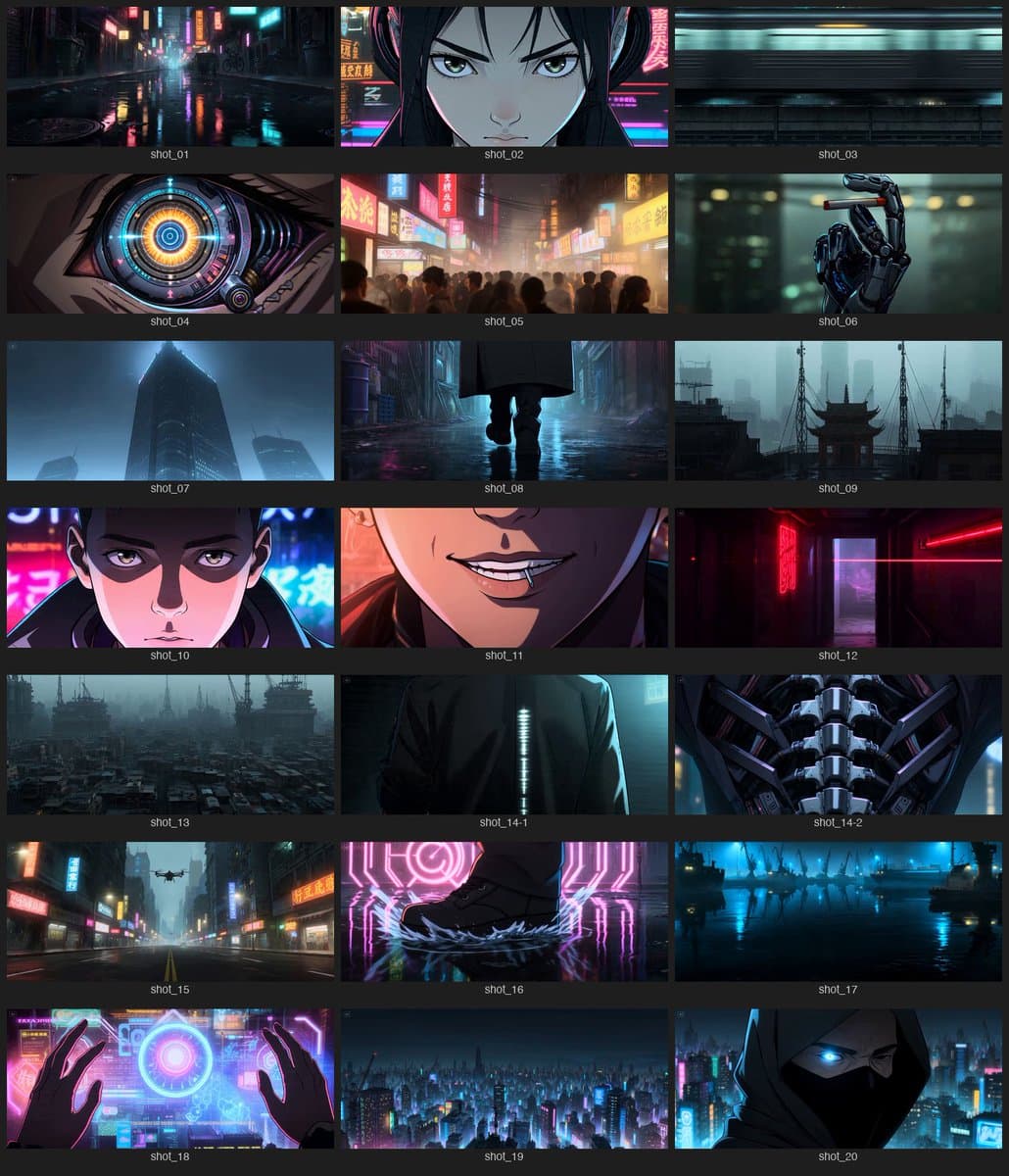
TL;DR
- Kaigani's main workflow post packages 20 full-resolution shots into a single 5-second Seedance 2.0 generation, pitched as a faster alternative to the 2x2 and 3x3 consistency grids many creators have been using.
- Kaigani's template post shows the prompt as a numbered 20-shot list in Chinese, a compression trick he says keeps the whole sequence inside Seedance 2.0's character limits.
- ByteDance's launch post says Seedance 2.0 supports text, image, audio, and video inputs, which helps explain why a dense shot-list workflow like Kaigani's can still hold onto style and scene continuity.
- After generation, Kaigani's extraction step hands the clip to Claude Code and ffmpeg to pull out all 20 key frames, turning one burst video into a reusable storyboard sheet.
You can browse ByteDance's official launch post, skim the Seedance 2.0 product page, and compare Kaigani's workflow against Dreamina's own how-to guide and prompt guide. The useful twist here is not a new model feature. It is one creator using Seedance 2.0's multimodal headroom to cram a 20-shot anime sequence into one pass, then turning the result back into a frame pack.
BURST FRAME
Kaigani's core claim is simple: one Seedance 2.0 run can yield 20 consistent shots at full resolution. The attached grid is the proof of concept, a numbered set of cyberpunk anime frames that reads like a miniature storyboard.
The shot list spans wet alleywide shots, face closeups, mechanical inserts, skyline cuts, and interface shots. ByteDance's official launch post frames Seedance 2.0 as a multimodal video model with mixed-input support, while the product page emphasizes reference and editing controls, which is the official context behind this kind of dense multi-shot experiment.
Chinese shot-list template
The template is structured as 20 numbered beats inside a 5-second clip, with a style block first and the shot list after it. Kaigani says the prompt needs to be in Chinese to fit the full sequence without blowing past the character count.
The useful structure is visible in the template itself:
- total duration: 5 seconds
- structure: 20 rapid-fire shots
- style reference: thin black line work, cel-shaded color blocks
- language split: Chinese visuals, English audio
- shot format: one numbered visual beat per line
Dreamina's own usage guide describes Seedance 2.0 as a model that can combine text with reference assets, and Dreamina's prompt guide pushes users toward more structured prompts. Kaigani's version is the extreme end of that logic.
Claude Code and ffmpeg
The third step is not inside Seedance at all. Kaigani exports the generated clip, then uses Claude Code with ffmpeg to pull the 20 key frames back out.
That makes the output usable beyond the video itself:
- as a contact sheet for selecting winning shots
- as a reference pack for follow-up image edits
- as a starting storyboard for a longer sequence
Anime benchmark clips
Kaigani is already treating the workflow like a benchmark. In one post he asks frontier models to describe themselves in cyberpunk anime form, and in the thread attached to the main workflow post he says Seedance 2.0 now makes it possible to test how well models can write an episode of anime, starting with a Gemini clip.
That gives the BURST FRAME method a second use beyond consistency. It is also a scoring harness for prompt-writing models, where the LLM writes the 20-shot sequence and Seedance turns it into something you can judge visually.