
Stages AI introduces AGENTIX for 1,200-shot node workflows
Dustin Hollywood previewed AGENTIX inside Stages AI as an agent-driven node and automation system, alongside an effects engine, CUE prompt adaptation, and reusable presets. If the rollout matches the demo, it could offer Comfy-like control for large multi-shot productions, but it is still preview footage.
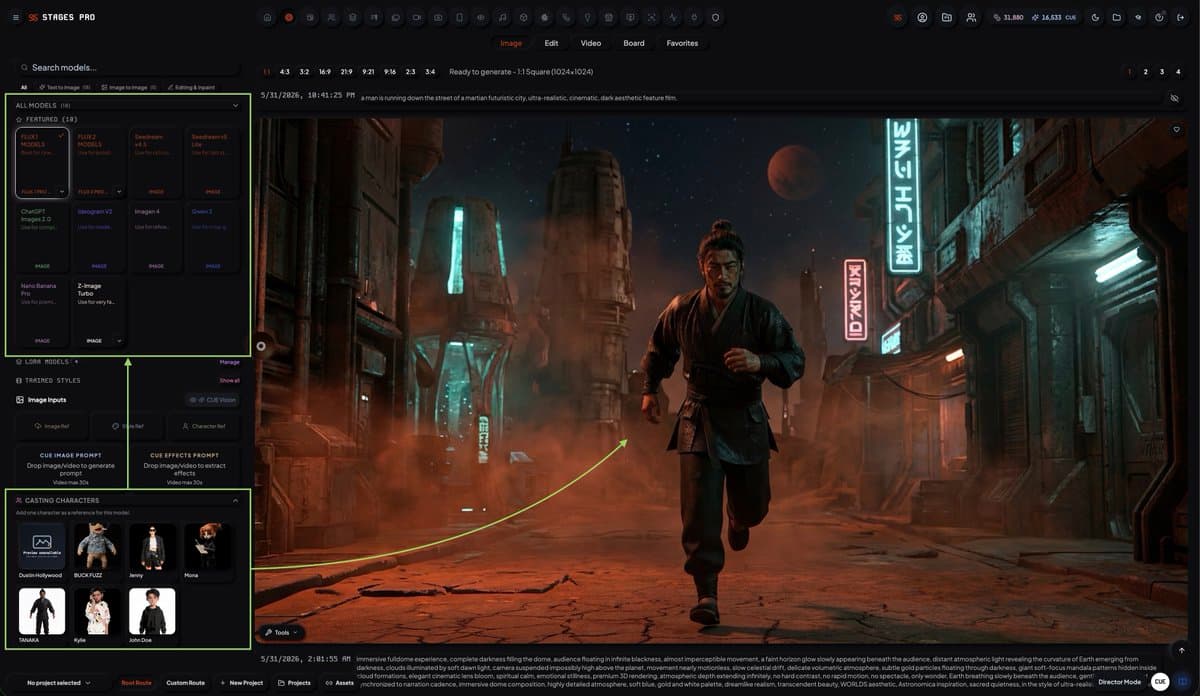
TL;DR
- dustinhollywood's AGENTIX preview framed STAGES AI's new automation layer as a node-based agent system that can run anything from simple generations to "fully autonomous 1200 shot multi-level media type generation" with QA agents and review gates.
- dustinhollywood's effects-engine post said STAGES will ship dozens of built-in VFX and an effects engine that can turn custom looks into reusable presets, while CUE adapts those effects into the active prompt or scene automatically.
- On the official STAGES Pro page, AGENTIX sits inside an infinite canvas, while CUE is described as a command layer spanning planning, generation, orchestration, and delivery across 52 routes, 27 tasks, and 11 capability domains.
- dustinhollywood's early update thread also showed smaller workflow changes that matter in day-to-day use, including a 6-row grid view, inline character attachment, and one-click jumps to editor, canvas, remix, multi-shot, reference, and storyboard.
- The catch is that nearly all of the splashy functionality is still preview footage from dustinhollywood's live-demo teaser through later STAGES clips, not a documented public launch post with shipped feature-by-feature release notes.
You can browse the official STAGES Pro site, where the product is already pitched as a "creative AI-OS" with BYOK pricing tiers and a route map that stretches from /stage to /agentix. The weirdest reveal is how much of the stack is already named in public, including a Compliance Agent and Creative Concierge on the marketplace, while dustinhollywood's CUE thread promises a memory-heavy creative assistant and his AGENTIX demo post pushes all the way to 1,200-shot autonomous runs.
CUE
STAGES is increasingly being presented as one assistant wrapped around a full production stack, not just a model picker. In dustinhollywood's CUE thread, Dustin Hollywood describes CUE as a creative assistant that can move across tools fluidly, remember prior context, and eventually expose a more autonomous side.
The official STAGES Pro page makes that broader claim concrete. CUE is listed as the platform-wide command system for planning, generation, orchestration, and delivery, with:
- 52 connected routes
- 27 CUE tasks
- 11 capability domains
- auto, notify, and confirm execution modes
- project memory and postmortem loops
That is a big surface area for a tool still being shown mostly through teaser clips.
AGENTIX
AGENTIX is the clearest new subsystem in the preview cycle. Hollywood says it is a custom agent design, automation flow, and tasking system that can scale from simple generations to autonomous multi-shot productions with QA agents, DAO-style structure, quality audits, and review gates.
The official STAGES Pro page places AGENTIX inside the canvas itself, where it routes vision, audio, and QA agents in real time. That matches dustinhollywood's QA post, which leans hard on expert review and canonical quality checks as part of the creative workflow.
The comparison Hollywood makes in the AGENTIX post is blunt: easier to use and customize than Comfy, but with similar power. For creative teams doing long shot lists, that is the part worth watching.
Effects engine
The strongest concrete workflow claim is the effects stack. According to dustinhollywood's post about VFX and presets, STAGES will include the effects shown in the demos, dozens more designed in-house, automatic prompt or scene adaptation through CUE, and an effects engine for building and saving custom presets.
That sits on top of the official generative layer, which the STAGES Pro page summarizes as real-time image-to-video, in-painting, style transfer, text-to-image, and upscale tools. The combination suggests STAGES is trying to turn look development into a reusable system, not a one-off prompt exercise.
Grid view and inline characters
Before the AGENTIX reveal, Hollywood was already tightening the production UI. In his June 4 update, he said STAGES had shipped a grid view that expands from a single generation row to six rows, plus inline character attachment for faster new character shots.
The same post listed fast handoffs to editor, canvas, regenerate, remix, multi-shot, reference, and storyboard. Those sound minor next to autonomous agents, but they are the difference between a flashy demo and something people can actually steer shot by shot.
Pricing and access
The public site is already live enough to expose packaging. On the pricing section of STAGES Pro, the stack starts with a free tier, then a $29 Creator BYOK plan, $89 Creator Plus, $159 Pro, $399 Studio, and $1,499 Enterprise.
The same page says BYOK support covers FAL, KIMI, Grok, Gemini, OpenAI, Anthropic, Replicate, Hugging Face, Runway, Hailuo, and more. That matters because it turns STAGES into an orchestration layer over other model vendors, which is exactly the direction dustinhollywood's CUE thread argues for when he says model convergence matters less than tool and workflow delivery.