
Zopia opens film agent with 9-keyframe storyboard-to-short workflow
Zopia lets creators start from an idea, script or images, pick a video model, then auto-generate characters, storyboards, clips and 4K exports. More of the film pipeline is bundled into one app.
TL;DR
- Zopia is pitching an all-in-one AI film workflow that starts from an idea, script, storyboard, or uploaded images, then moves through generation inside one app, according to the launch thread.
- The setup step is model-driven: creators can pick from Stardust 2.0, Kling 3.0, Vidu Q3, Hailuo 2.3, and Wan 2.6, with theme buttons to auto-draft scripts when a concept is still loose, as shown in the workflow post.
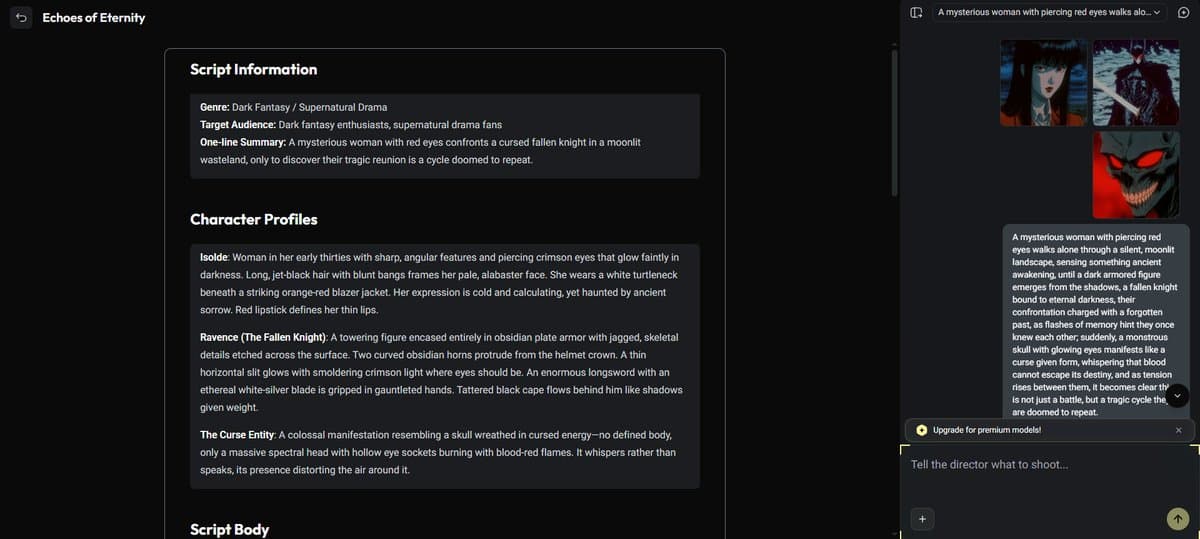
- In one demonstrated anime project, a short script plus three Midjourney images and the Vidu Q3 model generated a full script, character and scene images, a 9-keyframe storyboard, and 9 video clips, per the demo breakdown.
- The back end of the workflow is built for revision: the creator can replay the finished short in a timeline, redo weak shots from the storyboard, download clips individually, and upscale exports to 4K, according to the export post.
What shipped
Zopia's product page frames the app as a film agent rather than a single video generator. The practical difference is bundling preproduction and postproduction into the same interface: you can start from a written idea, upload source materials, choose a video model, and let the system assemble script, character setup, storyboard, clips, and final edit instead of bouncing between separate tools.
How the 9-keyframe workflow works
The clearest creator example here is an anime short called Echoes of Eternity. The workflow was simple: enter a dark-fantasy script, upload three Midjourney reference images, choose Vidu Q3 plus a Japanese Anime style, then let the agent generate the rest. That run produced a full script, scene and character imagery, a 9-keyframe storyboard, and 9 video clips inside Zopia's canvas.
The edit loop matters as much as the generation step. Zopia keeps the project in a timeline for playback and download, while the storyboard remains editable so individual animations can be regenerated without rebuilding the whole short.