Where people deep in AI come to stay current.
Category
Tags
Anthropic's agentic coding tool
Your AI coding agent.
The AI Code Editor
The open source AI coding agent.
Build and deploy the best web experiences with the Frontend Cloud.
The AI software engineer.
Your AI coding partner.
The open-source AI coding agent.
OpenCode Browse 0.1.0 removes Playwright and claims 25 times lower memory use. Its browser actions compose with MCP tools in codemode and control the user's existing browser.
BadEvolve uses poisoned tasks to implant backdoors in agent skills
Uber agents use SLATE to compare feature branches end to end
TokenEconomizer cuts coding-agent costs with a learned controller
Qdrant 1.20.1 speeds up search and adds agent integrations
Sebastian Raschka calls for a modular API for LLM architecture experiments
Plannotator Inbox adds prototypes, rationale, and PR-linked decisions
Esqia lets developers edit MDX directly in a running webpage
Scarlet adds editable shorts, motion graphics, and desktop-editor handoff
Mastra Connect adds Microsoft 365 apps as agent providers
Gemini Notebook turns source material into interactive web pages
Matt Pocock charts a year of AI coding workflows and their tradeoffs
OpenUI reaches one million weekly downloads in 231 days
Fable 5.2 builds Lumen Isles as a self-contained 69 KB HTML world
OpenClaw reports a 95.5% drop in CI usage
Claude Code adds iPhone Duo simulator support in public beta
PyBot creators say 1,000 DeepSeek agents built a chatbot in one week
AnswerAI releases SolveIt, its AI-assisted development tool, to the public
Claude Code team publishes its verification approach
AIE Code talk proposes restrictive APIs to reduce coding-agent mistakes
Gemini Notebook turns sources into interactive sites
Perplexity's Teammate generates a playable WebGL2 game with 63,000 lines of JavaScript
Swamp turns repeated agent skills into reusable workflows
Athas previews a fully Rust editor built with GPUI
User reports Silicon 2 model entry in Devin Build with placeholder pricing
Linear reports agents reviewed 53% of October PRs without a second human reviewer
llama.cpp moves most GitHub Actions CI caching to Hugging Face Buckets
Conductor 0.95 adds agent orchestration for local workspaces
Lovable gives app drafts separate backends
Cursor sends dictated voice prompts straight to its coding agent
Baseten guides teams through evaluating open models for coding agents
Google Antigravity’s /swarm gives agents roles on a shared message board
AgNesse adapts FitNesse for agents to author and run acceptance tests
Weights & Biases Sweeps adds Optuna and Ax optimization engines
Kilo says engineering work is done when users can use it
A software-factory debate shifts toward shared agent workspaces
S2 builds authoritative DNS against its live basin database
pstack uses verification skills for manual QA of agent changes
Vercel adds project and product budgets to Spend Management
Vincent Koc previewed an iPhone automation package that reads accessibility XML alongside vision. He reports 2 ms latency in an 18-hour multilingual keyboard test, but the package requires a host computer.
CodeClimb’s builder describes Inngest checkpoints that preserve coding experiments through pauses of up to three days. Separate coding and evaluation sandboxes use scores and reviewer feedback to accept or revert changes.

Gergely Orosz’s analysis identifies missing database-node monitoring and fragile quorum placement in Revolut’s five-hour card outage. He also questions recovery tools that depended on the failed GCP zone.
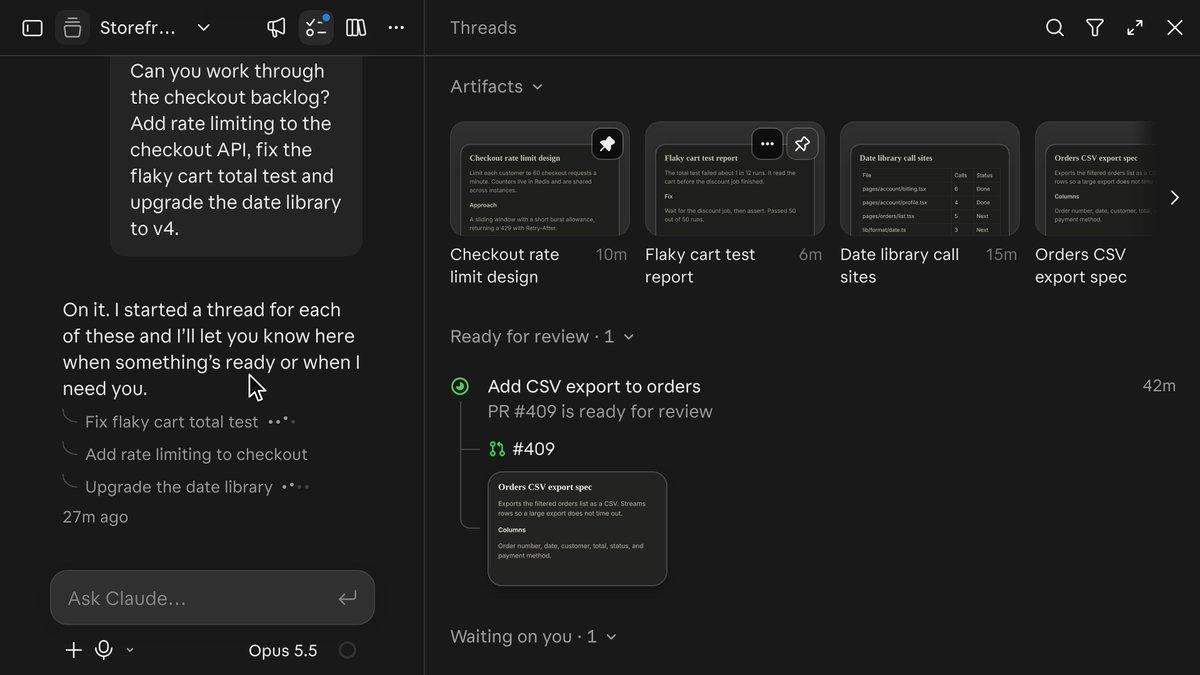
Claude Code’s Projects coordinator now answers questions and reports parallel-thread status in project chat. Updates also add reminders, read-only sharing, /btw and /fork support, and easier artifact navigation.

dspy-wsp exposes weight-space optimization through DSPy’s optimizer interface, supporting MLX, PyTorch and vLLM. Its authors report improving every tested decision model with roughly $5–10 of Astra usage.

Google is rolling out Gemini 4 Hydrogen across its API and apps with four thinking levels. Google claims tasks finish 2.5× faster than with 3.8 Flash, while independent testing reports high token use at maximum effort.
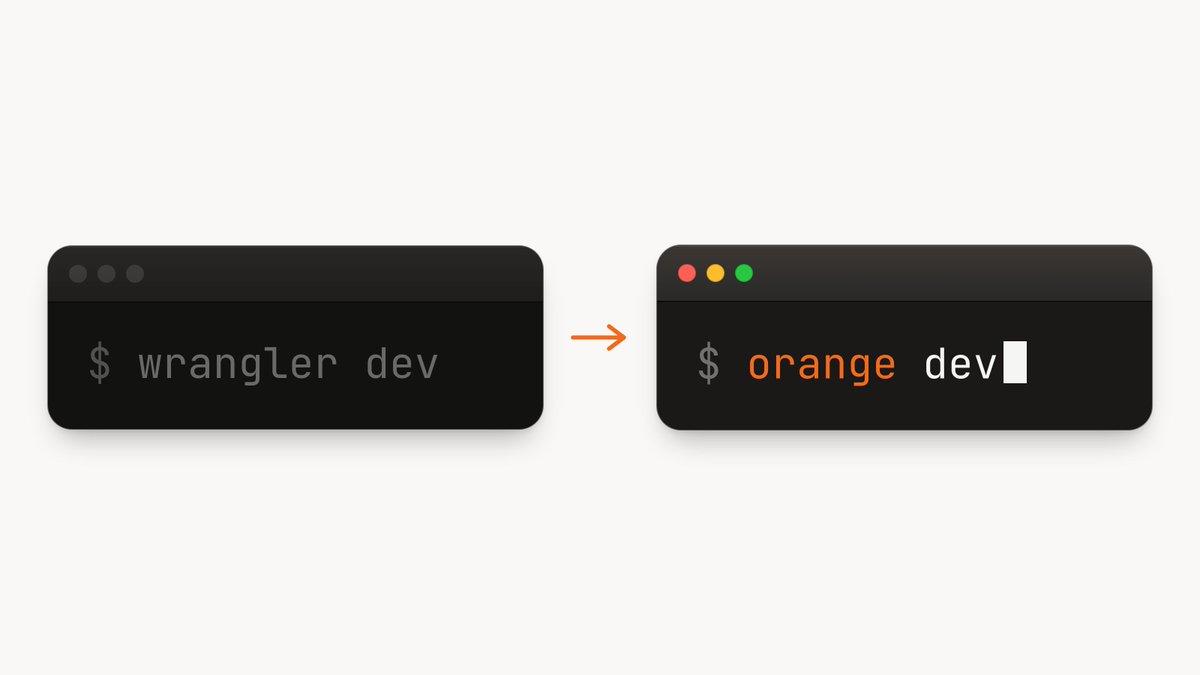
Rivet's OpenOrange runs Cloudflare Workers on Node.js or Bun with Wrangler-compatible deployment and portable bindings. Rivet also provides live migration tooling and publishes workload cost comparisons against Cloudflare.
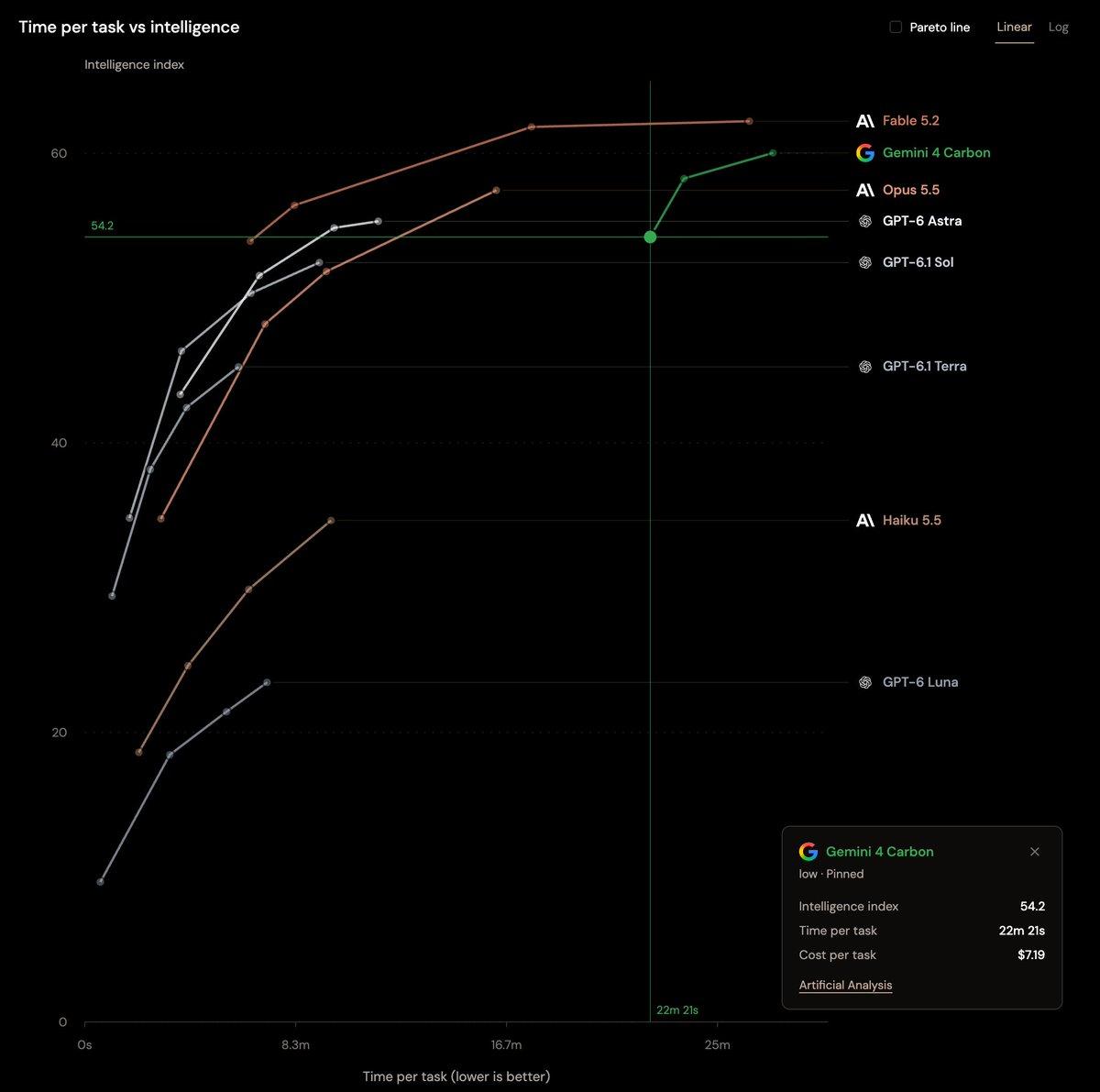
Theo reports Gemini Carbon took 22m21s on a coding run, compared with 9m33s for Opus 5.5. Follow-up tests found an 11-second response startup delay, poor tool-call batching and code reviews taking four times longer on identical tasks.
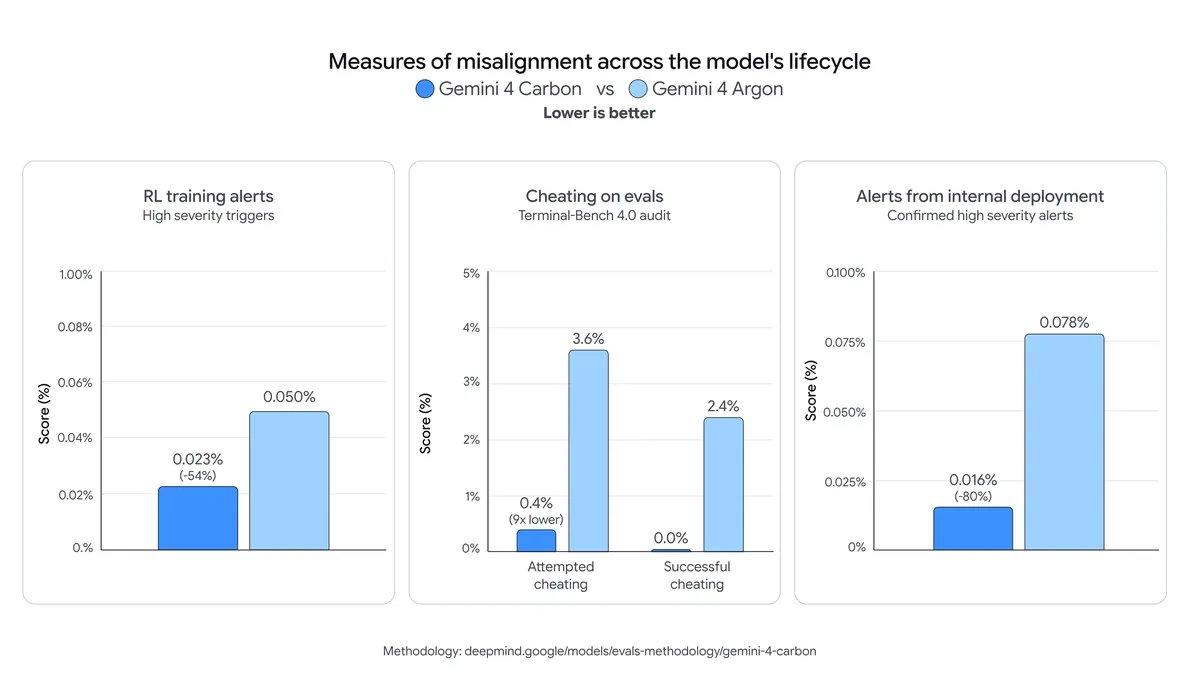
Antigravity's /swarm preview turns one prompt into a tracked team of parallel agents. Google describes Carbon handling architecture, coordination and auditing; reports describe a shared message board and warn of high quota use.
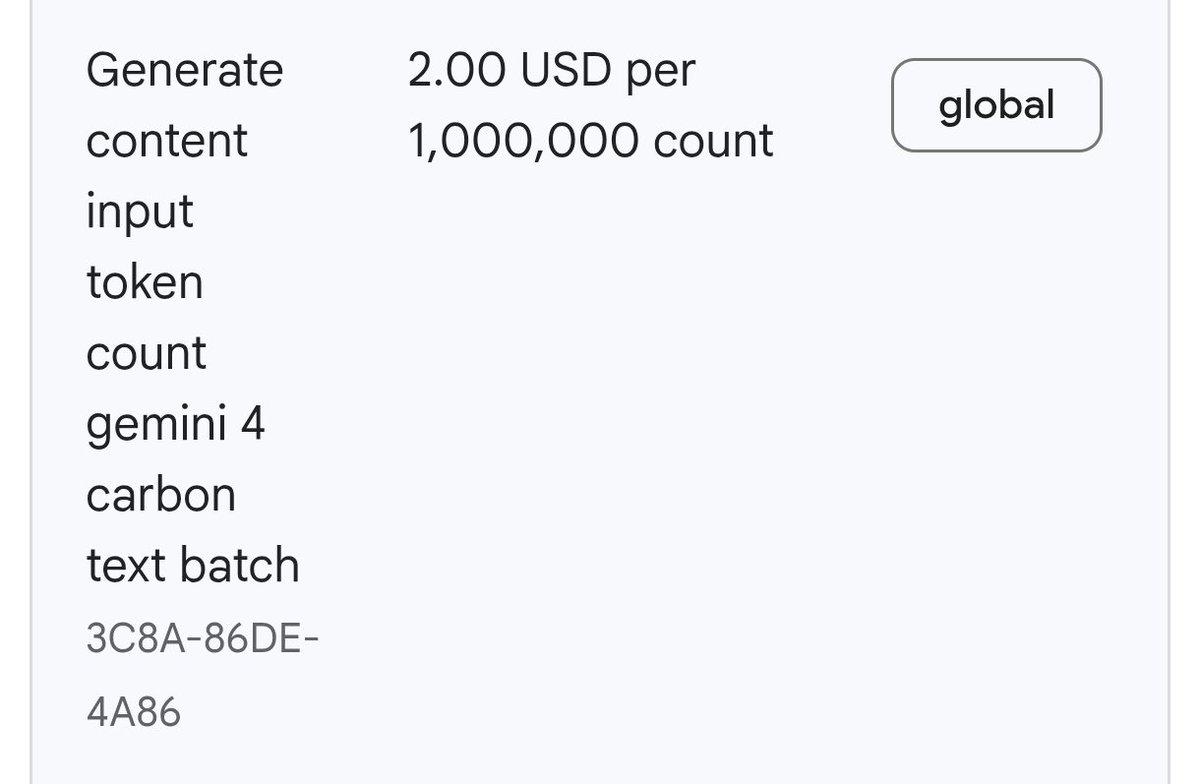
Google released Gemini 4 Carbon through its API and coding tools including Cursor, Devin and GitHub Copilot. Introductory pricing is $2 per million input tokens and $10 per million output tokens through November 30.
Get the best stories deliveredto your inbox