
Claude Design users report HTML and JSX exports for Claude Code handoffs
New hands-on reports show Claude Design exporting HTML and JSX prototypes that teams hand off to Claude Code for stack-specific TSX and server-side implementation. The workflow matters because it shows a concrete design-to-code path beyond the research-preview demo.
TL;DR
- Anthropic shipped Claude Design as a research preview for Pro, Max, Team, and Enterprise, and claudeai’s launch thread says the product can generate prototypes, slides, and one-pagers before handing work off to Claude Code.
- The most useful hands-on report came from the main Hacker News thread, where one team said Claude Design exported a zip with HTML and JSX, then Claude Code turned that prototype into stack-specific TSX and server-side code.
- A second wave of discussion in the fresh HN delta described the same prototype-to-code loop in broader terms, including a CRUD app built by a non-designer relative and then implemented inside an existing business stack.
- The official rollout also hinges on design-system ingestion, because claudeai’s follow-up post says Claude Design reads codebases and design files to build and reuse a team’s brand system automatically.
- Early use was not clean: theo’s usage report said one thread wiped a project after heavy usage, while the HN delta also surfaced a claim that the system prompt appeared exposed in network requests.
You can read Anthropic’s official announcement, watch claudeai’s demo thread, and dig through the unusually practical Hacker News thread. The interesting bit is not the marketing page, it is that users were already describing zip exports, JSX files, AGENTS.md-backed backends, and Claude Code conversions into real TSX codepaths within a day of launch.
Export bundles
Claude Design
The useful engineering angle is the prototype-to-implementation pipeline: Claude Design can emit HTML/JSX that gets exported into a repo and then transformed by Claude Code into stack-conforming TSX/server-side code. The thread also surfaces an open integration question about the cleanest handoff mechanism between Claude Design and Claude Code.
The headline workflow is more concrete than the launch video suggests. According to the HN discussion roundup, one user received “one html file and a bunch of jsx files,” exported the project as a zip, dropped it into a repo, and used Claude Code to convert the prototype into TSX plus server-side TypeScript.
That matters because it turns Claude Design into a front end for an existing code workflow, not just a sandbox. Another fresh HN roundup also described a PM-to-code flow and a separate experiment where a two-line prompt plus an AGENTS.md fetch was enough to give a prototype a backend.
Design system ingestion
Anthropic’s official claim is that Claude Design reads a codebase and design files, builds the team design system, and reapplies it across projects. The official announcement adds the rest of the plumbing: prompt, image, document, and code imports; inline comments and direct edits; exports to Canva, PDF, PPTX, HTML, and a handoff bundle for Claude Code.
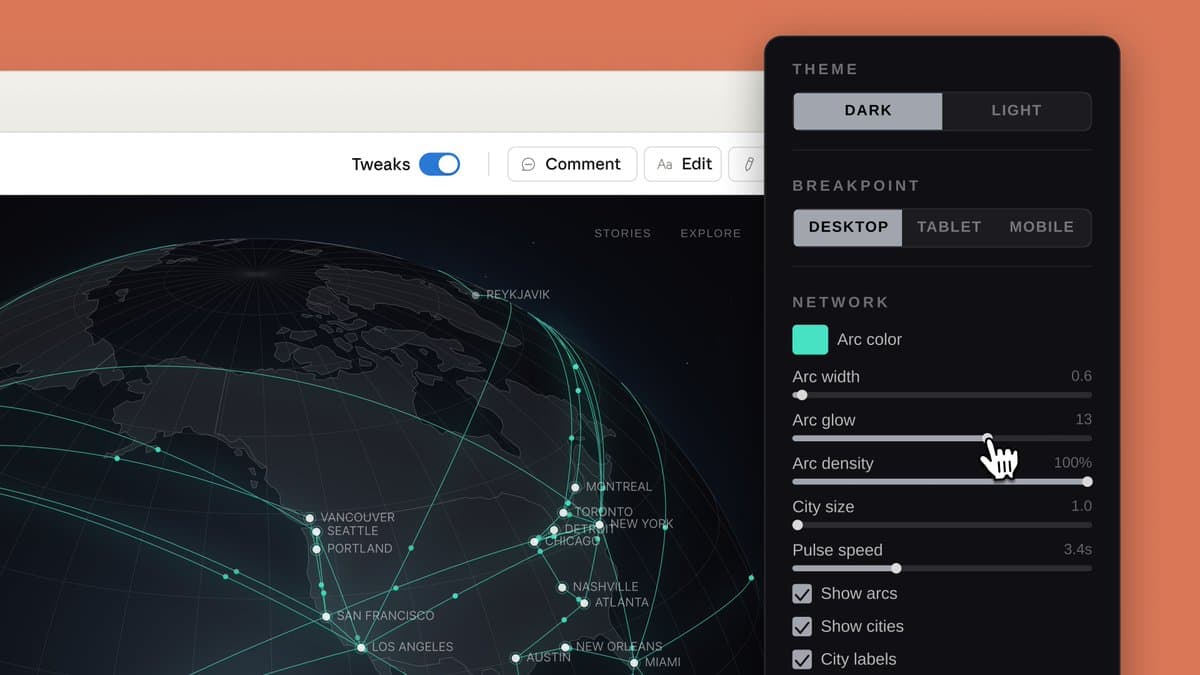
Hands-on testers filled in a few interface details that the announcement only gestures at. altryne’s long test video called out live feedback, a “point and talk” mode tied to the cursor, queued comments during deck editing, and generation of a design system from a GitHub repo.
Rough edges
The roughest early reports were operational, not aesthetic. theo’s thread said one Claude Design thread lost its files after consuming a noticeable chunk of usage, and the HN delta separately noted a login or redirect loop for some users.
There was also immediate prompt-surface scrutiny. elder_plinius’s leak thread published a long Claude Design system prompt, while an HN comment claimed the prompt appeared in network requests. Even if Anthropic intended some of that exposure, it gave outside users a fast look at how the product frames HTML artifacts, file structure, starter components, and Claude Code handoff rules.