
Firefly Boards: creator builds a fictional electric-car campaign
A sponsored Adobe Firefly workflow used Firefly Boards to take a fictional electric-car brand from logo directions and vehicle references through brand guidelines, a website, brochure, storyboard, and ad concepts. Because the brand was fictional, the result was a concept campaign rather than a real car launch.
TL;DR
- NOVA-01 is a fictional electric coupe and fictional brand, but CharaspowerAI's campaign overview documents a complete sponsored Adobe Firefly campaign spanning identity, advertising, web, print, storyboards, and four 15-second Seedance 2 sequences.
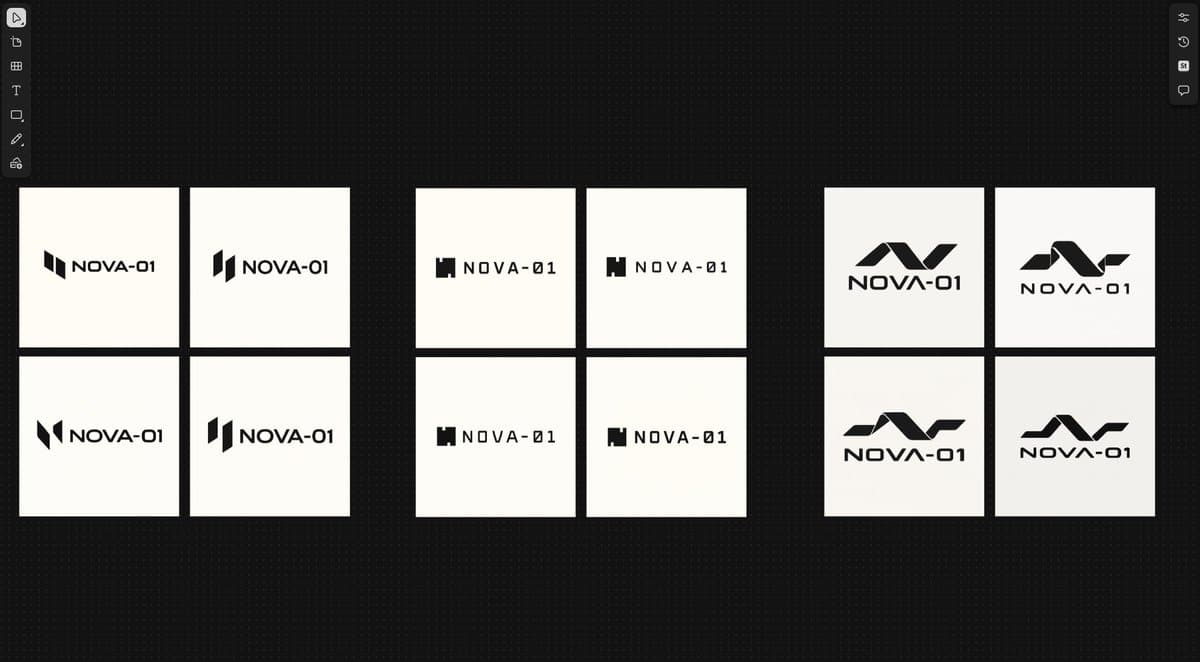
- The workflow fixed the visual system early: CharaspowerAI's logo study tested three identity directions, while CharaspowerAI's vehicle study selected a coupe and turned it into exterior and interior reference sheets.
- The selected car then moved through studio, road, and architectural advertising contexts in CharaspowerAI's campaign-frame post, before CharaspowerAI's brand-guide post set the palette, materials, typography, and logo treatments.
- The same references fed a product-site concept and brochure layouts, according to CharaspowerAI's website post and CharaspowerAI's brochure post, while the thread's closing post says Firefly Boards kept generations, references, and assets together.
Adobe’s Firefly Boards guide describes a canvas for images, video, shapes, and text that can sample an existing image as a prompt description or style reference. NOVA-01 puts that capability through a useful continuity test: pearl white, deep graphite, satin metal, and the folded graphic motif travel from the ad work into a finish-selector website concept CharaspowerAI's guide and the website concept.
Logo and vehicle references
CharaspowerAI began with minimal geometric, technical, and sculptural logo routes. The chosen folded mark was meant to work as a small vehicle badge and a larger campaign graphic.
Three vehicle directions followed the same brief: low fastback, architectural tourer, and sculpted sports coupe. Comparable angles made proportion, stance, and lighting signatures easier to judge before the coupe was turned into exterior and interior reference sheets.
Campaign frames and the brand guide
The campaign tested the same coupe under studio lighting, on cinematic roads, and in architectural settings. Each frame was planned around an idea, camera angle, and space for a logo and headline.
The resulting guide locked down:
- Pearl white, deep graphite, and satin metal
- Typography and logo treatments
- Graphic elements derived from the folded symbol
That guide became the shared direction for the advertising, brochure, and website concept.
Website and brochure
The homepage mockup contains a cinematic hero, exterior-detail views, an immersive interior section, and a finish selector. Existing campaign assets were repurposed as product-discovery screens.
The brochure kept the vehicle references and identity but changed the pacing:
- A bold cover
- Room for the silhouette
- Material close-ups
- Spreads designed to stand on their own
Boards, Seedance, and the finishing pass
The campaign was storyboarded into four 15-second Seedance 2 sequences. Adobe describes Firefly as a workspace for generating images, video, audio, and more with 30-plus models, while its partner-model documentation lists Boards as one of the supported Firefly surfaces.
CharaspowerAI said Boards held the generations, references, and assets together while the project expanded from a logo to a campaign, web concept, brochure, and film.
After Effects and sound
Separate brand-design posts supplied a production boundary that the NOVA thread does not detail. AmirMushich said only the images were generated in another project, with the rest made in After Effects and by hand in AmirMushich's reply; a later AmirMushich reply added that sound production took roughly as long as the visual work.