
Adobe Firefly supports Hidden Objects boards with Nano Banana 2 across Levels .058 to .061
A creator extended a repeatable Hidden Objects series with new boards made in Adobe Firefly and Nano Banana 2 across Levels .058 to .061. Follow the format if you want a reusable game mechanic for newsletters, communities, or merch, and watch for the promised write-up on failure patterns.
TL;DR
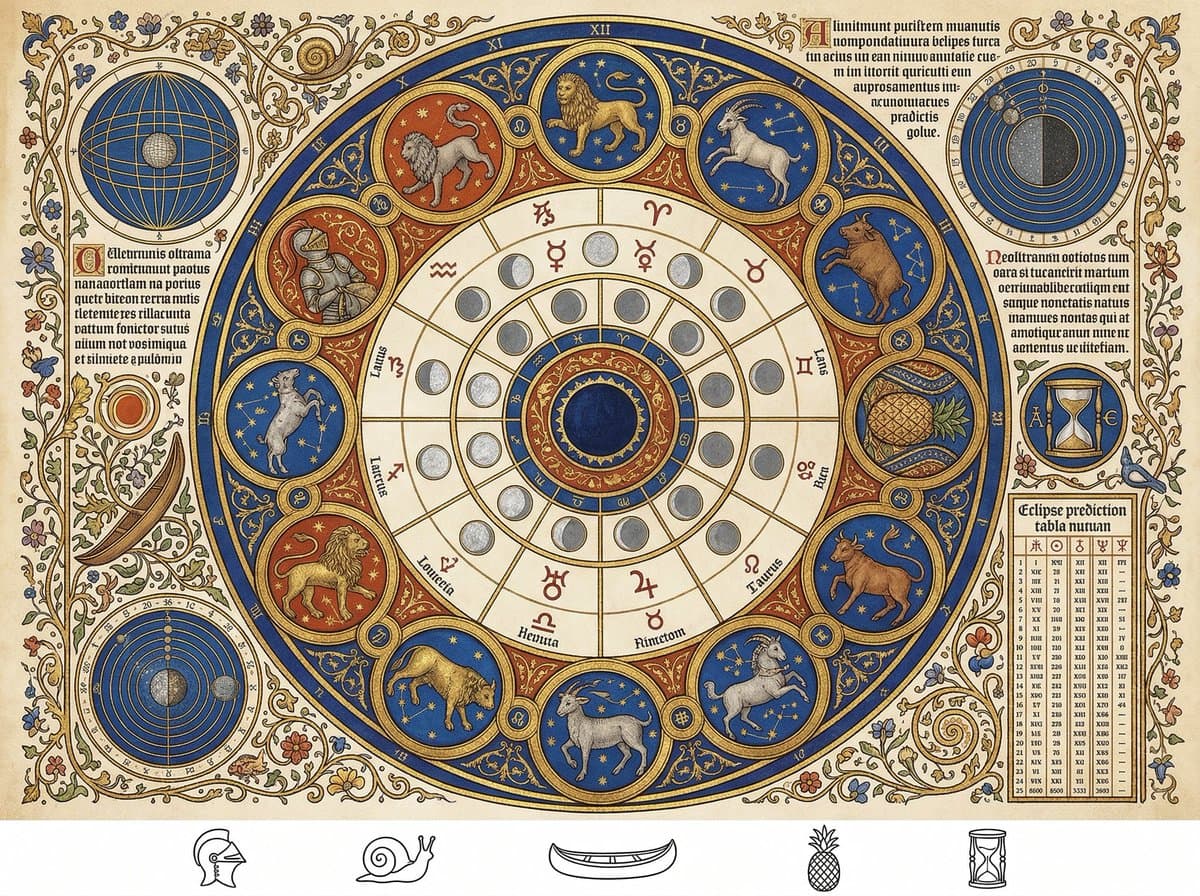
- A creator pushed a Hidden Objects run from Level .058 through .061 in Adobe Firefly with Nano Banana 2, keeping the same five-object game structure while changing the scene style each time from illuminated manuscript to layered stone Level .058 Level .061.
- The middle boards show the format is not tied to one genre: Level .059 turns a toy-strewn floor into a search puzzle, and Level .060 hides objects inside a mossy branch packed with orchids, fungi, and frogs Level .059 Level .060.
- The series is starting to look like a repeatable content system rather than a one-off image gimmick, and the creator also teased a separate write-up built from several hundred logged failures and six recurring patterns failure log tease.
What the format looks like
Each board uses the same simple mechanic: one dense hero image, then a strip of five outline icons telling the viewer what to find. In Level .058, that means a medieval astronomical wheel where a helmet, snail, canoe, pineapple, and hourglass are buried in manuscript ornament; Level .059 swaps the setting to a cluttered floor of vintage toys and asks viewers to spot a snake, strawberry, dragonfly, starfish, and pretzel.
The later boards prove the template survives bigger visual shifts. Level .060 hides a saxophone, spyglass, thimble, crayon, and lantern inside a tropical branch scene full of bromeliads and poison dart frogs, while Level .061 moves to striated rock with a seahorse, hammer, butterfly, candlestick, and boot fused into the geology.
Why the series reads like a workflow
What makes the run useful for other creators is the consistency. The prompt target appears to be less about one signature aesthetic and more about a production recipe: generate a busy scene, preserve legibility, then embed five recognizable silhouettes that can still be surfaced as clean icons below the image. That makes the output portable across newsletter challenges, community posts, printable games, and merch concepts without changing the core interaction.
The creator also framed the work as part of a broader test discipline. In a teaser post, he said he had scored, logged, and filed several hundred failed images and found six recurring patterns, suggesting these polished boards sit on top of a much larger iteration process failure log tease.