
Seedance 2.0 supports 15-second fairy-tale scenes from Midjourney character sheets
Creators documented a Midjourney-to-Seedance workflow for 15-second fairy-tale and storybook scenes, from frog-to-prince and Cinderella spells to children’s-book animations. Use uploaded character sheets to preserve identity, and compare results against storyboards or Grok Imagine.
TL;DR
- Seedance 2.0's official launch frames the model around mixed references, with support for text, image, audio, and video inputs in one generation stack, while PiAPI's Seedance 2 docs spell out the practical ceiling: 4 to 15 second outputs and an
omni_referencemode for up to 12 mixed assets. - The clearest creator pattern in this evidence pool is Midjourney character sheets first, then Seedance for motion: Artedeingenio's frog-to-prince clip, Artedeingenio's Cinderella spell, and CuriousRefuge's character-consistency test all use reference boards to lock identity and style.
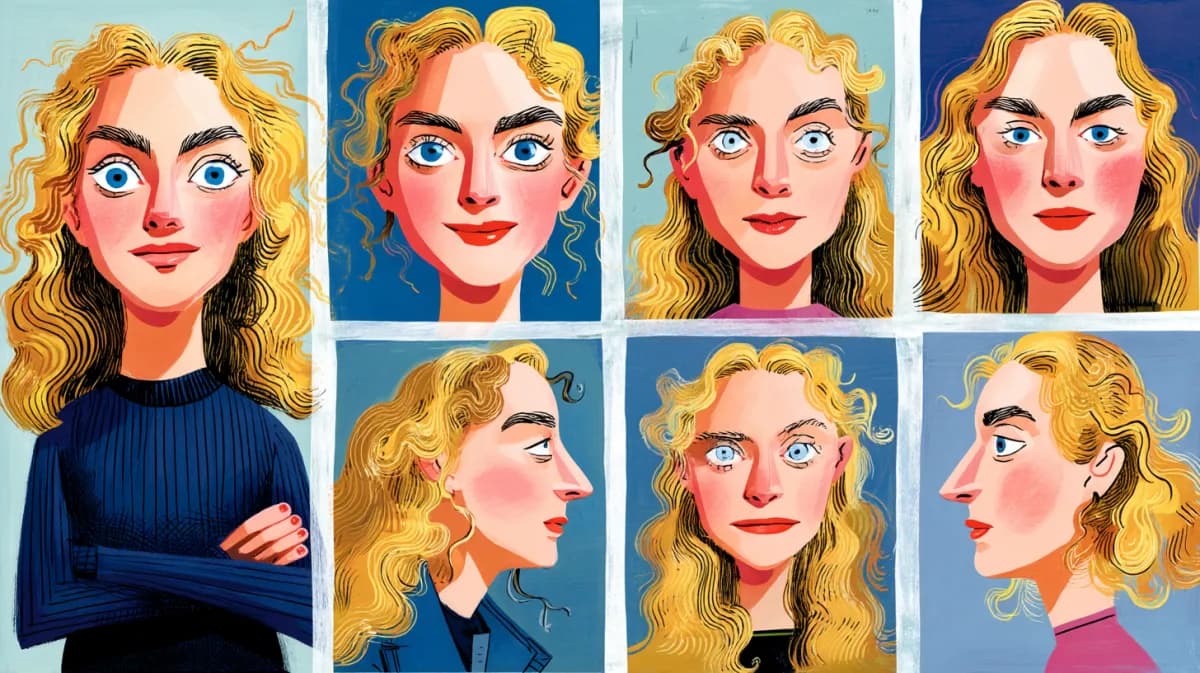
- Artedeingenio's reply about visual guides makes the key mechanic explicit: upload the character sheet images so Seedance can use them throughout generation, a workflow that the official Seedance 2.0 launch post broadly supports with up to 9 image references.
- Creators are also getting more deliberate about prompt structure. _OAK200's triptych system prompt turns a three-panel image into sequential story beats, while Artedeingenio's prompt dump breaks a 15-second clip into 3-second camera and action phases.
- The weirdest reveal is that Seedance is not staying in fantasy animation. CuriousRefuge's restoration workflow uses Seedance 2.0 Omni to clean live-action footage before looping through GPT-Image 2 and Topaz Astra.
You can read ByteDance's official launch post, skim the practical limits in PiAPI's docs, and then jump straight into creator-side recipes: a frog-to-prince transformation, a full triptych system prompt, and a restoration thread that treats Seedance like a video cleanup engine.
Character sheets
The strongest throughline here is not just "use references." It is "build a production board first."
Artedeingenio said in a reply about character sheets that the images need to be uploaded so the model can use them as a visual guide through the whole generation. In a separate post, Artedeingenio's workflow note said Midjourney character sheets worked better than storyboards for Seedance 2.0, at least in that creator's tests.
CuriousRefuge pushed the same idea further with a hybrid board workflow. CuriousRefuge's character-consistency test starts by comping character, environment, and visual style in Midjourney, then moves that material into GPT-Image 2 to build a character sheet before sending it into Seedance.
That maps neatly onto ByteDance's own product framing in the official launch post, which says Seedance 2.0 can take up to 9 images, 3 video clips, and 3 audio clips as mixed references.
15-second spell prompts
The fairy-tale clips are useful because the prompts are fully exposed, and the structure is unusually consistent across examples.
Across the frog-to-prince prompt in Artedeingenio's prompt dump and the Cinderella carriage prompt in Artedeingenio's Cinderella prompt dump, the recipe looks like this:
- Open with a hard duration and camera rule:
15-second continuous single-shot, no cuts, no scene transitions. - Separate style from action: one block for look and lighting, another for sound design.
- Write motion in 3-second beats: 0 to 3, 3 to 6, 6 to 9, 9 to 12, 12 to 15.
- End with a final-frame instruction, not just an action endpoint.
- Add a negative prompt for artifacts, duplicate limbs, photorealism, extra characters, and text.
- Add anti-duplication language when the scene is character-sensitive, as Artedeingenio's Cinderella prompt dump does with the fairy godmother.
The interesting part is how close this is to shot planning. These are not one-line vibe prompts. They read like miniature previs documents.
Triptych system prompts
Not everyone is using character sheets as the main scaffold. Some creators are feeding Seedance a three-panel image grid and treating it as cinematic progression.
According to _OAK200's full system prompt, the model is told to read the top, center, and bottom panels as sequential beats, but not to animate them frame by frame. The system prompt instead asks Seedance to infer the missing motion between panels and rebuild the implied scene as one continuous 15-second shot.
That prompt does three concrete things:
- assigns each 5-second block to one panel
- treats the triptych as tone, pacing, and camera language, not literal frames
- explicitly forbids random new props, characters, or unrelated story elements
It is a clever halfway point between storyboard control and free generation, and it answers the same consistency problem from a different angle.
Styles that are landing
A lot of the best results here come from leaning away from realism.
Artedeingenio argued in Artedeingenio's children's-book animation that illustrated children's-book worlds are underused in AI animation, and the clip makes the point fast. Elsewhere, Artedeingenio's micro-story post describes these 15-second outputs as micro-stories that do not need dialogue if the visual poetry is doing the work.
Three style buckets keep recurring in this evidence set:
- Storybook fantasy: frog-to-prince and Cinderella transformation scenes from Artedeingenio's frog-to-prince clip and Artedeingenio's Cinderella spell
- Cartoon and comedy: Artedeingenio's ogre workaround says direct use of a character like Shrek is filtered, but a close ogre analogue still works for DreamWorks-style comedy
- Anime and game cinematics: Artedeingenio's dark-fantasy duel prompt uses character sheets for what looks like a game trailer, while CharaspowerAI's anime warrior monk clip shows Seedance's anime motion is pulling creators in hard
The notable pattern is that each bucket depends on a strong style board first. The motion layer comes second.
Cross-model stacks
Seedance is showing up as the motion engine inside bigger stacks, not as a one-model workflow.
0xInk_ paired Midjourney v8.1 and GPT Image 2 with Seedance 2 in 0xInk_'s Honda Mech short, then added in 0xInk_'s music reply that the soundtrack came from Suno on a different project. CuriousRefuge used a similar relay in CuriousRefuge's character-consistency test, with Midjourney comps feeding GPT-Image 2 character sheets before the handoff to Seedance.
There is also a platform layer on top of this. Some creators in the evidence pool are running Seedance through Mitte, others through PixVerse, and others through their own API or tool stacks. The official Seedance page describes the core model, but most of the practical workflows here are happening through wrappers and companion tools.
Restoration and footage cleanup
The last surprise is that one of the most concrete workflows here is not animation at all.
CuriousRefuge's thread turns Seedance 2.0 Omni into step one of a four-stage restoration pipeline:
- Use Seedance Omni to restyle the source footage as if it were shot on a Sony FX30, with stabilization and cleanup instructions in CuriousRefuge's Step 1 prompt.
- Export 3 to 8 stills and run them through GPT-Image 2 for fresher high-resolution reference frames in CuriousRefuge's Step 2 still workflow.
- Feed those upgraded stills back into Seedance Omni so the video matches their quality and style, as CuriousRefuge's Step 3 handoff describes.
- Finish in Topaz Astra with
Creativeat 0 andSharpenat 2, according to CuriousRefuge's Step 4 settings.
That workflow is a different use case than fairy-tale animation, but it fits the same product logic: Seedance is most interesting when it is grounded by references, not when it is asked to hallucinate from scratch.