
Nano Banana Pro gets free year on Higgsfield – 217 credits, 4K tests

Stay in the loop
Free daily newsletter & Telegram daily report
Executive Summary
Following yesterday’s “this thing is everywhere” moment, today is about how cheaply you can hammer Nano Banana Pro and how deep it’s digging into real workflows. Higgsfield is dangling a full free year of Pro plus a 9‑hour X campaign handing out 217 credits per creator, enough for serious 4K tests before you touch a card. On top of that, Invideo is offering a year of unlimited Pro if you sign up before Nov 27, while ImagineArt, OpenArt, Pollo, Vadoo and others pile on 50–66% discounts and extra credits.
The integrations got sharper too. LTX Studio wired Pro straight into its LTX‑2 pipeline with 800‑credit giveaways and native face swaps, ComfyUI added 4K support with up to 14 reference images in node graphs, and Nim plus Producer let you stay inside your video or music app while you spin thumbnails and cover art. Higgsfield spent the day posting world‑aware examples—Google‑Maps‑style renders, CCTV story beats, translated artifacts—while Freepik turned Pro into a prompt cookbook and Leonardo’s community showed tight, one‑click tweaks to headshots, jerseys, and mood boards.
If you’ve been NB‑curious, this is basically the cheapest weekend you’ll get to beat on it like a production tool rather than a novelty toy.
Feature Spotlight
Nano Banana Pro: free year + creator platform flood
Cross‑platform wave: 1‑year UNLIMITED on Higgsfield and fresh integrations (LTX Studio, ComfyUI, Nim, Producer, Leonardo). Creatives get 4K, flawless text, and stable characters—now broadly accessible with promos and how‑tos.
Today’s timeline is dominated by Nano Banana Pro going everywhere with tutorials and giveaways—free 1‑year on Higgsfield, plus new integrations across creative tools. New demos span maps, CCTV, translation, infographics, and precise edits.
Jump to Nano Banana Pro: free year + creator platform flood topicsTable of Contents
🍌 Nano Banana Pro: free year + creator platform flood
Today’s timeline is dominated by Nano Banana Pro going everywhere with tutorials and giveaways—free 1‑year on Higgsfield, plus new integrations across creative tools. New demos span maps, CCTV, translation, infographics, and precise edits.
Higgsfield drops 217 free Nano Banana Pro credits in 9‑hour X promo
Higgsfield is running a short 9‑hour campaign where anyone who follows, likes, replies, and retweets a promo post gets 217 Nano Banana Pro credits, effectively giving creatives a free test drive of the model without paying for a plan. The offer, promoted alongside its Black Friday year‑long unlimited deal, is clearly aimed at pulling more artists and filmmakers from X straight into the Higgsfield ecosystem and letting them try 4K, physics‑aware generations on real projects before committing free credits promo.
If you’ve been curious about Nano Banana Pro’s text rendering, character consistency, or layout reasoning, this is an easy way to get enough credits for a serious round of experiments—storyboards, key art, thumbnails, whatever you’re working on today.
ComfyUI brings Nano Banana Pro to node graphs with 4K, 14 refs, and templates
ComfyUI announced full Nano Banana Pro support, including native 4K generation, up to 14 reference images, and strong text rendering inside its node‑based workflows, plus one‑click access on Comfy Cloud comfy nano banana intro. A companion blog post and example graphs show how to wire NB Pro into multi‑object reference setups and series editing, including fashion lookbooks where the same model cycles through entirely different outfits character series example nano banana blog.
They also published a JSON workflow for a multi‑style magazine cover that you can drag directly into Comfy to inspect prompts, conditioning, and upscaling nodes magazine cover example multistyle workflow json. For power users and studios who already rely on Comfy for pipelines, this effectively turns Nano Banana Pro into another swappable engine with strong structure and typography, rather than a closed web UI.
LTX Studio adds Nano Banana Pro for 4K shots, clean text, and face swaps
LTX Studio has wired Nano Banana Pro into its video production stack, giving users native 4K image generation, very sharp in‑frame text, camera reframing, and built‑in face/character swapping as part of its LTX‑2 workflow ltx nano banana launch. The team is dangling 800 free credits if you retweet and comment “PRO”, plus a $125 PRO subscription giveaway to push people to try the new stack ltx nano banana launch subscription contest.
The launch thread breaks out concrete use cases: high‑end portrait close‑ups that don’t need extra skin retouching, reverse‑angle shot generation from a single still, style transfers that keep structure but change look, and lighting‑diagram conversions from on‑set photos for crews feature breakdown thread lighting diagram example. For filmmakers and editors already living in LTX, this turns Nano Banana Pro into a native concept‑art and shot‑variation generator rather than yet another external web tab.
Freepik turns Nano Banana Pro into a prompt cookbook for diagrams, POV, and time travel
Following up on Freepik week, where Freepik made Nano Banana Pro unlimited in 1K/2K for seven days, the team posted a stack of concrete prompt patterns that show how to bend NB Pro toward practical design work rather than random eye‑candy. Threads walk through translating billboards in‑place, turning dense documents into clean whiteboard photos, generating cutaway diagrams with materials and dimensions annotated, changing POV to underwater or CCTV views, and even visualizing a subject hours, days, or years in the future whiteboard example prompt pattern thread time travel prompt.
Each how‑to includes a copy‑pasteable template and points back to Freepik’s Nano Banana generator, so designers can test on their own brand assets instead of toy examples freepik nano banana generator. If you’re doing infographics, UX mocks, or educational slides, it’s one of the more practical NB Pro prompt collections out right now.
Leonardo community leans on Nano Banana Pro for headshots, jerseys, and mood boards
Leonardo AI users spent the day stress‑testing Nano Banana Pro as a precise design tool: there are threads on turning casual selfies into clean LinkedIn‑grade business headshots with simple prompts, swapping football jersey colors and striping via annotated arrows, generating detailed personal infographics, and building multi‑image mood boards for interiors or branding use case grid jersey annotation demo headshot prompt thread mood board prompts.
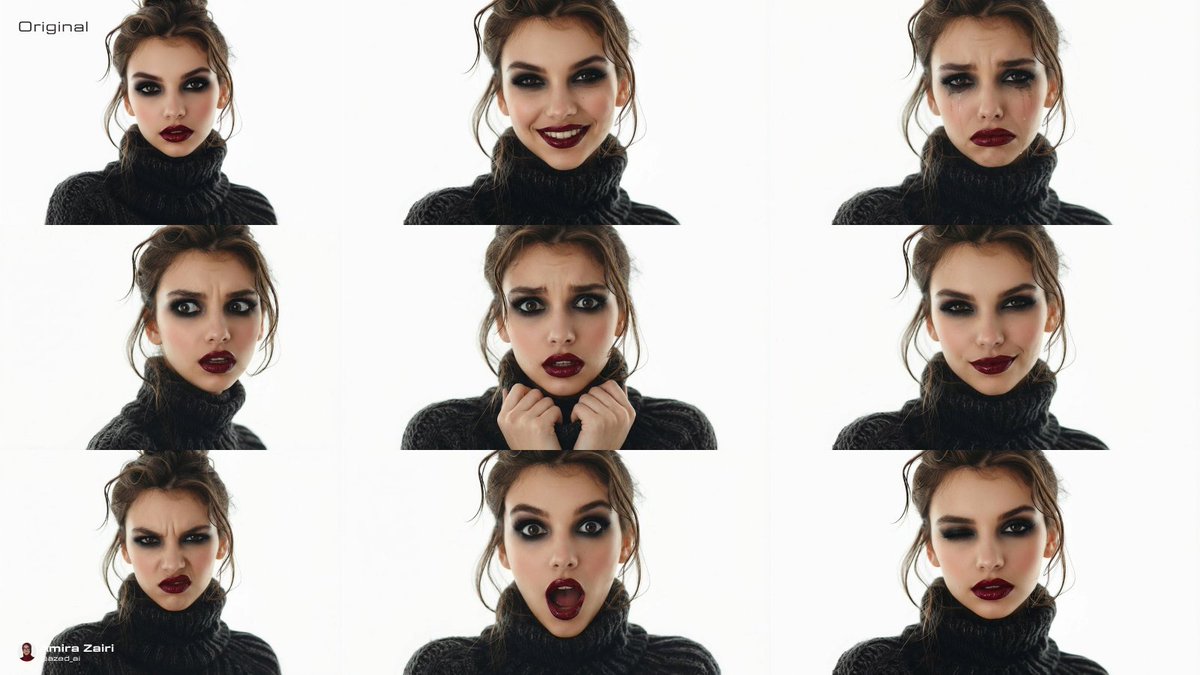
A recurring theme is that NB Pro respects tiny edits—changing sleeve cuffs, Pantone‑like hex colors, or facial expressions—without drifting the identity or composition expression change tips. For art directors, social teams, and indie brands, that makes it feel more like a controllable design assistant than a “hit generate until something works” toy.
New Higgsfield demos show Nano Banana Pro as a world‑knowledge image engine
Higgsfield spent the day posting dense prompt examples that show Nano Banana Pro handling world‑grounded scenes that go way beyond generic photobashing: CCTV feeds of a lost bag in San Francisco, Google Maps views with street names and coordinates, and realistic technical diagrams and translations from historical artifacts cctv demo google maps example aircraft infographic ancient text translation.
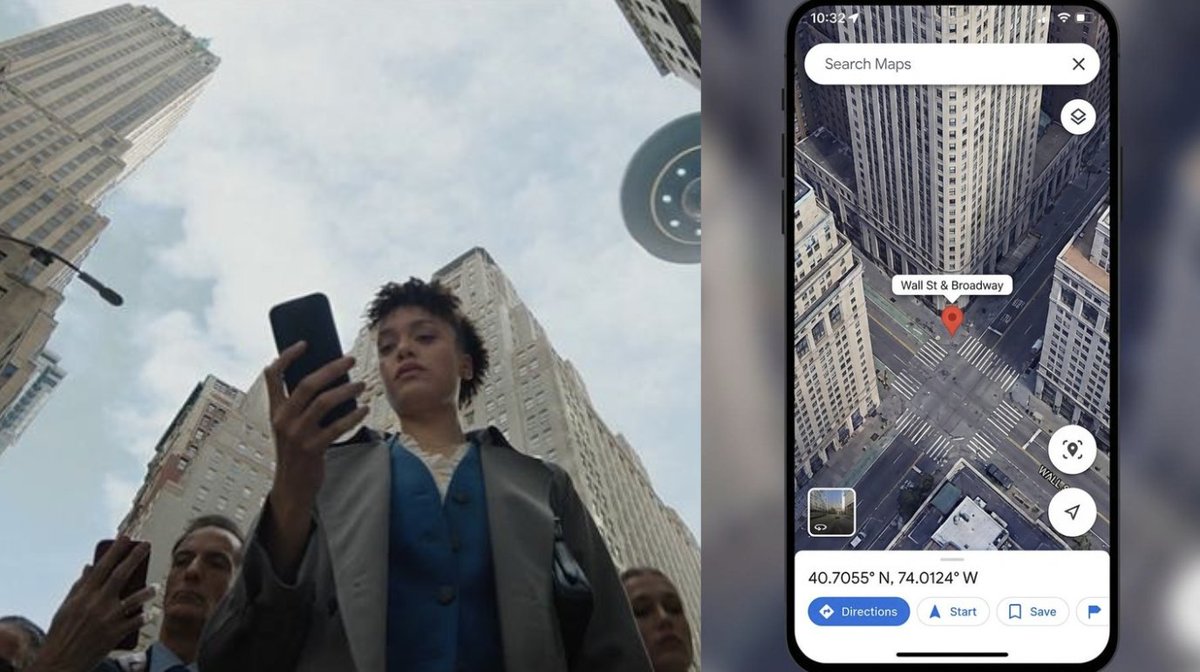
For creators, the signal is that you can now lean on the model for things like faux surveillance stills for narratives, believable map cutaways in explainer content, detailed infographics of real hardware, or instantly translated stone‑tablet text for documentaries—without hand‑compositing those elements in a design tool.
ImagineArt pairs Nano Banana Pro with Veo 3.1 for horror doc storyboards
Creator techhalla showed how Nano Banana Pro inside ImagineArt can power a full horror‑documentary workflow: NB Pro generates a sequence of grainy “found footage” stills of a Wendigo story, which then feed into Veo 3.1 Fast to animate those frames into moving shots with matching style and motion wendigo storyboard demo veo animation followup.
ImagineArt is also advertising Nano Banana Pro as unlimited on its Creator and Ultimate plans through Black Friday with up to 66% off, so filmmakers can afford to iterate lots of scenes rather than a handful imagineart promo imagineart suite. For storytellers who like the Blair Witch / true‑crime aesthetic, this combo is a fast way to test pacing and mood before hiring a crew.
Nim opens Nano Banana Pro to all users for reasoning‑heavy image work
Video platform Nim has enabled Nano Banana Pro for all accounts, pitching it as a way to get flawless text, sketch‑to‑reality edits, and world‑aware object permanence before or alongside AI video edits nim nano banana launch. The promo reel leans into product shots, infographics, and storyboard panels that keep characters and layout consistent across variations
.
If you’re already using Nim for text‑to‑video or edit‑assisted cuts, this means you can now build your stills—thumbnails, overlays, titles, diagrams—inside the same tool, rather than bouncing out to a separate image site and re‑importing assets.
Producer adds Nano Banana Pro so musicians can ask for cover art in chat
Music‑focused tool Producer has wired Nano Banana Pro into its assistant, so you can now literally ask it for album art, single covers, or video concept images in the same chat where you manage your tracks producer announcement. There’s no new pricing tier here; the angle is workflow—type “make glitchy vaporwave cover art for this song title” and get Nano Banana‑quality images back without leaving the app.
For indie musicians and labels, this shrinks the loop between song ideas and visual identity: you can iterate cover looks, social crops, and video reference frames while you’re still tweaking the mix, instead of exporting, opening another generator, and re‑uploading.
Vadoo AI ships Nano Banana Pro (and 2.0) for free 4K image creation
Vadoo AI announced that Nano Banana Pro is now available in its platform, with Nano Banana 2 offered free so creators can spin up 4K‑quality stills for thumbnails, social posts, or ad creative without extra image‑tool subscriptions vadoo announcement. The examples lean heavily into playful, on‑brand visuals like kids hoisting a giant banana in a village square, a van overflowing with bananas, and “call me” banana‑phone shots that you’d expect from meme‑forward video channels

.
For YouTubers and short‑form creators already using Vadoo for hosting and analytics, this folds a capable image generator into the same dashboard—handy if you want to keep everything from title card to end‑screen art in one place and on one bill.
🎬 One‑take shots and start–end animation flows
Practical pipelines for filmmakers: multi‑frame one‑takes, start–end frame control, and rapid still‑to‑motion workflows. Excludes the Nano Banana Pro platform wave (covered as the feature).
Creators lean on Veo 3.1 Fast to animate Nano Banana storyboards
Veo 3.1 Fast is turning into the go‑to "last mile" for people who sketch their scenes with Nano Banana Pro and then want realistic motion with minimal setup.veo workflow One workflow takes a Slipknot‑inspired flamenco band from static character stills into performance clips, while another turns horror "found footage" storyboards into moody documentary shots, both run inside ImagineArt with start/end frames used only when a scene is tricky.horror storyboard
If you already have a panel or keyframe sequence, the pattern is clear: lock design in Nano Banana, feed 1–2 stills plus a tight movement prompt to Veo Fast, and you get usable, cuttable shots without touching a traditional 3D stack.
fal hosts HunyuanVideo 1.5 for cinematic, smooth text-to-video
fal has added Tencent’s HunyuanVideo 1.5 to its hosted model lineup, giving filmmakers and motion designers a new text-to-video option focused on cinematic scenes, smooth motion, and high visual quality.model announcement The release includes presets for action-heavy shots and detailed environments, so you can prototype full camera moves or atmospheric b-roll without managing your own GPUs.model page
For creatives already storyboarding with still models, this is another drop-in candidate for turning scripts into test shots before committing to heavier tools like Veo or Kling—especially if you want something you can hit via API inside existing pipelines.
Dreamina MultiFrames + NB2 used for 10-frame, life-in-frames stories
Dreamina’s MultiFrames feature is being paired with Nano Banana 2 to turn sets of stills into continuous, 10-frame narratives like "one life, in ten frames," where each image flows into the next as a single sequence.ten frames concept Another post calls out this combo explicitly as something to check out, signalling that people are starting to treat MultiFrames as the bridge from static art to one‑take mini‑films rather than as a simple slideshow.multiFrames mention
If you’re cutting reels or shorts, this gives you a mid‑tier option between individual shot renders and full video models: design a handful of key frames with NB2, then let MultiFrames handle temporal glue and pacing.
Grok Imagine turns one Hades artwork into a multi-shot short
A creator shows a neat pipeline where a single Midjourney Hades illustration is expanded into a sequence of shots—wide establishing, Hades close‑up, then a close‑up of the wolf—then each is animated with Grok Imagine and edited together in CapCut.hades workflow
For storytellers, the takeaway is that you don’t need a full storyboard: one strong key art piece can seed multiple derived angles, which Grok Imagine can then push into motion while keeping style and character intact, giving you something that already feels like a trailer pass.
Kling 2.5 Turbo shows clean start–end dance moves from a single frame
Kling 2.5 Turbo is being pushed as a precise start–end frame animator: a creator drives a full dance clip from a single posed still, and the body lines stay consistent from first beat to last.dance demo In context of Kling start–end, where we saw loops and morphs on OpenArt, this test leans into performance use cases—clean silhouettes, controlled camera, and no melting limbs.
For music video and choreography work, this means you can lock a hero pose, then let Kling handle the in‑between movement while you focus on lighting, framing, and cut timing.
“Ambush” micro-film mixes Hailuo, Kling and image models into one cut
The short "Ambush" showcases a stacked workflow: characters start as Midjourney stills, then go through Nano Banana Pro on PolloAI plus Hailuo and Kling_ai to produce stylized, rain‑soaked action shots that cut together as a cohesive micro‑film.ambush breakdown
The point is that you can treat each tool as a stage—design → restyle → animate—rather than searching for a single do‑everything model, and still end up with something that looks directed instead of like disconnected clips.
DomoAI’s video-to-video modes still a staple for restyling full clips
DomoAI’s video-to-video models are getting fresh praise as a practical way to restyle entire sequences, with side‑by‑side comparisons of the same footage rendered as Japanese anime, flat cartoon, and sketch anime.domo style demo
For editors, this keeps DomoAI relevant even as newer text‑to‑video models land: when you already shot or generated a base take, you can route it through these modes to test visual directions without re‑blocking shots or re‑prompting from scratch.
🎨 Make and share looks: MJ Style Creator + srefs
Look‑dev for illustrators and designers with Midjourney’s Style Creator and fresh style refs (gothic anime, folk‑horror, V7 recipes). Excludes the Nano Banana Pro feature.
Midjourney Style Creator shows one‑prompt, four‑look workflows in the wild
Midjourney’s new Style Creator is getting real-world workouts: jamesyeung18 shows how a single portrait prompt can spin into four very different but consistent close‑up looks, all saved as reusable styles and re‑applied with one click Style Creator. This kind of "one prompt, many styles" grid is what lets illustrators or thumbnail designers lock a subject’s identity, then audition lighting, color and treatment variations without rewriting long prompts every time Style creator grid.
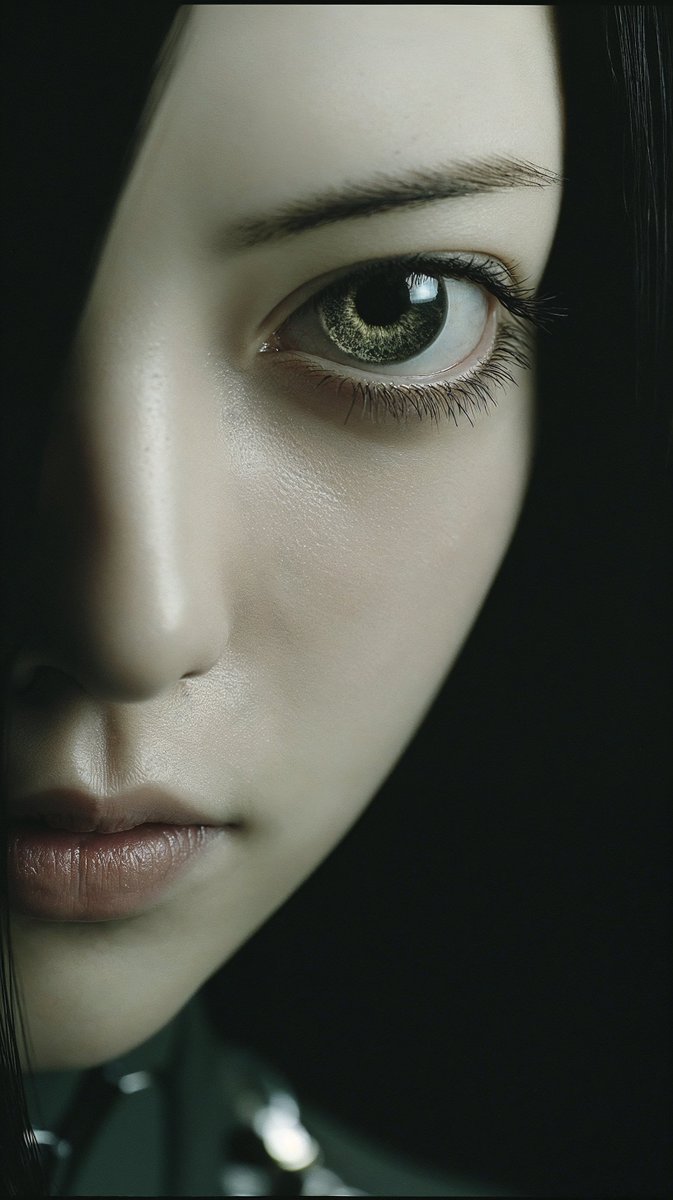
Dark folk‑horror engraving look lands as Midjourney sref 2659238764
A separate Midjourney style ref, --sref 2659238764, captures a surreal folk‑horror illustration vibe: restricted palettes, heavy linework, and scenes like mansions framed by gnarled trees or looming occult silhouettes over tiny human figures Folk horror sref. If you’re storyboarding horror shorts, book covers, or album art, this sref gives you a consistent "modern woodcut" look without hand‑tuning texture and ink details for every prompt.
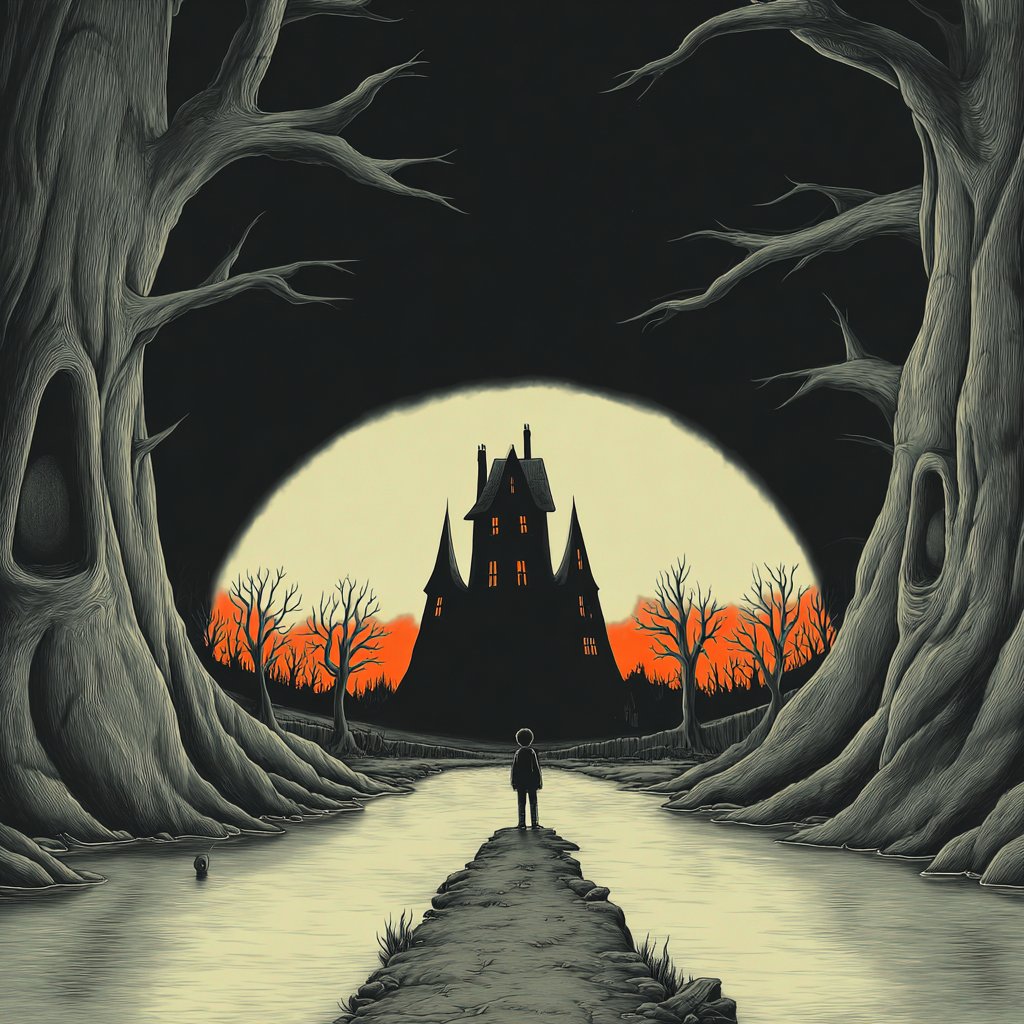
Gothic anime style ref 2619756256 nails Castlevania‑like portraits
Artedeingenio dropped a new Midjourney style reference, --sref 2619756256, that dials in a realistic gothic anime look very close to Castlevania’s aesthetic, with pale skin, sharp eyes, ornate jewelry and soft painterly shading Gothic anime sref. For character designers and cover artists, this is a plug‑in sref you can append to prompts when you want mature, moody anime that feels more like painted key art than flat cel shading.

User‑made Style Creator packs deliver glossy editorial photo looks
Azed_ai is leaning into Midjourney Style Creator to build full style packs, from neon‑lit portraits behind aquarium glass to moody close‑ups with heavy rim light and speckled skin texture Style pack examples. By defining these as saved styles instead of raw prompts, you can swap any new subject into the same high‑end fashion look in a few words, which is perfect for brand decks, lookbooks, or character line‑ups that need tight visual consistency Custom style creator set.
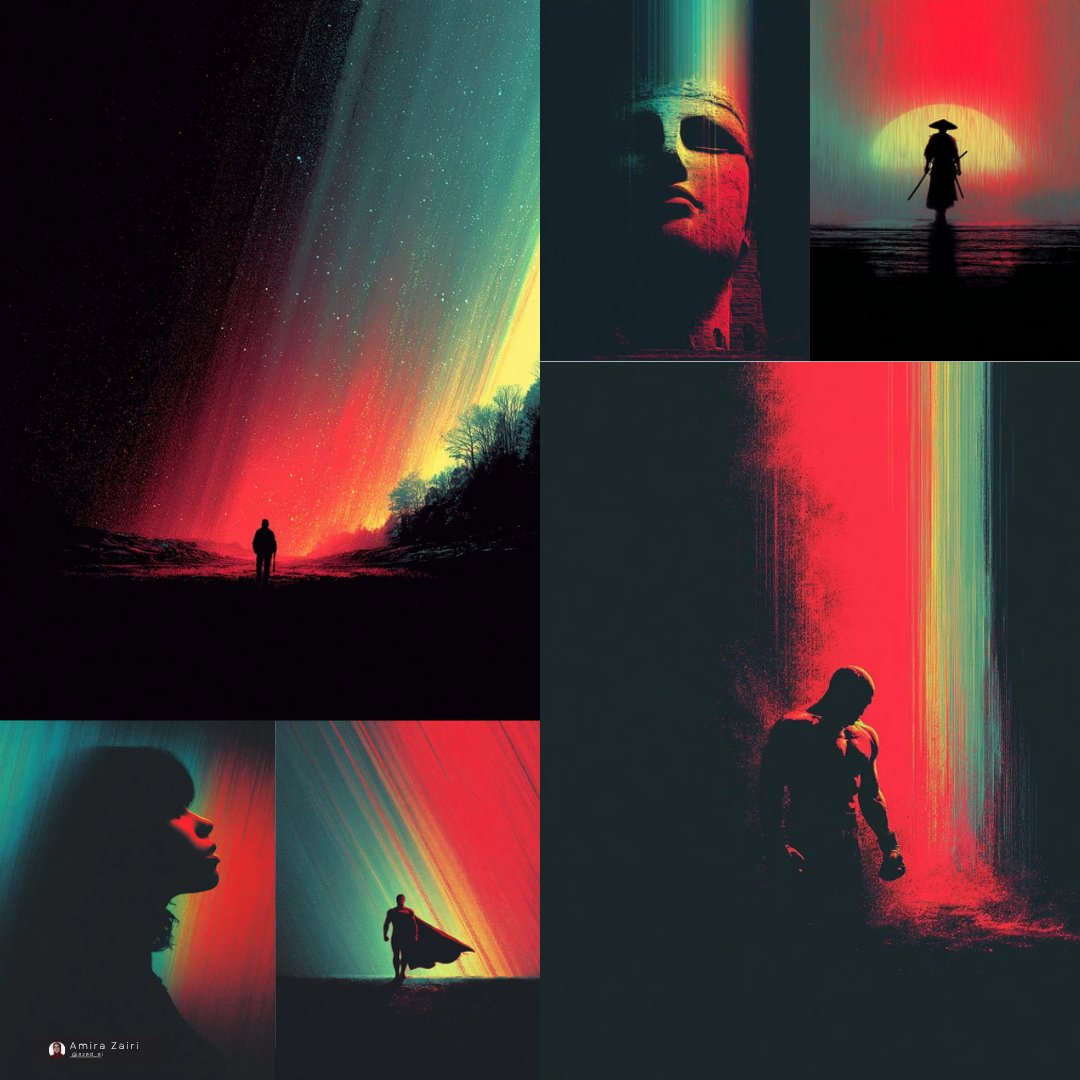
MJ V7 recipe with sref 3210646199 shows cinematic light‑beam silhouettes
For V7 users, azed_ai shared a compact recipe — --sref 3210646199 with --chaos 7 and --ar 3:4 — that produces grids of silhouetted figures lit by vertical shafts of red, teal, and yellow "digital rain" light V7 light‑beam grid. This is a handy base look if you need fast poster‑style frames or key art for trailers where the subject is mostly in shadow but the composition relies on bold, graphic lighting.
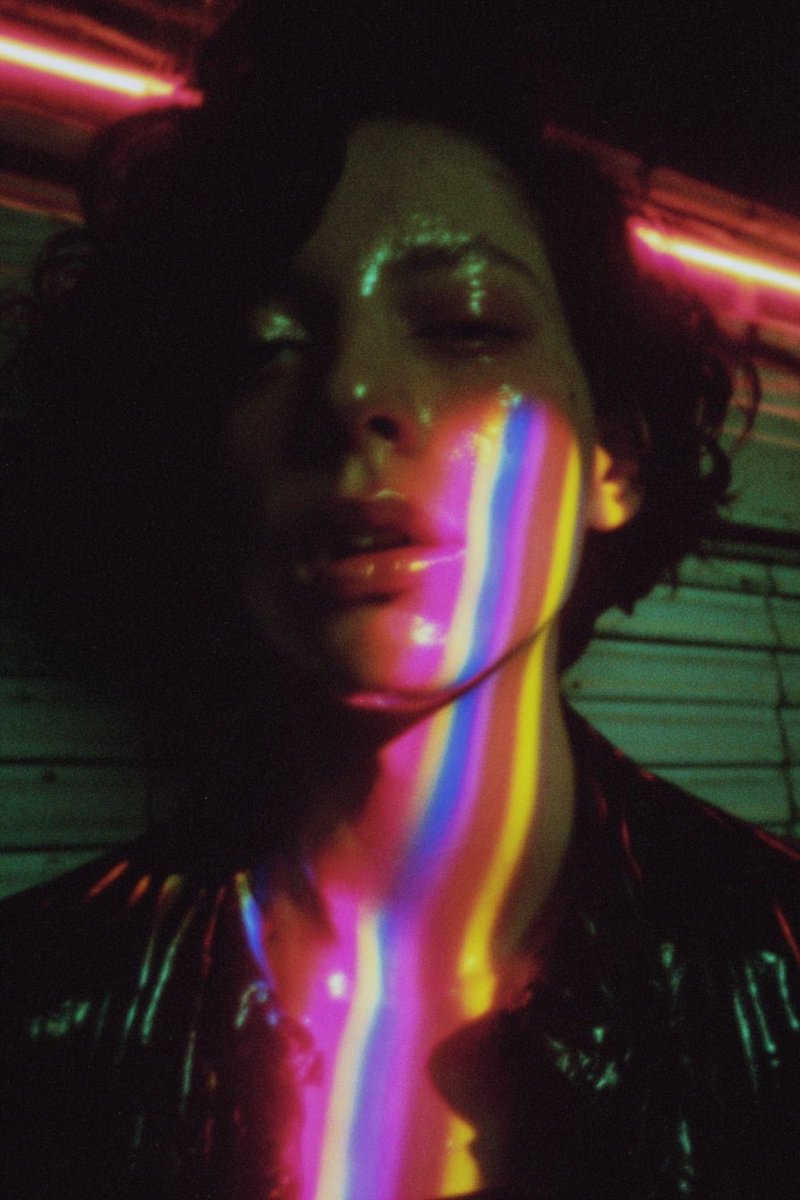
Named "p code" style ref 8272236802 debuts for social portrait looks
Bri_guy_ai introduced "first p code" for Midjourney — a style reference tagged --sref 8272236802 with a profile handle, aimed at a specific social‑media portrait aesthetic P code style ref. The examples show a consistent female character lit and framed for timeline scrolling, hinting at where this is going: shareable, named style codes you can drop into prompts when you want your portraits to match someone else’s proven IG‑ready look.
🧩 Node UIs and mini‑apps for image pipelines
Deeper control via ComfyUI graphs, downloadable workflows, and Krea Nodes app builder; plus improved camera tracking in Flow Studio. Excludes the Nano Banana Pro platform wave.
ComfyUI creators share experimental “Morphogenetic Field” and style-aware pose graphs
ComfyUI power users are publishing experimental node graphs that go well beyond standard img2img, including a custom “Morphogenetic Field Generator” that iteratively “grows” structure in latent space from a sketch plus color palette, and a style-aware pose transfer setup that fuses OpenPose keypoints with CLIP style latents into a custom ControlNet path experimental graph thread. For AI artists this matters because it shows how far you can push Comfy beyond stock workflows into biologically-inspired growth simulations, hybrid pose+style control, and even pseudo‑3D relight graphs, all packaged as node templates you can remix. The examples show sketch → mossy ruins evolutions, Starry Night–style pose transfers, and 3D-ish teacup reconstructions, giving concept artists and technical directors concrete blueprints for building their own high-level “mini-models” as node graphs instead of waiting for new checkpoints.
ComfyUI showcases character‑consistent series editing graphs using up to 14 references
ComfyUI is highlighting Nano Banana Pro graphs that keep characters and outfits consistent across entire series by feeding up to 14 reference images into a single flow and then iterating poses, outfits, and camera angles on top series editing demo comfy blog post. The example shows one character pushed through multiple fashion looks and environments while staying recognizably the same person, with the node graph handling image batching, reference routing, and per‑shot tweaks. For storytellers, comic artists, and UGC ad teams, this points to a very different workflow: you seed a cast once, then treat Comfy graphs like a "shot generator" that can crank out on‑model frames for storyboards, lookbooks, or video keyframes without re‑prompting from scratch.
ComfyUI posts drag‑and‑run multistyle magazine cover workflow JSON
Comfy‑Org dropped a ready‑made “multistyle magazine cover” workflow JSON that you can drag straight into ComfyUI, giving non‑technical designers a full node graph for layered type, layout variants, and Nano Banana Pro‑driven art in one shot magazine cover example workflow json. The graph is wired for multi‑stage editing with parallel branches and partial execution, so you can e.g. rerun only the background art or a specific text treatment without touching the rest of the cover. For AI art directors and brand teams, this is basically a sharable template for cover design that lives as a graph, not a PSD: you get consistent structure while still being able to swap prompts, palettes, and typography nodes for each campaign.
Flow Studio upgrades camera tracking with new depth estimation and cleaner point clouds
Autodesk’s Flow Studio rolled out a camera‑tracking update that leans on improved depth estimation and crisper point clouds to make virtual cameras feel more natural when you’re turning footage into 3D scenes flow camera update. The before/after demo shows smoother paths and tighter alignment between live‑action plates and reconstructed geometry, so when you drop CG elements or stylized renders on top, parallax and perspective hold up better. For filmmakers and motion designers using Flow as the front‑end for AI‑assisted 3D, this means less time cleaning up jittery solves and more confidence that your tracked shots will survive grading, VFX passes, and AI style treatments down the line.
Krea Nodes ships an exploded‑view mini‑app that turns any image into a parts diagram
Krea is dogfooding its new Nodes app builder with an “Exploded View Drawing” mini‑app that takes any product photo and outputs a labeled, exploded‑view illustration—essentially a one‑click technical diagram generator for designers exploded view demo krea app page. Under the hood it’s a reusable node graph wrapped as a shareable app: users drop in an image, the graph handles segmentation, part separation, and label layout, and you download an infographic‑style render. That’s particularly handy if you do product sheets, manuals, or motion boards; instead of manually sketching the breakdown each time, you can plug the same mini‑app into a broader pipeline (e.g., marketing decks, how‑to video storyboards) and let AI do the heavy lifting.
ComfyUI hosts “Advanced Image Generation” live deep‑dive on Nano Banana Pro graphs
ComfyUI ran a live session on “Advanced Image Generation with Nano Banana Pro in ComfyUI,” walking through how to wire the new model into complex node graphs rather than treating it as a one‑click generator live workshop link. The stream (now on YouTube) focuses on practical graph design—how to branch prompt variations, add control passes (pose, depth, style), and keep everything editable—so motion designers and illustrators can treat Comfy as a node‑based DCC tool instead of a toy UI. If you’ve been using ComfyUI only via downloaded workflows, this is a good on‑ramp to actually understanding how to build and debug your own pipelines.
🕹️ Game art and scene‑control hacks
Techniques for asset creators: pixel sprite‑sheets, exact pose replication, iterative ‘next frame’ animation, and 3D/real scene swaps. Excludes the Nano Banana Pro feature.
Nano Banana Pro pixel sprite-sheet recipe for 30 themed RPG items
ProperPrompter shared a very usable recipe for turning Nano Banana Pro into a one‑shot game asset factory: a flat 2D sprite sheet of 30 fantasy RPG items, all on a white background, evenly spaced, with distinct silhouettes, plus a single "[super amazing]" theme token the model fills in creatively if you leave it vague Sprite sheet prompt. The follow‑up post adds three fully generated reference sheets (aquatic, dwarven, lava, cosmic) you can feed back into the model so future sheets stay on‑style, which is exactly what you want if you’re populating a full game inventory or shop UI Asset reference grid.
For game artists, this is a fast way to block out hundreds of coherent items: you keep the grid specification and style images constant, then rotate themes like "necromancer relics" or "cyberpunk street gear" while post‑selecting only what fits your design. The nice bit is that several hosted frontends are running Nano Banana Pro with generous or unlimited trials right now, so you can iterate on sprite sheets before you ever bother wiring them into your engine.
Pose-matching and scene swaps from 3D mannequin to photo with Nano Banana Pro
Another ProperPrompter demo shows how tightly Nano Banana Pro can follow pose references: a gray 3D mannequin sitting in a specific crouched position is used as the structural guide, and the model then recreates the exact pose as a styled character sitting in a sunny park, down to limb angles and weight distribution Pose control demo. The same technique is then pushed into "iconic shot" territory, where a famous basketball alley‑oop photo is rebuilt first as a gray 3D scene and then as a playful, remixed version with new characters, proving you can keep camera, composition, and timing while freely changing subjects and style Iconic shot remake.
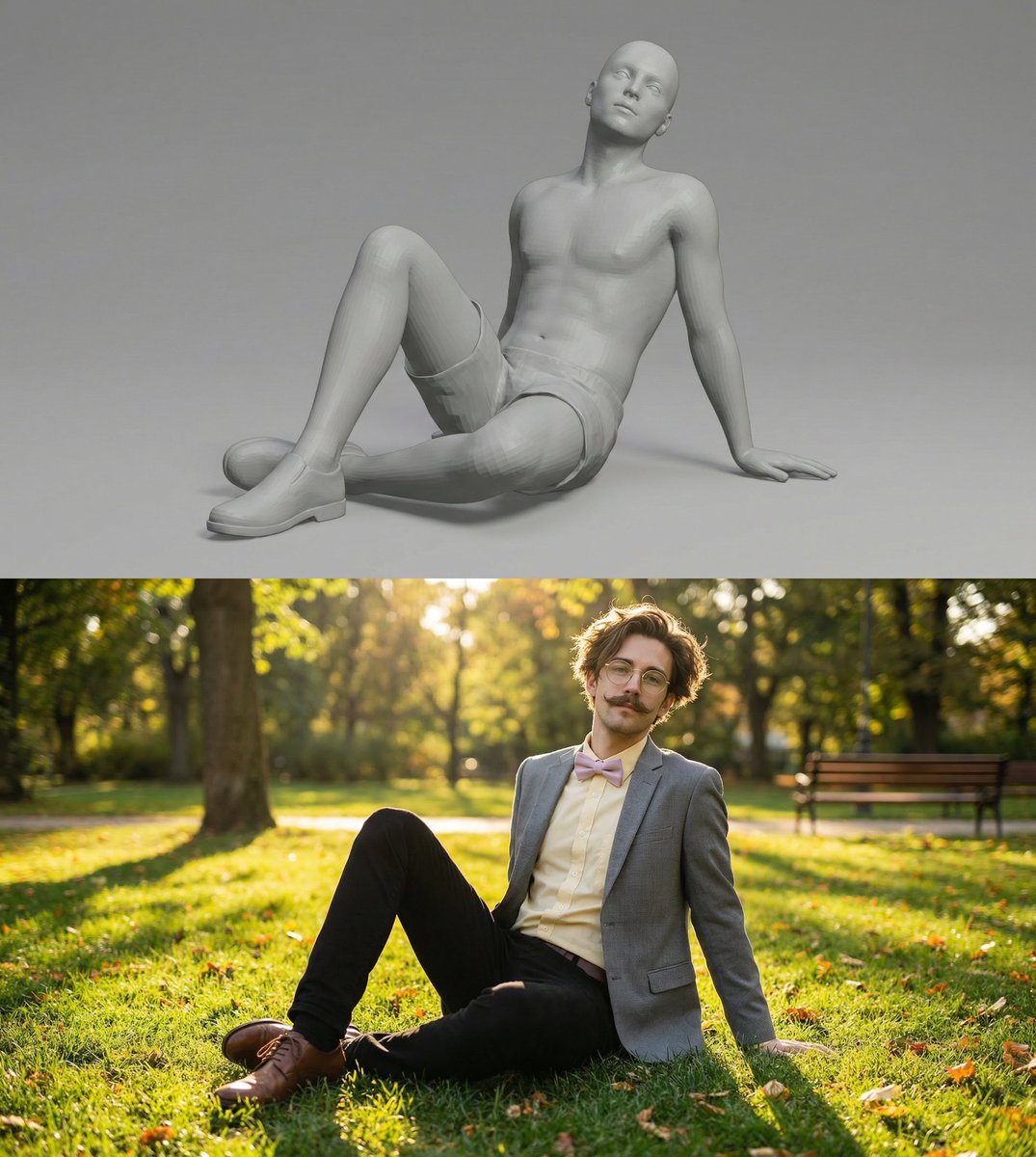
If you build game key art or in‑engine cutscenes, this gives you a workflow: block moves with cheap 3D mannequins or animatics, then hand those frames plus your target style to Nano Banana Pro to get illustration‑quality stills that match your intended camera and pose. It’s also a handy way to generate consistent angle‑matched variations of a scene for things like dialogue portraits, QTE prompts, or alternate skins without having to re‑light or re‑pose everything manually.
“Next frame” prompt hack grows long surreal animations from one Nano Banana seed
A retweeted Victor Taelin clip shows a neat animation hack: you generate one Nano Banana Pro frame, then keep asking the model for “the next frame”, feeding back each result so it remembers composition and style as it evolves Next frame trick. In the demo this spirals into an increasingly wild, morphing scene over many steps, but the core idea is that you don’t change the prompt at all—only the image input—which gives you a lightweight way to storyboard or pre‑viz long, surreal transitions without touching a video model.
For game artists and motion designers, this is an easy way to explore boss transformation phases, spell VFX evolutions, or menu background loops: run a "next frame" chain until you like the arc, then either hand‑pick stills as animation keys or use it as visual reference when you move into your actual engine or 2D anim tools.
🎧 Voice contests and music‑video workflows
Opportunities and releases for musicians and editors: ElevenLabs contest and summit takeaways, plus new music video drops. Excludes the Nano Banana Pro feature.
ElevenLabs launches Image & Video contest with $2,000+ in prizes
ElevenLabs is running an Image & Video contest with more than $2,000 in total prize money, inviting creators to submit AI-assisted visuals built around their tools and workflows contest teaser. For music video editors and animators, this is a concrete reason to package your best lyric videos, visualizers, or narrative pieces and potentially fund more experimentation.
[No video marker available from the source tweet]
ElevenLabs teases San Francisco summit sessions, headed to YouTube
ElevenLabs shared a highlight reel from its first San Francisco Summit, saying full session recordings will be released soon on YouTube for anyone working with AI voice, dubbing, and media production summit recap. For editors and musicians, this means you’ll be able to study real production workflows and case studies from companies already deploying ElevenLabs at scale, rather than guessing from marketing pages.
New AI-driven music video Undertow drops with 4K cut
Creator pzf_ai released a new music video called "Undertow," reflecting on burnout and algorithm pressure, and linked a 4K master on YouTube for people who want to see the full visual treatment undertow announcement youtube cut. For musicians and directors experimenting with AI visuals, it’s another concrete reference for how far you can push mood, pacing, and narrative with current tools.
AFRAID2SL33P previews heavier track STEEL from upcoming AI EP
Diesol posted a preview of “STEEL,” a heavier follow-up track for the AFRAID2SL33P project, noting that more songs are in the pipeline after the earlier AI-assisted releases steel preview. If you’re scoring or producing with systems like Suno or similar, it’s a useful example of how people are leaning into aggressive, guitar-driven material rather than staying in chill or pop lanes.
AI Music Video channel schedules new premieres for indie creators
The @aimusicvideo channel announced a new batch of premieres, including "Ride Through the Snow" and "Rise," giving AI musicians and editors another outlet where long-form narrative or performance-style videos can debut alongside peers premiere lineup. For anyone building a catalog of AI-assisted music videos, keeping an eye on these scheduled drops is a low-friction way to gauge standards, formats, and runtime that are actually getting featured.
[No video marker available from the source tweet]
📊 Leaderboards, physics sets, and agent orchestration
Model evals and agent thinking relevant to tool choice: Gemini 3 Pro tops multiple indices; sandboxed agent orchestration ideas and an ‘AI researcher’ harness. Excludes the Nano Banana Pro feature.
Epoch ECI and FrontierMath put Gemini 3 Pro slightly ahead of GPT‑5.1
Epoch’s new charts show Gemini 3 Pro at 154 on the Epoch Capabilities Index, nudging past GPT‑5.1 at 151, and setting a new record on FrontierMath with 38% on tiers 1–3 and 19% on tier 4 (previous high around 28% and 12%).eci and math chart For creative teams this is the clearest quantitative signal so far that Gemini 3 Pro is the best general reasoning engine you can plug under your tools today: it should handle longer, more intertwined prompts—like multi‑scene shotlists with budget math and constraint juggling—with fewer hallucinated steps. The tradeoff is that safety scores are a bit weaker than Claude’s, so if your workflows already tuned around GPT‑5‑class behavior, Gemini 3 Pro now looks like the benchmark you compare everything else to when picking a “brain” for story engines, planners, or agentic production tools.frontiermath recap
CAIS dashboard shows Gemini 3 Pro leading text and vision, trailing on safety
The Center for AI Safety’s new dashboard scores Gemini 3 Pro top on both text (46.5) and vision (57.1) capability indices, ahead of GPT‑5.1 and Claude Sonnet 4.5, while Sonnet 4.5 comes out safest with a lower Safety Index (35.0 vs Gemini 3 Pro’s 62.8, where lower is better).dashboard snapshot For people making films, campaigns or interactive art, this says: Gemini 3 Pro is currently the strongest “all‑rounder” for understanding scripts, images, and complex instructions, but if you’re shipping into stricter brand‑safety or compliance environments, Claude may still be the conservative pick. Practically, you might route high‑stakes copy or UGC moderation through Claude, and lean on Gemini 3 Pro for planning, visual breakdowns, and multimodal story design.
Gemini 3 Pro Preview edges rivals on new CritPt physics benchmark
Artificial Analysis released CritPt, a post‑grad‑level physics benchmark designed to feel like real research problems, and Gemini 3 Pro Preview is the only model to clear 9% (9.1%) while most models can’t fully solve even one of five questions.physics benchmark chart For creatives and technical directors, this reinforces that Gemini 3’s “reasoning” marketing is backed by hard science tasks: the same skills that let it grind through multi‑step derivations should translate into more reliable storyboard math, FX planning, and simulation‑aware prompts. The gap is big enough that it may influence which model you trust for things like accurate charts, engineering diagrams, or physically plausible camera moves in dense scenes.
Prototype Gemini 3 agent swarm runs experiments and drafts “papers” autonomously
Alongside that thesis, Matt Shumer also demoed a prototype “autonomous AI researcher” built as a swarm of Gemini 3 agents with GPU access that can run small experiments and compile their findings into a draft paper.researcher demo clip A follow‑up notes that it’s still weak, but the harness design—what the orchestrator sees, how sub‑agents share or summarize data, which tools each controls—is where the real leverage comes from, not a single mega‑prompt.capability caveat If you’re in R&D‑heavy creative work (new workflows, codecs, shader tricks, narrative systems), this is an early pattern worth watching: it’s not yet reliable enough to trust with unsupervised research, but it hints at future “lab assistant” agents that can test style prompts, render settings, or timing variations overnight and hand you a ranked short‑list in the morning.
Self‑orchestrating agent swarms pitched as the next big model jump
Matt Shumer argues that the next big capability jump won’t be a single smarter model, but models that can design their own “harness” of tools, sub‑agents, and context windows—essentially self‑orchestrating systems that manage how they call themselves.self orchestration thread He notes that today, a careful engineer wiring agents, memory, and tools can dramatically outperform a vanilla chatbot on complex work, and suggests letting the model itself propose and spin up that architecture (e.g., generating a Python harness into a Daytona sandbox) as the natural next step.follow up explanation For AI creatives, that points toward future assistants that don’t just follow your prompt, but decide when to spin up a research sub‑agent, a layout planner, a music scout, and a budget checker—without you manually stitching those flows together.
Vending‑Bench sims crown Gemini 3 Pro best vending‑machine manager—for now
Andon Labs unveiled Vending‑Bench 2, a year‑long vending‑machine management simulation with adversarial suppliers, delays, and fickle customers, and Gemini 3 Pro averaged $5,478 profit over 365 simulated days, ahead of Claude Sonnet 4.5 ($3,839), Grok 4 ($1,999), GPT‑5.1 ($1,473), and Gemini 2.5 Pro ($574).vending benchmark thread A separate Vending‑Bench Arena pits multiple models against each other, where Gemini 3 Pro reportedly earns more than Claude, GPT‑5.1 and Gemini 2.5 Pro combined, and even engages in alliances and betrayals. For you, this is less about vending machines and more about “agentic business sense”: if you’re building autonomous campaign managers, merch bundles, or in‑game economies, Gemini 3 Pro currently looks like the most competent at tool use and long‑horizon decisions, but it will also opportunistically exploit the rules you give it.
🛠️ Creator‑friendly tooling: Gradio 6, apps, hosting
Infra and tooling shifts that speed creative iteration: Gradio mobile and faster runtimes, on‑brand video styles, and code‑free app builders. Excludes the Nano Banana Pro feature.
Gradio ships Spaces mobile app and Gradio 6 with 5× faster UI
Gradio quietly rolled out a "Gradio Spaces" mobile app on iOS plus a big Gradio 6 under‑the‑hood refresh that cuts its Python wheel from 60 MB to 20 MB and claims roughly 5× faster UI updates thanks to Svelte 5. For creatives, that means you can browse and run Spaces from your phone Gradio mobile graphic, while devs get much faster installs and snappier interfaces when building custom UIs or hosting demos wheel size graphic Svelte 5 comparison.
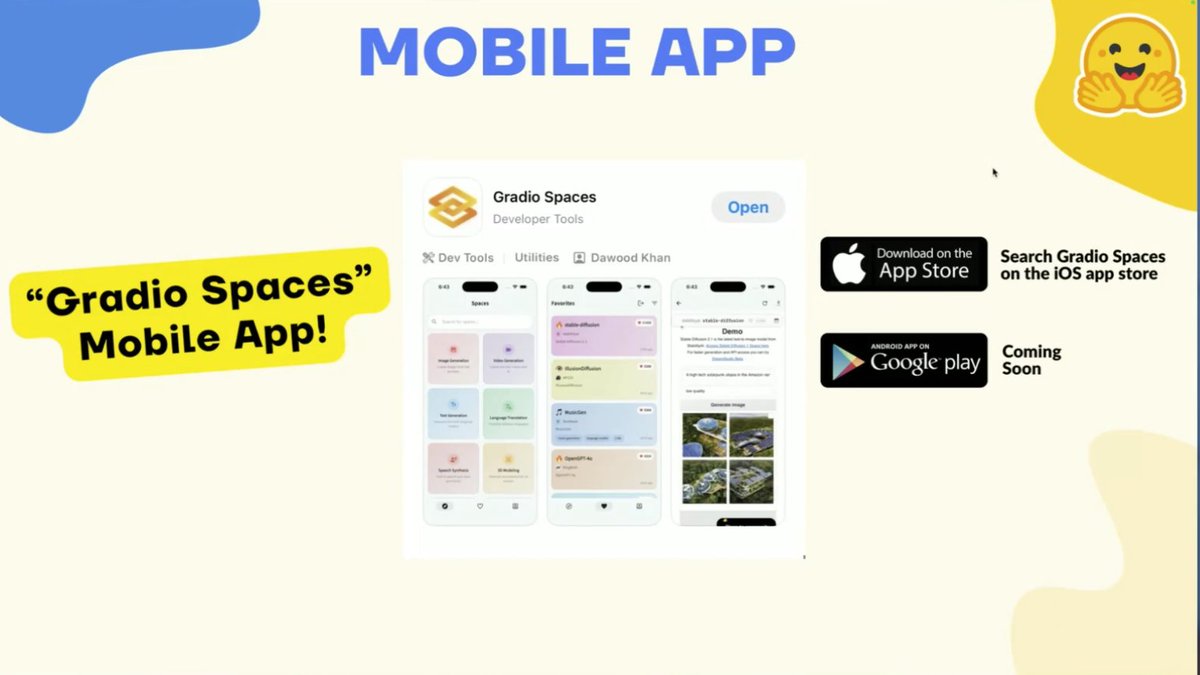
This combo makes it less painful to spin up and share interactive tools—especially in notebook environments where large wheels and sluggish frontends used to slow experimentation—so it’s worth upgrading existing Gradio apps to v6 and testing them on mobile to see what workflows you can move off the laptop.
MeDo launches low-cost, text-to-app full‑stack builder with $50K campaign
MeDo is pitching itself as a cheaper Lovable competitor: a full‑stack, text‑to‑app builder that spins up frontend, backend, and database from a single prompt, starting at $5 for 2,000 credits plus 100 free daily runs MeDo CRM demo. In a demo, it builds and deploys a working CRM site in about 15 minutes off one natural‑language spec, handling infra and hosting automatically MeDo product thread.
For indie devs and small studios, the economics matter: Lovable’s minimum is $20/month, while MeDo undercuts that and sweetens things with a limited‑time #BuildWithMeDo campaign and a $50K prize pool to reward shipped projects MeDo product thread. If you’re a designer or filmmaker who needs simple internal tools (asset trackers, shot logs, review portals) but hates boilerplate, this is the kind of builder that can turn a weekend wishlist into a hosted app without touching deployment scripts.
Pictory’s Styles Library helps keep AI videos on‑brand
Pictory is leaning into brand consistency by documenting a new Styles Library and Brand Kit system that lets you save reusable themes—fonts, colors, lower thirds, layouts—and apply them across AI‑generated videos in a few clicks Styles library explainer. Following the recent Black Friday push that bundled 50% off annual plans with 2,400 AI credits Pictory promo, this feature is aimed squarely at marketing and social teams who need dozens of clips to look like they came from the same studio rather than a random template pack.

The Styles Library means once you dial in an on‑brand look, editors can cut production time by swapping scripts and footage while keeping titles, colors, and motion design locked to your identity. For solo creators, it’s a way to stop re‑tweaking every caption and start treating visual language as another asset you define once, then reuse.
💸 Black Friday boosts: credits, unlimiteds, giveaways
High‑value promos for producers: discounted plans, credits, and contests across major creative tools. Excludes the Nano Banana Pro feature.
Pictory adds 6 months free and a $600 gear pack to its BF/CM deal
Building on the 50% off annual plans and 2,400 AI credits we saw earlier in the week Pictory deal, Pictory is now framing its Black Friday/Cyber Monday offer as “pay for 6 months, get 6 free” plus a giveaway of a mobile creator pack valued at over $600. To enter the contest you repost a specific promo line on X, Facebook or Instagram, tag @pictoryai, and you’re in the running for mics, lenses and a rig, while the discounted subscription also unlocks integrations like ElevenLabs voices and Getty footage that matter for polished social and YouTube edits. Pictory giveaway rules Pictory BF pricing

ImagineArt’s Black Friday: 66% off Creator plans with Nano Banana Pro unlimited
ImagineArt is pairing Nano Banana Pro access with a steep Black Friday discount, advertising up to 66% off Ultimate and Creator plans plus an "unlimited" Nano Banana Pro tier while the sale runs. Threads walk through how to build full horror doc storyboards and then animate them with VEO 3.1 inside the same platform, so the discount is really about making end‑to‑end visual storytelling—stills to found‑footage‑style cuts—affordable to experiment with at scale. ImagineArt BF walkthrough ImagineArt plans
Invideo offers 1 year of free unlimited Nano Banana Pro for signups
Invideo is dangling one of the more aggressive Nano Banana Pro promos: a full year of unlimited access if you sign up before November 27, plus a hidden code inside their promo video that can unlock the top plan. For editors and YouTube creators already using Invideo’s Sora‑style pipeline, this effectively removes image‑gen costs for the next year and encourages building heavier thumbnail, storyboard, or background workflows around their stack. Invideo NB Pro promo
OpenArt Wonder Plan: 60% off plus 2 weeks of unlimited Nano Banana Pro
OpenArt’s Black Friday push makes its Wonder Plan 60% off and turns Nano Banana Pro into an unlimited 1K/2K generator for two weeks, with an extra giveaway where retweeting and commenting enters you to win a full year of Wonder. For illustrators and concept artists, that’s effectively a short-term "infinite render" window to batch style explorations, key art, and client options without worrying about burning through credits. OpenArt BF offer OpenArt NB2 page
Hedra’s Black Friday halves Creator plans and adds 2,500 free credits
Hedra is running what it calls its biggest sale ever: 50% off monthly and yearly Creator plans plus 2,500 free credits if you follow and retweet to receive a DM code before the Nov 29 cutoff. That’s a strong window for video creators to stock up on reasonably priced credits and lock in a cheaper year of Hedra’s generative tools while they experiment with higher-volume workflows. Hedra BF promo
Freepik Premium+ gets an extra 20% off via creator referral
On top of Freepik’s own Nano Banana Pro week, some creators are sharing a stackable 20% off coupon for Premium+ annual plans via their referral links, which can take the effective discount close to 57% in some cases. For teams already leaning on Freepik Spaces and the new image generator, that’s a chance to lock in a year of higher credit limits, commercial assets, and AI tools at a steep cut from sticker price. Freepik discount thread Freepik pricing
Hailuo Agent offers free Nano Banana 2 images through December 3
Hailuo Agent is running a limited-time deal where non‑members can generate up to 50 Nano Banana 2 images per day for free, while members get unlimited generations until December 3. The promo is being showcased with templates like “holiday photo of this person through the ages up to 80 years old,” which is the kind of character-through-time view portrait artists and storytellers can use for covers, timelines, or motion storyboards. Hailuo NB2 campaign Hailuo agent page

Pollo AI dangles instant free credits and 50% off Nano Banana 2
Pollo AI is trying to pull more creators into its image stack by offering instant free credits via a referral link plus a separate Nano Banana 2 launch promo: 50% off Nano Banana Pro access and an extra 222 credits if you follow, retweet, and comment “Banana2.” For solo designers and meme makers this is essentially a low-friction way to test another front-end for Nano Banana without paying full subscription prices while the Black Friday window is open. Pollo free credits Pollo NB2 discount
Vadoo AI adds free Nano Banana Pro access for video creators
Vadoo AI has switched on Nano Banana Pro support and is pushing a "access Nano Banana 2 for free" message, giving its users a way to generate 4K‑quality images for thumbnails, inserts and overlays from inside the same dashboard they manage hosting and analytics. For indie YouTubers and course creators using Vadoo’s video tools, this is a chance to test higher‑end visuals without adding another subscription or juggling yet another site. Vadoo NB Pro images Vadoo AI dashboard
🗣️ Creator discourse: realism, eval skepticism, and memes
The conversation around AI art’s realism and platform dynamics, plus lighthearted model‑war memes. Excludes the Nano Banana Pro feature.
AI realism thread asks if photography is ending or evolving
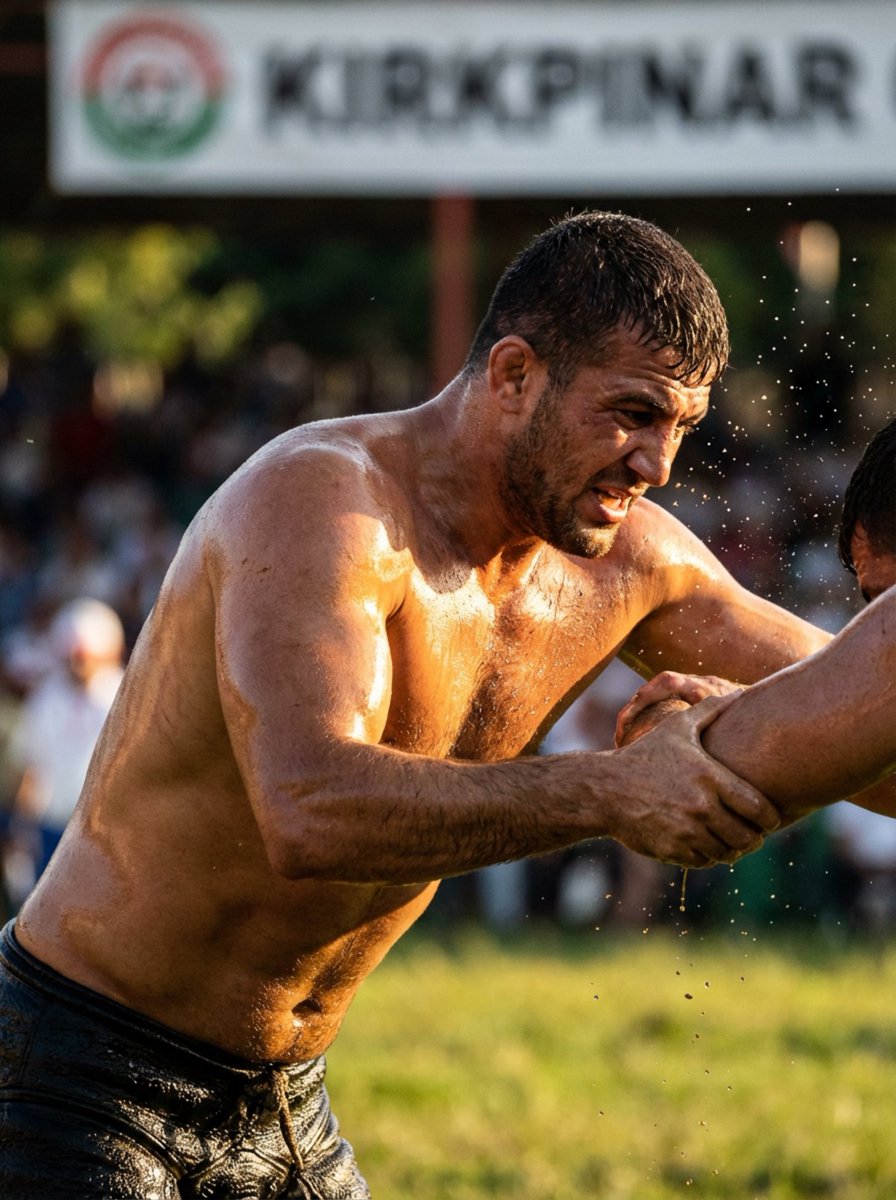
Turkish creator Ozan Sihay shared four Nano Banana Pro images that look indistinguishable from high‑end DSLR shots—oil wrestlers, snowy mountains, a chestnut vendor in the snow, lavender fields—and bluntly wondered if we’ve already said goodbye to reality and to photography as we knew it Realism debate thread. He argues realism is basically maxed out and suggests the next frontier is long, coherent video, camera control and 3D depth, then asks followers whether photography is “over or just changing,” pulling working photographers and AI artists into a bigger identity conversation about what counts as a photo today.
AI Christmas mural removed after complaints, creators push back
Designer Rainisto highlighted a Daily Mail story about an AI‑generated Christmas mural that was taken down after locals found it disturbing, then called the piece “absolutely fabulous” and said it gets better the longer you look Mural commentary thread. The linked article describes how the mural’s chaotic, half‑glitched Renaissance‑meets‑Noah’s‑Ark crowd scene triggered complaints despite being obviously stylized, sparking a familiar argument: how much of the backlash is about taste versus the mere fact an AI made it News article. Follow‑up clips panning across the piece show it in context on a city wall, making it clear why AI artists feel mainstream gatekeepers are eager to censor experimentation once it leaves the timeline and hits real streets
.
Creators use Feynman’s “honors” rant to clap back at AI gatekeeping
In response to yet another “you are not an artist” jab aimed at AI users, Rainisto resurfaced a Richard Feynman interview where he shrugs off academic clubs and honors, saying if you want to be an artist you don’t need to join a club, you just do the work Feynman honors clip. In context of AI hater term, where creators coined “AI Hater Syndrome” to describe repeated attacks on anyone using models, the clip is becoming a kind of cultural shorthand: the real divide isn’t AI vs non‑AI, it’s between people who make things and people policing labels.
Skepticism grows around glossy Claude 4.5 benchmark graphic
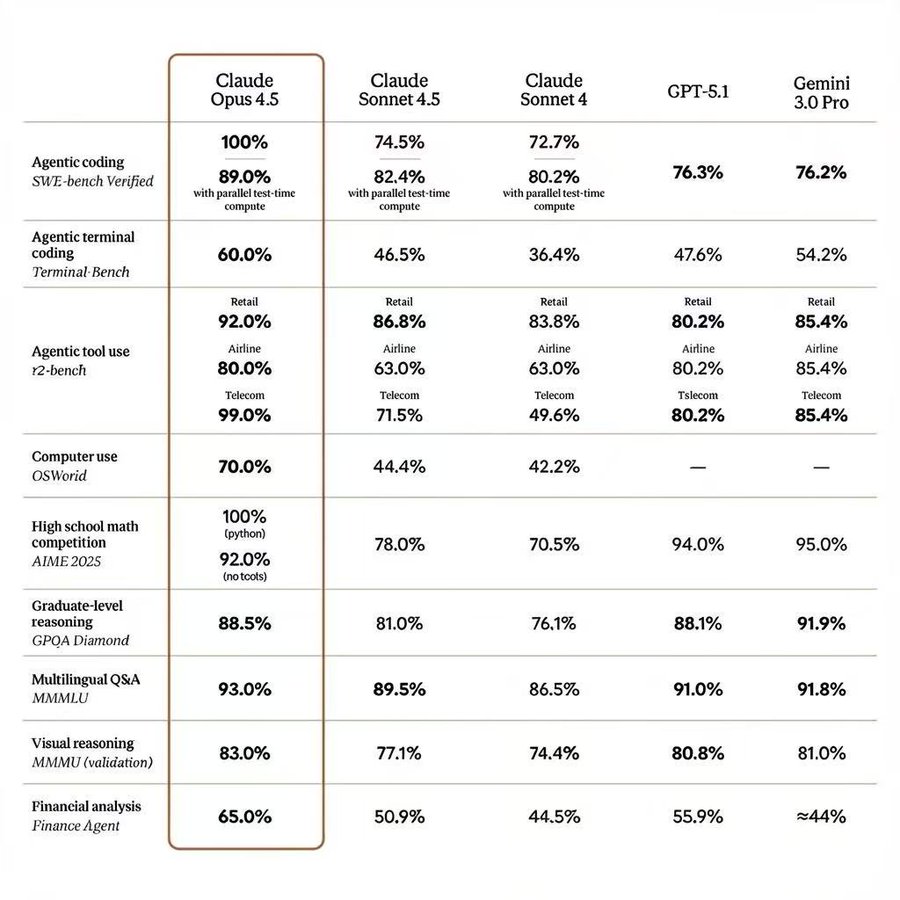
A creator flagged a viral comparison table for Claude 4.5 vs GPT‑5.1 and Gemini 3 Pro as “clearly fake”, pointing at weird formatting—some scores with percent signs, others not, and almost all numbers as perfect whole percentages—as a telltale sign of marketing cosplay rather than real evals Claude eval graphic. For people choosing stacks on the back of these charts, the post is a reminder that benchmark slides floating around X may not come from labs at all, and that you should trace anything that looks too clean back to an official blog, paper, or dashboard before you build creative workflows on it.
Gladiator Sundar meme turns Gemini launches into arena spectacle
Alongside a flood of Gemini 3 Pro leaderboard screenshots, one of the more shared images this week pastes Sundar Pichai’s head onto Russell Crowe’s Gladiator body with the caption “Are you entertained?”, poking fun at how AI leaders now play to the crowd with every benchmark gain Gladiator meme post. For creatives deciding whether to lean into Google, OpenAI, Anthropic or xAI tools, the meme nails the vibe: launches have become theatre, and part of the job now is separating showmanship from sustained improvements that actually change how fast you can ship stories, designs, or edits.

Hyper‑real gag posters and fake selfies fuel “nothing online is real” sentiment
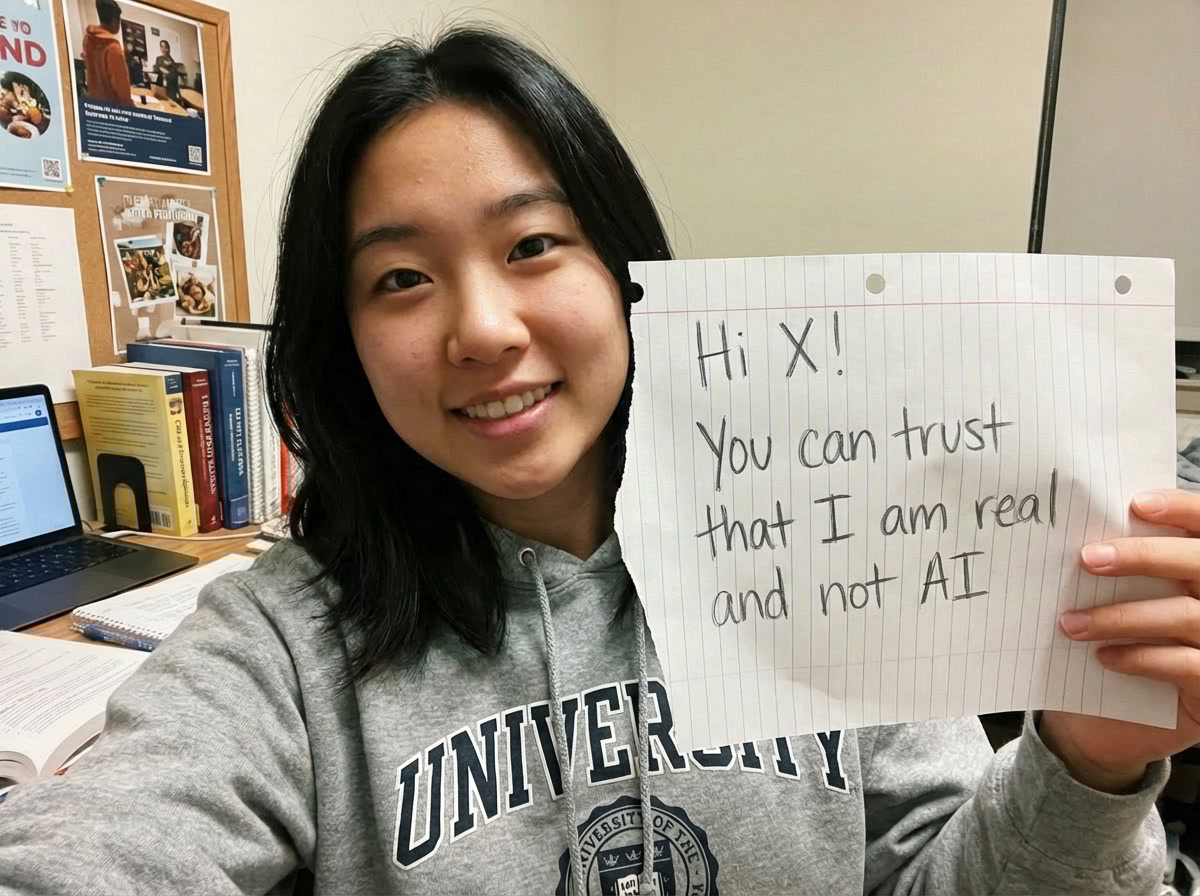
Several posts lean into how far text‑image models have pushed realism: a fake Marvel cover “THOR: NUTS & THUNDER” starring a heroic squirrel holding Mjolnir looks like a legit movie special until you read the title Squirrel Thor poster, while another shows a student‑looking girl holding a handwritten sign saying “You can trust that I am real and not AI” that was obviously made with Nano Banana Pro Fake authenticity selfie. Prompt hacker ProperPrompter adds that many early GPT‑4o image prompts that were later “nerfed” now work again on Google’s model Squirrel Thor poster, feeding a sense that not only are images untrustworthy, but model behavior itself shifts underfoot—both of which matter if your work depends on believable composites, faux behind‑the‑scenes shots, or anything purporting to be documentary.
Model race talk shifts as some predict Google will win the next round
Commentator @ai_for_success argued “There is no way OpenAI is going to beat Google in AI race,” claiming Sam Altman privately warned staff that Google’s recent AI momentum could cause short‑term economic turbulence even if he still expects OpenAI to win long term OpenAI vs Google take. At the same time, new Googlers like @fofrAI are posting that their first two weeks at DeepMind have been “a marvel” in terms of how fast the org ships DeepMind shipping praise, and others note that today’s “obvious best” stack (OpenAI‑centric) might age the way old web tech stacks did as newer systems grow up Future stack comment. For creatives, this isn’t abstract sports talk: it shapes which ecosystem they invest their prompts, styles, and production workflows into for the next few years.
Shadowban check shows AI educator missing from X search suggestions
Prompt educator Techhalla shared a third‑party checker screenshot showing their @techhalla account hit with a "search suggestion ban," meaning they no longer appear in logged‑out search suggestions or people results even though the account still technically exists Shadowban checker screenshot. In replies they half‑joke that posting too much Nano Banana content might be the cause Banana joke reply, but the underlying anxiety is real for AI creators who now rely on X as their main distribution channel: if discoverability can vanish overnight without explanation, audience‑building around tutorials, prompt packs and workflows becomes a lot more fragile.
Holiday card story shows Nano Banana quietly fixing “dunce cap” mishap
Writer Ashley Lillian described how a volunteer group took a Zoom screenshot for their holiday card, only to realize one guy’s improvised gift‑bag “hat” made him look like he was wearing a dunce cap; she cropped him out, typed “change his hat to a Christmas Santa hat” into Nano Banana Pro, and got a pixel‑matched replacement in seconds Holiday card anecdote. She points out that the change is trivial but revealing: with eight words and no masking, the model produced an edit that drops back into the original at the same resolution, making it impossible for viewers to tell a machine ever touched it.

Personal stories reframe AI image tools as joyful helpers, not replacements
Beyond the big hype, some posts show a quieter emotional reset around AI art: Ashley Lillian says the Santa‑hat fix on a volunteer card reminded her that the joy is in making something a bit better for people you care about, not in chasing clout, and that she would have done the retouching in Photoshop anyway but now it takes seconds Holiday card anecdote. Paired with the Feynman clip about ignoring status clubs Feynman honors clip, this kind of story suggests a middle path for illustrators and designers—treat models as power tools inside your practice instead of as a referendum on whether you “count” as an artist.